In This Article
A secured vs. unsecured loan decision often comes down to one tough trade-off: lower costs and more borrowing power versus keeping your personal assets out of reach. The central difference is collateral, property you pledge to back the debt.
Rates, credit requirements, loan amounts, fees, and default consequences can look entirely unique. The better fit depends on your credit, loan purpose, budget, and willingness to risk an asset if your circumstances change.
Key Takeaways
- Secured loans use collateral, such as a home, car, boat, or savings account. Unsecured loans rely on your promise and ability to repay.
- Collateral may help you qualify for a larger balance or a lower rate, but it can also put that asset at risk after default.
- Unsecured borrowing can protect a specific asset from automatic repossession or foreclosure, although missed payments still carry serious consequences.
- Compare APR, fees, repayment length, and default terms before choosing either option.
Secured vs. unsecured loan: which is better for you?
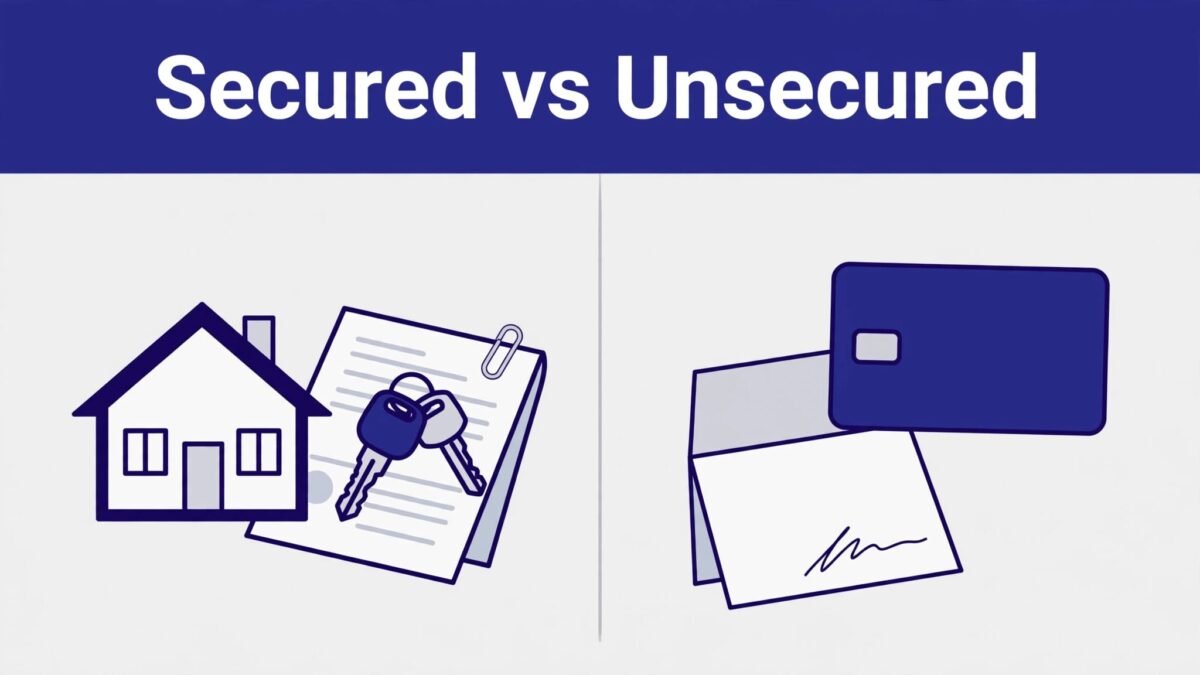
A secured loan is backed by collateral. A mortgage is secured by the home, an auto loan is secured by the vehicle, and a HELOC uses home equity as security. If the borrower defaults, the lender may have rights to take and sell the pledged asset, subject to the contract and applicable law.
An unsecured loan has no specific pledged asset. Credit cards, many personal loans, student loans, and personal lines of credit are common examples. The lender still reviews your income, credit history, debt, and repayment record before extending credit.

The labels describe collateral, not the repayment structure. A loan can be an installment product with fixed payments, or a revolving line of credit that lets you borrow again as you repay. For example, a personal line of credit is generally unsecured, while a HELOC is a revolving line secured by your home.
| Feature | Secured loan | Unsecured loan |
|---|---|---|
| Collateral | Required, such as a home or vehicle | No specific asset pledged |
| Typical cost | Maybe lower when the borrower and asset qualify | Often higher because the lender takes more risk |
| Credit standards | May be more flexible in some cases | Often, you need stronger credit to get the best terms. |
| Borrowing limits | May support larger balances | Usually lower limits |
| Default consequence | Possible repossession or foreclosure | Credit damage, collections, fees, and possible lawsuit |
The Consumer Financial Protection Bureau explains that a HELOC uses your home as collateral. That added security can change the offer, but it also increases the lender’s risk.
How collateral changes the lender’s risk
Collateral gives the lender a potential source of repayment if you stop paying. Because the lender has a claim on an asset, it may offer a larger balance or a lower rate than it would on an unsecured product.
That is not a guarantee. The rate still depends on your credit profile, income, loan term, debt load, the asset’s value, and the lender’s policies. Collateral also doesn’t remove your responsibility to repay the full debt.
The most common examples of each loan type
Mortgages and auto loans are secured because the home or vehicle backs the debt. Boat loans and loans secured by a savings account also fall into this category.
Credit cards, student loans, and many personal loans are unsecured. A personal line of credit is usually unsecured as well. The product name alone is not sufficient; please read the agreement for any security interest or lien language.
How rates, credit scores, fees, and loan limits compare
Unsecured loans often cost more because the lender cannot directly recover a pledged asset after default. Still, a strong credit profile can make unsecured options more competitive than many borrowers expect.
Secured borrowing may offer a lower rate or a higher limit when the asset and borrower qualify. However, the advertised rate is only one part of the cost. Compare APR, origination fees, annual fees, late charges, prepayment terms, required insurance, and closing costs.
A lower APR can still cost more overall. For example, a loan with a lower rate but a large origination fee and a longer repayment period may produce higher total interest and fees than a shorter unsecured loan with a slightly higher rate.

- TAKE CONTROL OF YOUR MONEY & ACHIEVE YOUR FINANCIAL GOALS – Are you looking for the best monthly budget planner to keep …
- FIND THE BEST WAY TO ACHIEVE YOUR FINANCIAL GOALS – This budget organizer is not just a tool; it’s a framework for achie…
- EASILY CONTROL YOUR SPENDING, DEBTS & SAVINGS – This money planner is undated and covers 12 months. Every month features…
Why unsecured borrowing may require stronger credit
With no collateral to recover, lenders often rely heavily on credit history, income, existing debt, and prior repayment behavior. A lower score can lead to a higher rate, a smaller credit limit, a co-signer requirement, or a declined application.
There is no universal score that guarantees approval. If your credit is limited or damaged, review personal loan options for bad credit carefully and compare the full repayment terms, not only the monthly payment.
When a secured loan can provide more borrowing power
Mortgages and auto loans can support larger balances than most unsecured products because the home or vehicle has measurable value. A HELOC can also provide access to funds based partly on the appraised home value minus the mortgage balance.
Loan-to-value limits, income, credit, and lender rules still control how much you can borrow. A larger approved amount is not proof that the payment fits your budget.
Fees and total cost can change the comparison.
Read every disclosure before signing. A HELOC may have a variable rate and may include application, appraisal, annual, or closing fees, according to the CFPB’s HELOC consumer brochure.
Ask for a clear explanation of every insurance charge or add-on product. A lender should not leave you guessing whether a fee is required, optional, or connected to the collateral.
The real risk is what happens if you miss payments.
Missing payments hurts with either type of loan. Both can trigger late fees, negative credit reporting, collection activity, and growing interest charges. The difference is what else the lender can pursue.
With secured debt, the pledged property may be repossessed or foreclosed upon. With unsecured debt, the lender cannot automatically take a particular car or home, but it may still take collection steps or sue where permitted by law.
A loan becomes dangerous when its payment only works in a best-case month. Test the payment against a reduced-income budget before signing.
What can happen after default on a secured loan
The process can begin with missed-payment notices and may progress to repossession or foreclosure. Timelines, notice rules, and borrower rights vary by loan agreement and location.
Losing the collateral may not end the debt. If the lender sells a car or home for less than the outstanding balance and allowable costs, you may still owe a deficiency balance where local law permits it.
Why unsecured debt still has serious consequences
No collateral does not mean no risk. Late payments can damage your credit report, while interest and fees can push the balance higher.
Collection activity and lawsuits are also possible. Depending on local law and court action, a creditor may have access to remedies involving wages or bank accounts. Review local rules or seek qualified legal help if you receive a lawsuit notice.
Questions to ask before pledging an asset
Before using a car, home, or savings account as collateral, check:
- Whether the asset’s value is worth the risk.
- Whether insurance is required and how much it adds to the cost.
- The grace period, notice process, and hardship options.
- Whether repossession, foreclosure, or sale costs can be added to your balance.
- Whether a deficiency balance could remain after the asset is sold.
- Whether the payment still works after a job loss or reduced hours.
How to choose the right loan for your situation
Start with affordability, not approval. Calculate the full monthly payment, then check whether it leaves room for housing, food, insurance, taxes, savings, and existing debt payments.
A secured loan can fit when you need a larger amount, have stable income, understand the asset risk, and can maintain a cautious payment plan. An unsecured option may fit when protecting your property matters more than a potentially lower rate.
A new loan should also fit your broader debt plan. If you are consolidating balances, compare it with proven personal finance basics such as budgeting, reducing high-interest balances, and avoiding new debt that recreates the same problem.
A secured loan may make sense when the asset risk is manageable.
This route can be reasonable when the loan purpose is necessary, the payment is affordable under a conservative budget, and you have emergency savings. Stable income also matters because the collateral could be essential to your daily life.
Be especially careful before pledging a home or vehicle for a purchase that is not essential. A depreciating purchase or short-term spending need rarely justifies placing a major asset at risk.
An unsecured loan may be better when protecting property matters most
Borrowers with strong credit may accept a higher rate to keep a home, car, or savings balance outside the loan agreement. This can be a sensible trade when the amount needed is smaller and the repayment period is short.
Compare a personal loan, credit card, and line of credit based on total cost and your repayment discipline. Revolving credit can become expensive if you carry the balance longer than planned.
A final loan comparison checklist
Before choosing an offer, compare at least a few legitimate lenders and confirm these details:
- APR, total repayment, and the monthly payment.
- Every origination, annual, insurance, late, and closing fee.
- Credit reporting practices and early-payoff terms.
- Default remedies and collateral requirements.
- Whether your budget can absorb the payment during an income loss.
Walk away from guaranteed approval claims, pressure to pay an upfront fee, or vague collateral and insurance charges. This article provides general education, not individualized financial, legal, or credit advice.
Choosing Based on the Risk You Can Carry
The right loan is the one you can repay without placing an essential asset or your monthly budget under unreasonable pressure. A secured option may bring lower costs, larger amounts, or broader access, but those benefits must justify the collateral risk.
Compare written offers side by side before applying. Focus on the payment, total repayment, fees, and the consequences of falling behind, rather than the promotional rate alone.
Conclusion
A secured vs unsecured loan comparison has no universal winner. Secured loans may offer lower costs, larger balances, or easier approval for some borrowers, but they put an asset at risk. Unsecured loans protect property from automatic seizure, though they may cost more and require stronger credit.
Review the full agreement before applying. Check the total cost, monthly payment, default terms, and available alternatives. Most importantly, choose a payment that remains affordable even if your income drops unexpectedly.