
In This Article
A bank app that stops loading or a troubling headline about your brokerage can make your savings feel suddenly out of reach. How to Protect Your Money During a Financial Institution Failure depends on the account you own, the insurance behind it, the ownership rules, and the country where the money is held.
The main rules here apply to the United States, not accounts worldwide. A sound plan includes checking insurance limits, spreading deposits carefully, understanding brokerage protection, keeping records, and staying calm if access is interrupted.
Key Takeaways
- FDIC, NCUA, and SIPC cover different types of money and property under different rules.
- Account titles, owners, beneficiaries, and the institution holding the funds can affect coverage.
- A cash sweep at a brokerage may have different protection than ordinary brokerage cash.
- Keep current account records and backup payment options before trouble starts.
- Follow official notices after a failure, because rumors and phishing attempts can spread quickly.
How to Protect Your Money During a Financial Institution Failure
Start before a crisis. A bank failure occurs when a bank cannot meet its obligations and regulators step in. A credit union failure follows a similar path, although the National Credit Union Administration may arrange a merger, conservatorship, or liquidation. A brokerage failure is different because securities may still exist in customer custody, even if the firm cannot return them promptly.
Please confirm the protection associated with each account. Banks should be FDIC-insured, federally insured credit unions should have NCUA share insurance, and brokerage firms should be SIPC members. Those labels matter, but they don’t protect every loss. Deposit insurance covers eligible deposits, while SIPC can address missing customer cash or securities after a qualifying brokerage failure.
Make a simple list of every account, its balance, owners, beneficiaries, account type, and institution. Include apps and cash-management products, not only traditional banks.
For example, a single-owner checking account with $300,000 at one FDIC-insured bank generally has $250,000 in coverage. The remaining $50,000 may be uninsured. In contrast, $150,000 held in a qualifying single-owner account at each of two separate FDIC-insured banks generally falls within the standard limit at both institutions.
Use the FDIC’s deposit insyourAQs and its Electronic Deposit Insurance Estimator, or EDIE, to test your own account structure. For credit unions, review current NCUA share-insurance guidance before relying on a coverage assumption.

- FIREPROOF: Box is UL Classified to endure 1/2 hour at 1550°F to protect irreplaceable documents and valuables from fire …
- KEYLOCK: Fireproof safe features a flat key lock to prevent the lid from opening in the event of a fire; Includes 2 keys
- COLOR: The fireproof file box for documents has a black exterior finish
Check the insurance status before relying on the balance.
Verify insurance through the institution’s official website, account agreement, and regulator databases. A familiar fintech brand or investing app may be the company you see, yet a separate bank, credit union, or broker-dealer may hold the money.
Ask where funds sit, under whose name, and what insurance applies. If an app cannot clearly identify its partner institution, treat that as a reason to pause before adding more money.
U.S. protections do not automatically follow your money abroad. Accounts held in another country usually depend on that country’s deposit-protection system and local rules.
Keep emergency cash available without creating new risk
A modest cash reserve can cover groceries, rent, transfers, or a temporary card problem while an institution posts instructions. Keep a second payment method available, such as another debit card or credit card, and update your email address and phone number with each provider.
Emergency fund guidance can help you decide where accessible reserves fit into your broader finances. Avoid storing large sums of uninsured cash at home, where theft, fire, and loss create a different problem.

Preparing records and backup access before a financial institution Failure can reduce stress when normal access is interrupted.
How FDIC and NCUA Insurance Protect Deposits
For an FDIC-insured bank, the standard coverage is generally $250,000 per depositor, per insured bank, per ownership category. Eligible deposits include checking accounts, savings accounts, money market deposit accounts, and certificates of deposit. Stocks, bonds, crypto assets, and money market mutual funds are not FDIC-insured deposits.
Ownership categories matter. Single accounts, joint accounts, certain retirement accounts, business accounts, and qualifying revocable trust accounts can receive separate coverage if they meet the requirements. Two people with a properly structured joint account can generally receive up to $500,000 in total coverage, or $250,000 per qualifying co-owner.
Deposits at multiple branches of the same bank are usually combined. However, deposits at different FDIC-insured banks may receive separate coverage. The FDIC’s overview of deposit insurance explains these distinctions in more detail.
NCUA share insurance at federally insured credit unions generally follows a similar $250,000 limit. Coverage depends on the member-owner and ownership category. Retirement accounts, joint accounts, and trust arrangements can require closer review, so use current NCUA share-insurance information for complex situations.
Use ownership categories carefully, not as a paperwork shortcut.
Opening several accounts under the same ownership at one bank doesn’t automatically create more coverage. Likewise, adding a joint owner or naming beneficiaries can affect estate planning, taxes, access rights, and family relationships.
Confirm account registrations in writing. Review beneficiary names, trust terms, and ownership records after a marriage, divorce, death, move, or major transfer. For revocable trusts, current FDIC rules can depend on the number of eligible beneficiaries and the terms of the account.
What happens after an insured bank or credit union fails?
The FDIC may arrange for another bank to take over deposits, establish a bridge bank, or send an insurance payout. The NCUA may merge a troubled credit union into another institution, transfer accounts, or make a payout from the National Credit Union Share Insurance Fund.
Insured customers usually receive instructions about account access. Uninsured balances may face delays and can involve losses. Save official messages, monitor the regulator’s notices, and avoid moving money solely because of social media rumors.
A temporary outage, delayed transfer, or frozen login is not proof that your money has disappeared. Wait for verified instructions before making rushed decisions.
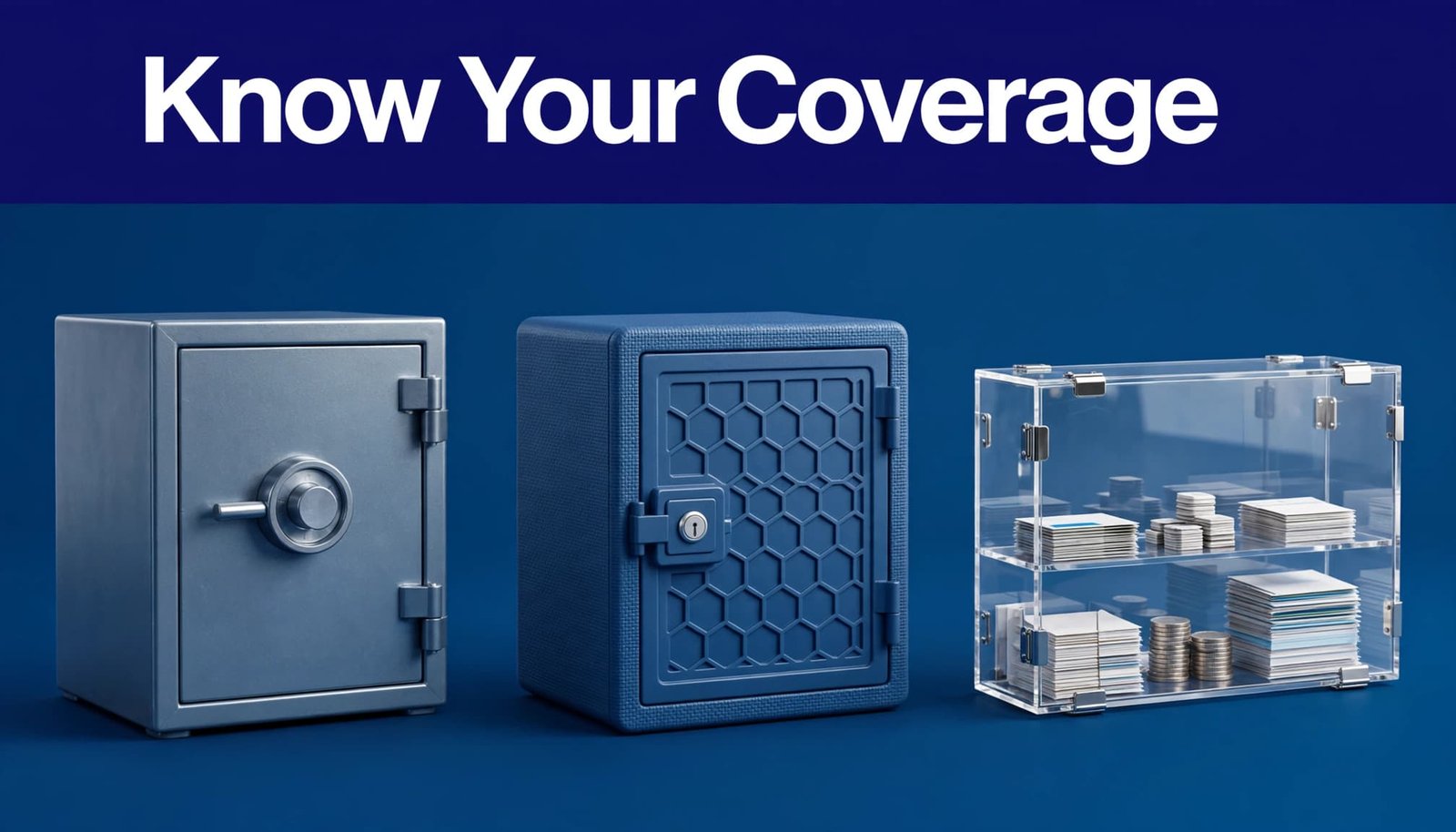
Protect Brokerage Accounts From a Financial Institution Failure
Brokerage protection is not deposit insurance. The Securities Investor Protection Corporation, or SIPC, can provide up to $500,000 per customer when a SIPC-member brokerage fails and customer securities or cash are missing. That total includes a $250,000 limit for cash.
SIPC does not cover a falling stock price, an unsuccessful investment choice, or every fraud loss. It also excludes certain assets, including ordinary commodities and futures contracts, foreign-currency positions held as investments, and some unregistered securities. Review what SIPC protects before treating the limit as a blanket guarantee.
A brokerage cash sweep deserves special attention. Your uninvested cash might be swept into bank deposits, held in a money market mutual fund, invested in Treasury securities, or left as an ordinary brokerage cash balance. Each option has different protections.
Separate custody risk from investment risk
If a stock position falls from $10,000 to $6,000, SIPC does not replace the $4,000 market loss. The shares may still be safely held in the account, but their market value has declined.
If a failed brokerage cannot return securities that should be in your account, SIPC may address missing customer property within its limits. Diversification can reduce concentration in one stock, sector, or fund, but it cannot guarantee against losses. Use portfolio diversification principles to address market risk separately from custody risk.
Ask what happens to uninvested brokerage cash.
Read your brokerage’s cash-management disclosure before assuming FDIC or SIPC coverage. A bank deposit sweep may receive FDIC coverage through one or more program banks. A money market mutual fund is a security, not a bank deposit. Treasury securities are direct U.S. government obligations, while ordinary brokerage cash may fall under SIPC rules.
Ask the firm which entity holds the money, what coverage applies, whether banks can change, and what delays could arise in a failure. The SEC’s cash sweep program bulletin outlines the differences.
Build a Personal Protection Plan Before Trouble Starts
Keep deposits within applicable insurance limits where practical, and avoid placing all your banking or investment access with one institution. Separate institutions can improve coverage, although more accounts also mean more passwords, statements, transfers, and monitoring.
Use checking for daily spending and savings for reserves only when the arrangement matches your needs. These checking and savings account differences can help you assign each account a clear role.
Store statements, tax forms, account numbers, beneficiary records, and trusted-contact information in a secure location. Business owners should track authorized signers and operating balances. Families should revisit joint registrations. Trust and retirement account holders may need a qualified financial, tax, or legal professional to confirm complex ownership rules.
Use a coverage review worksheet.
A simple worksheet makes gaps easier to spot. Update it after opening, closing, retitling, or transferring an account.
| Institution | Insurance type | Account title | Ownership category | Balance | Beneficiary | Estimated coverage |
|---|---|---|---|---|---|---|
| Bank or credit union | FDIC or NCUA | Exact registration | Single, joint, trust, or retirement | Current amount | Named person or trust | Review with official tool |
| Brokerage firm | SIPC or other program | Exact registration | Individual or joint | Cash and securities | Named person or trust | Review program terms. |
The worksheet cannot replace official coverage calculations. Still, it gives you a clean starting point when a household or business holds accounts across several providers.
Respond calmly if access is interrupted.
If an app stops working or a bank announces a failure, check official notices first. Confirm whether deposits were transferred to another institution, then use backup accounts to pay essential bills. Document unanswered requests and save screenshots, emails, and reference numbers.
Watch for phishing emails, fake recovery agents, and callers demanding passwords or transfer fees. Contact the institution through a verified phone number or official website. Don’t make rushed investment trades because temporary access trouble can look worse than it is.
Frequently Asked Questions
Are deposits at separate branches insured separately?
Usually, no. Deposits held at different branches of the same FDIC-insured bank are generally combined for insurance purposes. Separate FDIC-insured banks can provide separate coverage, but only if ownership rules are met.
Does FDIC insurance cover a money market mutual fund?
No. A money market mutual fund is an investment product, not an FDIC-insured bank deposit. A money market deposit account at an FDIC-insured bank is different and can qualify for deposit insurance.
Can SIPC replace losses after a stock price falls?
No. SIPC does not protect against market declines. It may help return missing securities or cash when a SIPC-member brokerage fails, but only within its coverage limits.
What should I do if a fintech app does not name its partner bank?
Don’t assume the balance has federal deposit insurance. Ask where funds are held, identify the legal institution, and verify its status through the relevant regulator before adding more money.
Do U.S. insurance limits apply to accounts in other countries?
No. FDIC, NCUA, and SIPC protections apply under U.S. rules and to eligible institutions or accounts. Accounts held abroad depend on local laws, institutions, and protection programs.
Conclusion
Protection during a financial institution failure starts long before the warning signs appear. The strongest preparation combines the right insurance, accurate account structure, current records, and a backup way to pay essential bills.
FDIC, NCUA, and SIPC each serve different purposes, and U.S. limits should never be treated as global rules. Review your accounts this week, confirm where your money is held, and use current official guidance to check the coverage you expect.