In This Article
Choosing between fast-growing companies and overlooked, lower-priced businesses is a common investor dilemma. Growth stocks vs value stocks can affect your portfolio’s valuation, income potential, risk level, and performance during different market conditions.
Neither approach guarantees better returns. The right fit depends on your goals, time horizon, and ability to stay invested when prices become uncomfortable.
Key Takeaways
- Growth stocks trade on expectations of rising sales and earnings, while value stocks appear inexpensive compared with measures of business worth.
- Growth investing often prioritizes future expansion. Value investing often emphasizes current fundamentals, dividends, and a possible recovery in share price.
- Interest rates, economic conditions, and investor sentiment can favor one style for long stretches, then reverse course.
- A broad fund or a mix of both styles can reduce dependence on one type of stock.
- Low share prices do not automatically indicate value, and fast revenue growth does not make a company a sound investment.
Growth Stocks vs Value Stocks: What Sets Them Apart?
Growth and value are investing styles, not permanent labels or forecasts. A company may show traits of both, especially as it matures or its market price changes.
According to Investor.gov’s stock definitions, growth stocks generally have earnings that grow faster than the market average, while value stocks often have a low price-to-earnings ratio. Those descriptions offer a starting point, not a complete investment decision.
How Growth Stocks Aim to Build Wealth
Growth companies often reinvest profits into product development, new markets, hiring, or expansion. Investors buy shares because they expect revenue and earnings to increase substantially over time.
These businesses are common in technology, health care, and newer industries, although growth can appear in any sector. Their shares may carry higher price-to-earnings or price-to-sales ratios because investors are paying today for future results.
That expectation creates risk. If revenue slows, competition rises, or profit targets disappoint, the share price can fall hard. Many growth companies also pay limited dividends because management directs cash back into expansion.
How Value Stocks Can Offer a Lower-Priced Opportunity
Value investors search for companies trading below what they believe the underlying business is worth. They may compare the share price with earnings, cash flow, book value, dividends, or the value of business assets.
A stock can look cheap because a company faces a temporary setback, works in an unpopular industry, or has fallen out of favor with investors. In the best case, operations improve and the market gradually recognizes the business’s worth.
Still, a low valuation can point to a real problem. A value trap is a stock that stays cheap because declining sales, debt, or weak management continue to damage the business.
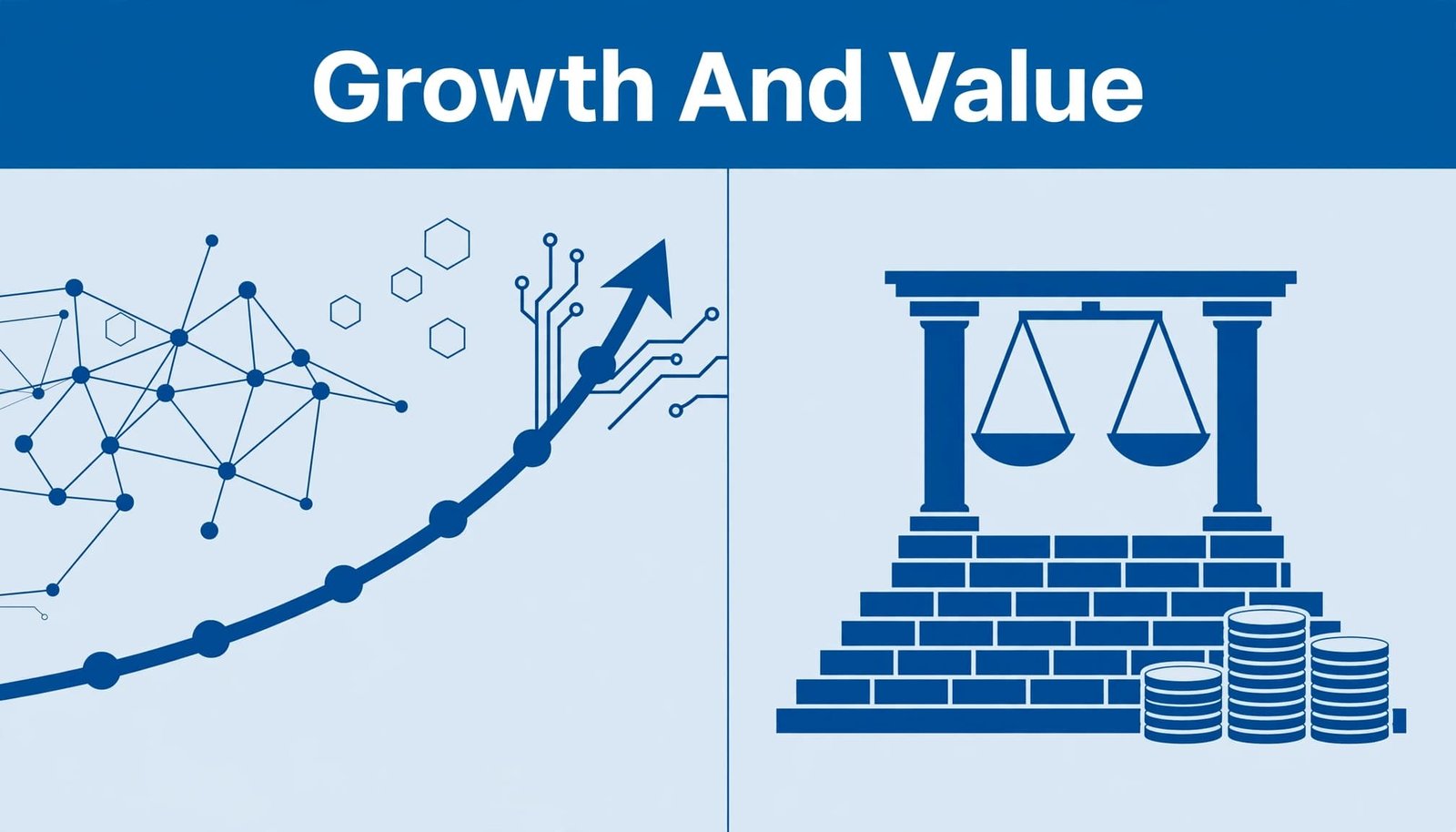
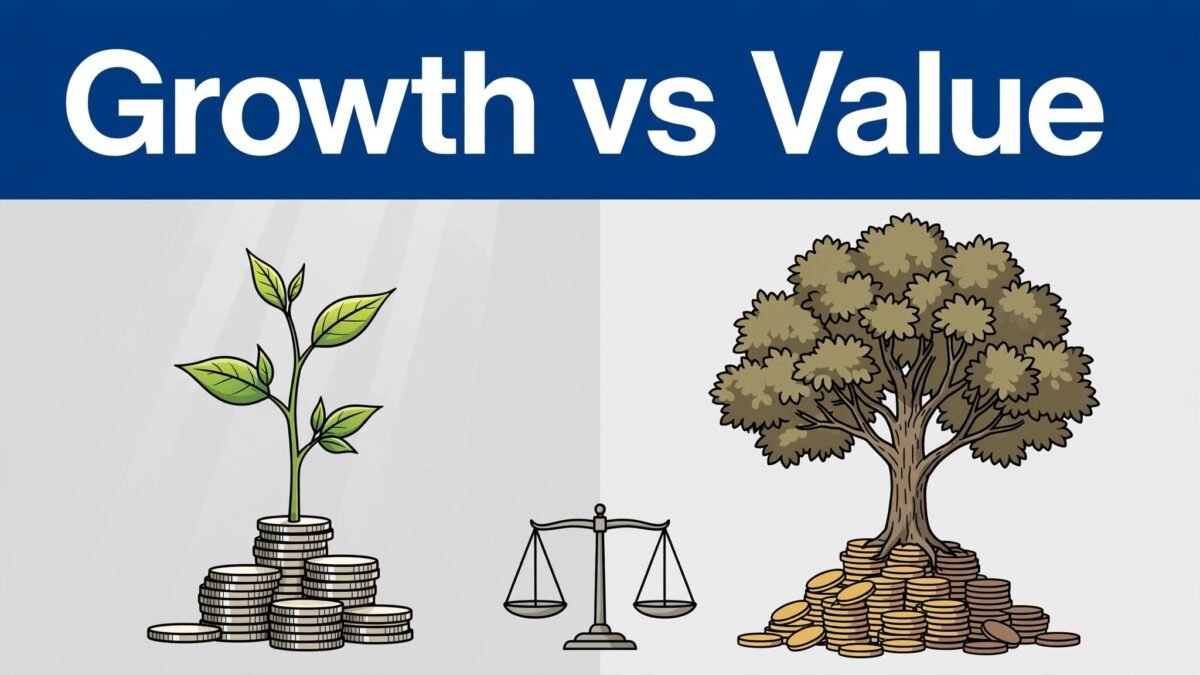
Growth stocks vs value stocks place future expansion and current business fundamentals in different parts of the investment decision.
Growth Stocks and Value Stocks Compared Side by Side
The distinction becomes clearer when you compare the factors investors usually weigh. Growth and value investing education also emphasizes that both styles can sit within a diversified portfolio.
| Factor | Growth Stocks | Value Stocks |
|---|---|---|
| Valuation | Often priced high relative to current earnings or sales | Often priced low relative to earnings, cash flow, or assets |
| Earnings outlook | Investors expect rapid future expansion | Investors may expect steadier results or a recovery |
| Dividends | Often limited or absent | May offer dividends, but not always |
| Volatility | Can be sharp when expectations change | Can fall when business weakness persists |
| Interest-rate sensitivity | Higher valuations may face more pressure when rates rise | May appeal during rotations toward established companies |
| Typical sectors | Technology, health care, emerging industries | Financials, industrials, utilities, mature businesses |
| Time horizon | Often requires patience for growth to arrive | Often requires patience for a re-rating |
| Main risk | Growth disappoints | The business remains cheap for valid reasons |
Performance moves in cycles. A style that leads one year can lag badly the next, so historical returns should never become a promise about what comes next.
Risk, Volatility, and Market Conditions
Rising interest rates can pressure high-valuation growth stocks because investors place a lower present value on earnings expected years ahead. However, rates are only one influence. Profit margins, competition, economic growth, and investor confidence also matter.
Value stocks can draw interest when markets favor established businesses and current cash flows. Yet an economic slowdown may hurt financially weaker companies, especially those with heavy debt. Your investment risk tolerance should guide the amount of stock-market uncertainty you can accept.
Dividends, Valuation, and Total Return
Total return includes share-price movement plus dividends. Growth investors may accept little current income in exchange for the possibility of stronger future earnings. Value investors may seek dividends alongside a potential recovery in price.
The price-to-earnings ratio divides a share’s market price by earnings per share. A lower ratio can look attractive, but it means little without context. Review several stock valuation measures, including cash flow, debt, margins, and future prospects.
Recommended Reading: Investors who want to understand value investing in greater depth may find The Intelligent Investor by Benjamin Graham useful for learning about valuation, investment discipline, and long-term investing principles.

A cheap valuation is only useful when the business can protect or improve the cash flows behind it.
How to Choose Between Growth and Value Investing
Your choice should begin with your financial plan, not the style that has recently dominated headlines. Consider when you need the money, whether you need income now, and how you react when markets decline.
For many investors, growth stocks vs value stocks is not an all-or-nothing choice. Broad funds can provide exposure to hundreds or thousands of companies without requiring stock-by-stock selection. New investors can start with Finance Beacon’s guide to investing in stocks before selecting individual shares or specialized funds.
When a Blend of Both Styles May Make Sense
Holding both styles can reduce your dependence on one market trend. Growth holdings may add exposure to expanding businesses, while value holdings can add companies with lower valuations and, in some cases, dividend income.
Broad-market index funds often include a mix of growth and value companies. Style-focused funds offer a more targeted approach, but check fees, top holdings, sector concentration, and overlap with funds you already own. Finance Beacon’s investment diversification guide explains how to spread exposure across companies, sectors, and asset classes.

Combining styles can help a portfolio avoid relying on one kind of market leadership.
Common Mistakes to Avoid Before Buying
Chasing recent winners can lead investors to pay too much after a run-up. On the other hand, buying a stock solely because its share price looks low ignores the size, quality, and financial condition of the business.
Review debt, cash flow, earnings quality, and competitive pressure. Avoid relying on a single ratio, and factor in fund fees, trading costs, and taxes where they apply. Morningstar research tools can help investors review fund holdings and costs, but no rating or screen replaces independent judgment.
General education cannot account for your income, taxes, debt, goals, or personal risk capacity. Consider professional advice when your decision carries major consequences.
Read the Company, Not the Label
Style labels can be useful shortcuts, but they can also hide important details. A growth company may have strong revenue but weak cash flow. A value company may have a low valuation because its debt is rising faster than its earnings.
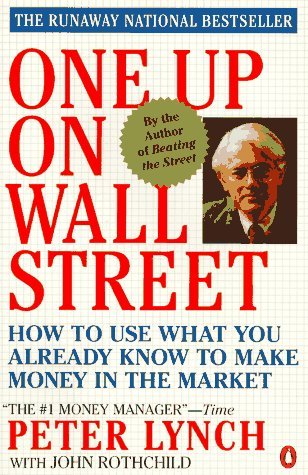
Recommended Reading: One Up On Wall Street by Peter Lynch offers additional insights into researching companies, recognizing potential opportunities, and looking beyond market headlines when evaluating stocks.
Look Beyond the Headline Ratio
Compare a company’s valuation with its own history, direct competitors, and expected earnings path. A price-to-earnings ratio may be less useful for a company with inconsistent profits, while cash flow can reveal whether reported earnings turn into money the business can use.
Also examine the source of growth. Price increases, one-time acquisitions, or temporary demand spikes may not support long-term expansion.
Match the Investment to Your Plan
Someone saving for a near-term goal may need less stock exposure overall, regardless of style. A long-term investor may have more capacity for stock volatility, but only if they can avoid selling during market stress.
A beginner-friendly investing guide can help connect stock choices with broader priorities such as emergency savings, debt management, and retirement planning.
Frequently Asked Questions
Can a stock be both a growth stock and a value stock?
Yes. A company with solid earnings growth can become attractively valued after a share-price decline. Likewise, a mature company may retain value characteristics while still growing faster than investors expected.
Are value stocks always safer than growth stocks?
No. A lower valuation does not erase business risk. A heavily indebted company with falling revenue can be more dangerous than a profitable growth company with a strong balance sheet.
Do growth stocks pay dividends?
Some do, but many retain more cash for expansion. Dividend policy depends on management’s capital priorities, business maturity, cash flow, and future investment opportunities.
How can investors compare growth and value funds?
Review each fund’s objective, expense ratio, top holdings, sector weights, and turnover. Two funds with different names can still own many of the same companies, which may reduce the diversification you expected.
Should beginners buy individual growth or value stocks?
Beginners can buy individual stocks, but research takes time and a small number of holdings can create concentration risk. Broad-market funds may offer a simpler starting point while an investor builds knowledge and experience.
Choosing a Style That Fits Your Goals
Growth stocks focus on expected expansion, while value stocks focus on shares that appear underpriced relative to business fundamentals. Both can produce gains or losses, and both require a clear view of valuation, volatility, dividends, and time horizon.
Review your current holdings, check how diversified they are, and decide whether growth stocks vs value stocks fits your goals rather than whichever style recently performed best. Consistency with a sound plan matters more than chasing a market trend.
Conclusion
The debate over growth stocks vs value stocks does not have a single answer that works for every investor. Growth stocks offer exposure to companies expected to expand their earnings and revenues, while value stocks focus on businesses trading at prices that may appear low relative to their fundamentals. Each approach brings different opportunities and risks.
Rather than choosing a stock simply because it is labelled “growth” or “value,” examine the underlying business. Consider its earnings, cash flow, debt, competitive position, valuation, dividend policy, and long-term prospects. A low-priced stock is not automatically a bargain, just as a rapidly growing company is not automatically a good investment. Pasted markdown
Your financial goals, investment horizon, need for income, and tolerance for market volatility should also influence your decision. For some investors, combining growth and value investments through a diversified portfolio may reduce dependence on the performance of a single investment style. Pasted markdown
Ultimately, successful long-term investing is less about predicting whether growth or value will outperform next and more about building a diversified strategy you understand and can maintain through changing market conditions. Choose investments that support your financial plan rather than chasing whichever style happens to be performing best today.