In This Article
Crypto dollar cost averaging gives investors a way to buy digital assets without trying to call every market top or bottom. When Bitcoin or Ether can move sharply in a single day, deciding when to buy can feel more stressful than the investment itself.
With dollar-cost averaging, you invest a fixed dollar amount on a fixed schedule. It can reduce timing pressure, but it can’t guarantee a profit or protect you if an asset loses value. For a broader look at the method, see dollar-cost averaging explained.
The details matter, especially fees, taxes, custody, and the reason you own the asset in the first place.
Key Takeaways
- Dollar-cost averaging spreads crypto purchases across regular intervals instead of investing one large amount at once.
- Fixed contributions buy more units at lower prices and fewer units at higher prices.
- DCA reduces timing risk, but the cryptocurrency can still decline, fail, or stay weak for years.
- Fees, spreads, taxes, and account security can affect results as much as the schedule itself.
- A sound plan fits your budget, has a long-term purpose, and gets reviewed at regular intervals.
Dollar-Cost Averaging in Crypto: How It Works
Dollar-cost averaging means buying the same dollar amount of an asset on a preset schedule, regardless of its current price. You might buy $100 of Bitcoin every month, for example, even when headlines are gloomy or prices are climbing.
Because the contribution stays fixed, lower prices buy more crypto and higher prices buy less. Over time, those purchases result in an average cost that reflects the dollars invested and the coins acquired.
A lump-sum investment puts all available money into the market immediately. DCA divides that money across weekly, biweekly, or monthly purchases. Many investors align the schedule with paydays, so the plan feels like a regular saving habit.
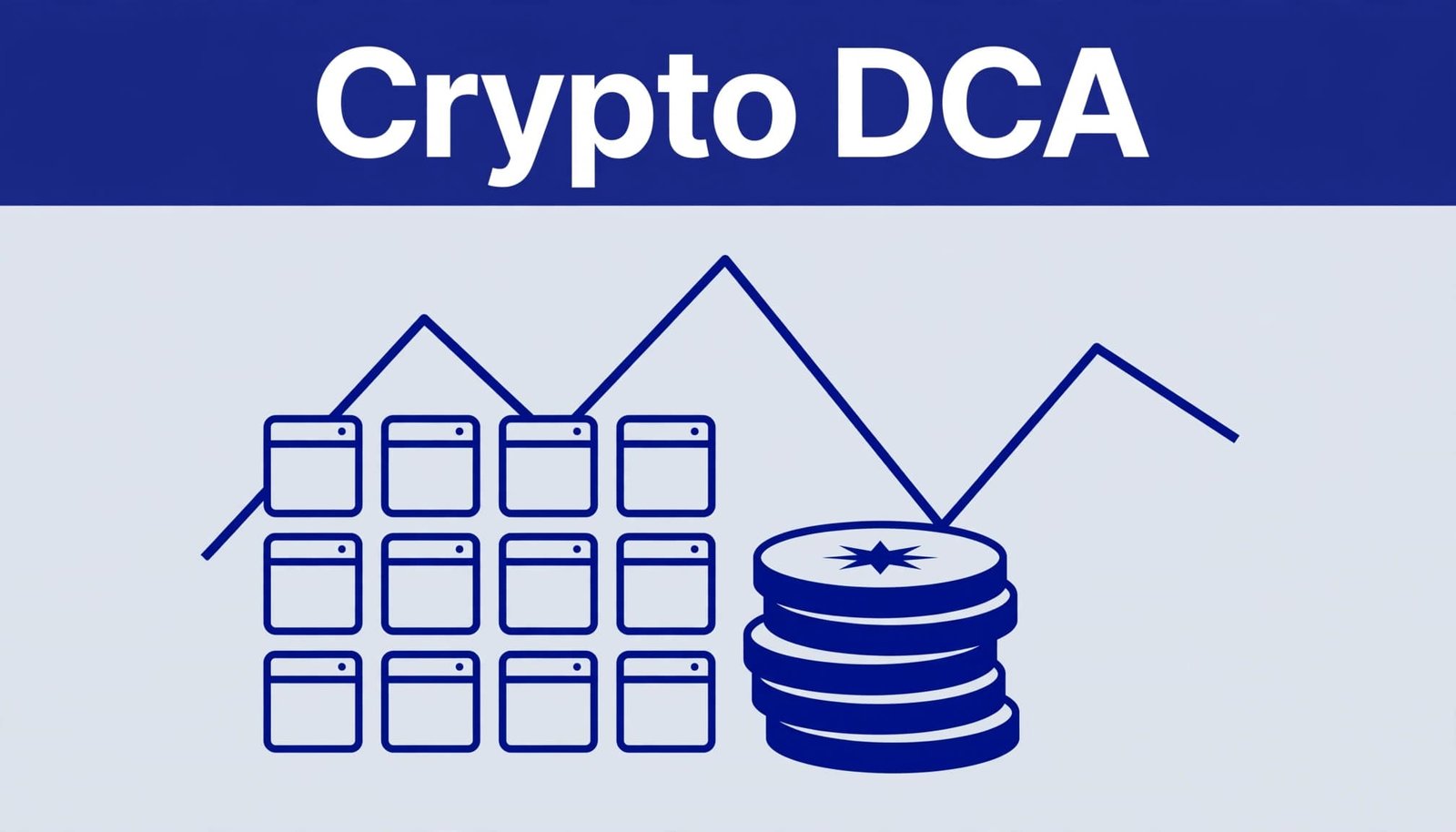
Crypto dollar cost averaging uses consistent purchases through changing prices.
A simple crypto DCA example with changing prices
Assume you invest $100 in Bitcoin on the first day of each month for six months. The price changes, but your contribution does not.
| Month | Bitcoin price | Amount invested | Bitcoin purchased |
|---|---|---|---|
| 1 | $20,000 | $100 | 0.005 BTC |
| 2 | $25,000 | $100 | 0.004 BTC |
| 3 | $10,000 | $100 | 0.010 BTC |
| 4 | $12,500 | $100 | 0.008 BTC |
| 5 | $20,000 | $100 | 0.005 BTC |
| 6 | $10,000 | $100 | 0.010 BTC |
You invested $600 and accumulated 0.042 BTC. Your average purchase price is about $14,286 per BTC, calculated by dividing $600 by 0.042 BTC.
That figure differs from simply averaging the six listed prices. The lower-price months matter more because the same $100 bought larger amounts of Bitcoin.
How recurring crypto purchases are set up
First, choose an asset you understand and a contribution amount that fits your cash flow. Then select a schedule, connect a bank account or other funding source, and review the recurring order before confirming it.
Check the provider’s trading fees, spread, minimum order size, and withdrawal policy. Exchange features, supported assets, order types, and availability differ by country and provider.
Many recurring buys execute at the prevailing market price. Therefore, the final execution price may differ from the price shown when you created the plan, especially during a quick move.
Why Crypto Dollar Cost Averaging Can Help Long-Term Investors
The chief appeal of crypto dollar cost averaging is emotional as much as mathematical. It gives you a repeatable rule when the market is moving too fast for a confident prediction.
A schedule can also fit a paycheck better than a large one-time investment. Still, it reduces timing risk, not the risk of owning a poor investment. Explaining investment risk can help separate those two concerns.
DCA versus a lump-sum crypto investment
A lump sum gives an investor full exposure to the market right away. If prices rise steadily after the purchase, that approach may outperform a plan that holds some money back for later buys.
DCA can soften the impact of investing just before a steep decline because later contributions buy at lower prices. However, it may lag a rising market because some cash is held back.
Your available cash, investment horizon, comfort with volatility, and ability to follow a plan should guide the choice. Neither method changes the underlying asset’s risk.
When crypto DCA may be a poor fit
Don’t use money needed for rent, debt payments, insurance, or emergency savings. A recurring purchase can look harmless until it competes with a real-life expense.
The strategy also has little value when you have no long-term reason to own the crypto asset. Automation builds discipline, yet it can also hide a losing position when nobody reviews it.
A recurring order creates consistency, but it does not turn an uncertain asset into a safe one.
How to Build a Safer Crypto Dollar-Cost Averaging Plan
Start with a contribution you can afford after essential expenses, emergency savings, and high-interest debt obligations. A small amount you can sustain is more useful than an ambitious amount you stop after two volatile months.
Choose assets with care. Before buying Bitcoin, Ether, or another token, learn how it works, what gives it value, and what could weaken the case for owning it. Finance Beacon’s Bitcoin for Beginners guide is a useful starting point.
Set a time horizon, then decide how often to buy. Weekly purchases may suit a steady income, while monthly purchases can reduce transaction count. Review the exchange’s security controls, enable two-factor authentication, and decide whether you will keep assets on the platform or move them to a self-custody wallet.
Write down rules for pausing, rebalancing, or ending the plan. Your financial situation, risk tolerance, and investment thesis can change.
Fees, Taxes, and Records That Affect Results
Small costs can erode a recurring strategy, especially when purchases are frequent and contributions are modest.
Fees, spreads, and the true cost of recurring buys
A trading fee is only one cost. The bid-ask spread, withdrawal charges, and blockchain network fees can also reduce the crypto you receive or keep.
For example, a $1 flat fee on a $10 daily buy consumes 10% of each contribution. The same $1 fee on a $70 weekly buy consumes about 1.4%. Actual pricing differs by platform, but the lesson is clear: compare the fee schedule before choosing a frequency.
Check whether recurring orders receive the same pricing as manual trades. Also review the total cost of moving crypto off the exchange if self-custody is part of your plan.
Crypto taxes and recordkeeping for each purchase
For U.S. taxpayers, the IRS generally treats digital assets as property. Buying crypto with cash and holding it is generally a non- taxable disposition. Selling, swapping, spending, or receiving crypto as income can create tax obligations.
The IRS says taxpayers may need to report digital-asset transactions even without a tax form. Review the IRS digital assets guidance and keep records for every purchase: date, quantity, price, fees, exchange or wallet, and details of any later disposal.
Form 1099-DA reporting applies to transactions on or after January 1, 2025. Tax rules differ across borders, so international investors should check local rules with a qualified tax professional.
Common Mistakes That Weaken a DCA Strategy
A plan can fail before the first order executes if the contribution exceeds the budget. Keep emergency savings and core household spending separate from speculative investments.
Other errors include chasing a newly popular coin after a price spike, ignoring fees, and assuming DCA prevents losses. Secure exchange accounts and wallets, save transaction records, and review the original reason for investing at set intervals.
A basic beginner’s guide to personal finance can help put crypto within a wider plan for savings, debt, insurance, and long-term goals.
Frequently Asked Questions
Is crypto DCA suitable for beginners?
It can be easier for beginners than making a large one-time purchase because it creates a fixed rule. Still, beginners should understand the asset, platform costs, and security risks before setting up automation.
How long should a crypto DCA plan run?
The timeline should match your goals and financial situation. Many long-term investors review their plan every few months rather than reacting to each daily price move.
Can I pause recurring crypto purchases?
Yes, most providers allow investors to pause, edit, or cancel recurring orders. Check the platform’s process and confirm that no pending orders remain before changing your plan.
Should I DCA into one cryptocurrency or several?
Adding assets can spread exposure, but it also adds research, fees, and recordkeeping. Start with assets you can explain clearly instead of building a complicated portfolio too early.
Does DCA work during a crypto bear market?
A bear market can allow fixed contributions to buy more units at lower prices. However, a declining market may continue falling, and some assets never recover, so DCA does not remove loss risk.
A Disciplined Way to Spread Crypto Purchases
Crypto dollar cost averaging can make a volatile market easier to approach because it replaces impulse with a defined schedule. It remains an investment strategy, not a promise of profit or a shield against losses.
Choose a manageable amount, understand the asset, compare costs, automate carefully, and keep detailed records. Review the plan as your finances and market assumptions change, and make investment and tax decisions that fit your personal circumstances and local rules.
Conclusion
Building a Disciplined Crypto Investment Strategy
Crypto dollar cost averaging offers a structured approach to investing in volatile digital assets. By investing a fixed amount at regular intervals, you reduce the pressure of predicting market movements and develop a consistent investment habit. This strategy allows you to purchase more cryptocurrency when prices fall and fewer units when prices rise.
Nevertheless, dollar-cost averaging does not eliminate investment risk or guarantee profits. Cryptocurrency prices fluctuate, and transaction fees, taxes, security threats, and market conditions influence your overall returns.
Before starting a crypto DCA plan, assess your financial goals, risk tolerance, and available income. Choose assets you understand, compare exchange fees, protect your digital wallet, and maintain accurate transaction records. Review your strategy periodically and adjust your contributions when your financial circumstances change.
Ultimately, successful crypto dollar cost averaging requires patience, financial discipline, and informed decision-making. Focus on building a sustainable investment plan rather than reacting to short-term market movements.