
In This Article
You want a credit card that earns rewards. You would rather not pay for the privilege. That’s a reasonable position, and it’s also the exact question behind the search term “no annual fee credit cards.”
The good news is simple. Some of the strongest cashback and travel cards on the market charge nothing to keep in your wallet. This guide walks through the best no-annual-fee credit cards available right now, organized by what you actually need them to do.
You’ll learn how these cards make money without charging you a fee, which ones fit different spending habits, and how to compare them without getting lost in marketing language.
What Does “No Annual Fee” Actually Mean?
A no-annual-fee credit card never charges you simply for holding the account open. Compare that to premium travel cards, which can charge anywhere from $95 to nearly $700 per year.
Card issuers still profit from no-fee cards. Understanding how these cards work helps you use them wisely.
How Card Issuers Make Money Without an Annual Fee
Issuers earn revenue every time you swipe. Merchants pay an interchange fee on each transaction, and the card network and issuing bank split that amount.
Interest is the second, larger source of revenue. Because of these factors, issuers profit most from cardholders who carry a balance month to month.
A no-fee card remains free only if you pay your statement balance in full. Carry a balance, and interest charges can outweigh any rewards you earned.
Finance Beacon Tip: Set up automatic payment for at least the statement balance. This single habit keeps a no-fee card genuinely free.
Quick Answer: The Best No Annual Fee Credit Cards by Category
Short on time? Here’s the fast breakdown before we go deeper into each pick.
| Best For | Card | Standout Feature |
| Flat-rate cash back | Citi Double Cash Card | Cash back on purchases, plus more when you pay it off |
| Everyday spending management | Wells Fargo Active Cash Card | Simple flat cash back with a single rewards rate |
| Rotating bonus categories | Chase Freedom Flex | Elevated cash back in categories that change quarterly |
| Groceries and gas | Blue Cash Everyday from American Express | Bonus cash back at U.S. supermarkets and gas stations |
| No-fee travel rewards | Capital One VentureOne Rewards | Flat-rate miles transferable to travel partners |
| Building or rebuilding credit | Discover it with a secured credit card. | Cash back plus automatic reviews for an unsecured card |
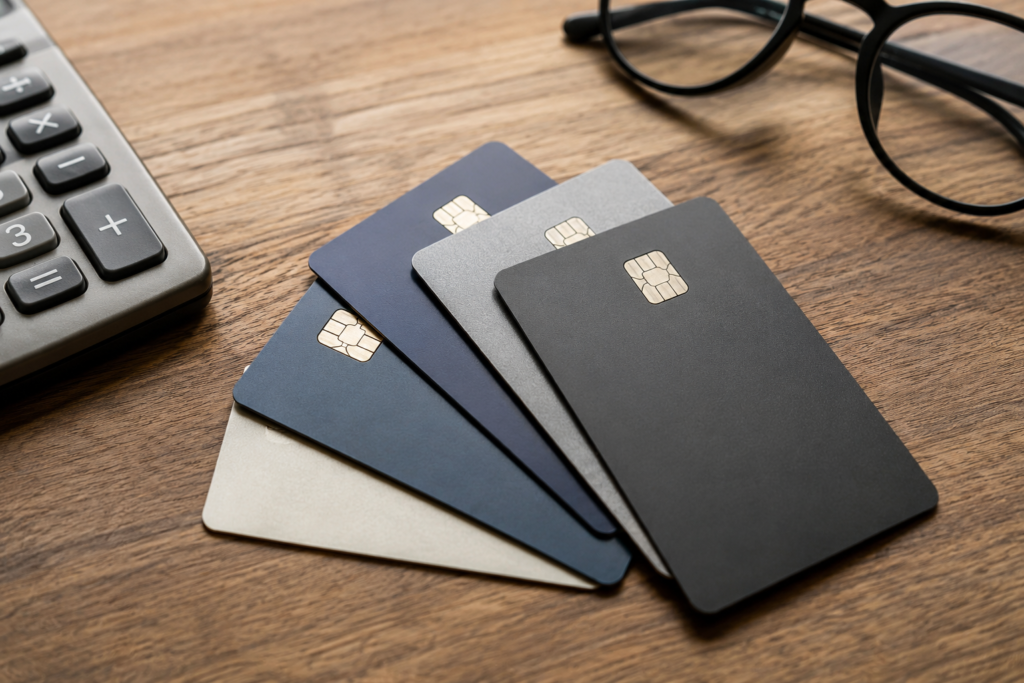
Best No-Annual-Fee Credit Cards, Category by Category
Every household spends differently. The right card depends on where your money actually goes, not on which card has the flashiest advertising.
Best Flat Rate Cash Back: Citi Double Cash Card
The Citi Double Cash Card has built its reputation on a simple structure. You earn cash back when you make a purchase, and you earn additional cash back when you pay for that purchase.
This design rewards people who pay their bill regularly. It also removes the need to track rotating categories or activate anything each quarter.
The trade-off is flexibility. You won’t find elevated rewards for dining or travel here. Instead, you get one dependable rate across nearly every purchase.
Best for Simplicity: Wells Fargo Active Cash Card
The Wells Fargo Active Cash Card takes a similar flat-rate approach. It earns unlimited cash rewards on every purchase, with no categories to track.
It also includes cell phone protection when you pay your bill with the card, a benefit not every no-fee card offers. As a result, it appeals to people who want one card for everything.
Best for Rotating Bonus Categories: Chase Freedom Flex
Some readers don’t mind a little extra effort in exchange for a higher ceiling on rewards. The Chase Freedom Flex fits that profile.
It offers elevated cash back in categories that rotate every quarter, such as grocery stores, gas stations, or streaming services. You typically need to activate the category each quarter to earn the higher rate.
Because the categories shift, this card rewards attention. If you’re willing to check the calendar four times a year, the payoff can exceed a flat-rate card during those quarters.
Best for Groceries and Gas: Blue Cash Everyday from American Express
Grocery bills and gas fill-ups are two of the most consistent expenses for U.S. households. The Blue Cash Everyday Card from American Express targets exactly those categories.
It offers bonus cash back at U.S. supermarkets, U.S. gas stations, and select online retail purchases, up to a set spending cap in each category. Spending above that cap earns the base rate instead.
Because Amex isn’t accepted everywhere merchants accept Visa or Mastercard, it’s worth keeping a backup card for smaller retailers.
Best No-Fee Travel Card: Capital One VentureOne Rewards
Frequent travelers often gravitate toward premium travel cards. However, occasional travelers can still earn solid value without paying an annual fee.
The Capital One VentureOne Rewards Credit Card earns miles on every purchase at a flat rate, with bonus miles on hotels and rental cars booked through the issuer’s travel portal. Miles can transfer to a number of airline and hotel partners.
Meanwhile, it typically skips foreign transaction fees, which matters if you spend money outside the United States.
Best for Building or Rebuilding Credit: Discover It Secured Credit Card
Not every reader qualifies for an unsecured rewards card. If your credit history is thin, damaged, or nonexistent, a secured card is often the more realistic starting point.
The Discover it Secured Credit Card requires a refundable security deposit that typically becomes your credit limit. Unlike many secured cards, it still earns cash back on purchases.
Discover also reviews secured accounts periodically to determine eligibility for an upgrade to an unsecured card and the return of the deposit.
Finance Beacon Tip: A secured card only builds credit if the issuer reports your activity to the three major credit bureaus. Confirm that before you apply.
No Annual Fee vs. Annual Fee Cards: What You Give Up
A fee-free card isn’t automatically the better deal. It depends on how much you spend and which perks you’d actually use.
Perks You Typically Lose
- Airport lounge access, which premium travel cards often include.
- Statement credits for travel, streaming, or dining, common on cards with fees above $250.
- Higher earning rates in categories like travel booked directly with airlines or hotels.
- Elite hotel or rental car status, sometimes granted automatically.
When Paying a Fee Still Makes Sense
If you travel often, an annual fee can pay for itself through lounge access or travel credits alone. In contrast, occasional travelers rarely recoup that cost.
Run the math before applying. Add up the dollar value of the perks you’d realistically use, then compare that total against the fee.
How to Choose the Right No Annual Fee Card for You
Match the Card to Your Spending
Start with your last three months of statements. Identify your two or three largest spending categories.

- TAKE CONTROL OF YOUR MONEY & ACHIEVE YOUR FINANCIAL GOALS – Are you looking for the best monthly budget planner to keep …
- FIND THE BEST WAY TO ACHIEVE YOUR FINANCIAL GOALS – This budget organizer is not just a tool; it’s a framework for achie…
- EASILY CONTROL YOUR SPENDING, DEBTS & SAVINGS – This money planner is undated and covers 12 months. Every month features…
Groceries and gas point toward the Blue Cash Everyday Card. General spending across many categories points toward a flat-rate card like Citi Double Cash or Wells Fargo Active Cash. Frequent travel, even domestic, points toward the Capital One VentureOne.
Check the APR If You Might Carry a Balance
Rewards only add value if you avoid interest charges. Otherwise, the interest you pay can quickly erase the cash back you earned.
According to Bankrate, the national average interest rate for credit cards stood at 19.58 percent as of early March 2026, after declining from a record high in August 2024. If you expect to carry a balance, prioritize a low introductory APR offer over a slightly higher rewards rate.
Look at Foreign Transaction Fees.
Many no-fee cashback cards still charge a foreign transaction fee, often around 3 percent. This detail rarely appears in headlines, so check it directly on the issuer’s rates and fees page.
If you travel internationally, a card without this fee, such as the Capital One VentureOne, can save meaningfully more than a slightly higher rewards rate elsewhere.
Understanding APR, Grace Periods, and Interest Charges
Your card’s Annual Percentage Rate, or APR, represents the yearly cost of carrying a balance. Most no-fee cash back cards carry a variable APR, meaning it moves with broader interest rate changes.

A grace period is the window between your statement date and your payment due date. Pay the full statement balance within that window, and you typically avoid interest entirely.
Carry any balance past the due date, however, and most issuers begin charging interest on new purchases immediately, with no grace period until you pay in full again.
Finance Beacon Tip: If a 0% introductory APR offer applies, mark the exact expiration date on your calendar. Interest applies to any remaining balance once that window closes.
How No Annual Fee Cards Affect Your Credit Score
A no-fee card affects your credit file the same way any other card does. Two factors matter most.
Credit Utilization
Credit utilization compares your card balances to your credit limits. Financial educators commonly recommend keeping utilization below 30 percent, and lower is generally better.
Because no-fee cards carry no cost to keep open, they’re useful for maintaining unused credit limits, which can help lower your overall utilization ratio.
Length of Credit History
The average age of your accounts factors into your credit score as well. Closing your oldest card, even one you rarely use, can shorten your credit history and reduce your score.
For this reason, a no-fee card you opened years ago is often worth keeping open, provided it doesn’t tempt you into unnecessary spending.
Common Mistakes to Avoid With No Annual Fee Cards
- Chasing rotating bonus categories without tracking spending caps, which can limit how much bonus cash back you actually earn.
- Ignoring foreign transaction fees before an international trip.
- Letting a rewards card sit unused for so long that the issuer closes it for inactivity.
- Assuming every no-fee card reports to all three credit bureaus without confirming it first.
- Applying for several cards in a short window, which can temporarily lower your credit score through multiple hard inquiries.
Frequently Asked Questions
Are no annual fee credit cards worth it?
For most everyday spenders, yes. You avoid a guaranteed yearly cost while still earning cash back or travel rewards on purchases you’d make anyway.
Do no annual fee cards have lower credit limits?
Not necessarily. Your credit limit depends primarily on your income, existing debt, and credit history, not on whether the card charges an annual fee.
Can a no-annual-fee card still charge other fees?
Yes. Late payment fees, foreign transaction fees, balance transfer fees, and cash advance fees can all still apply. Please review the card’s rates and fees table before applying.
Is it better to have one no-fee card or several?
It depends on your spending. Pairing a flat-rate card with a category-based card can maximize rewards, but only if you can track both accounts without missing payments.
Will applying for a no-annual-fee card hurt my credit score?
Most applications trigger a hard inquiry, which can lower your score by a few points temporarily. The effect is usually small and short-lived if you continue managing credit responsibly.
Do secured cards with no annual fee build credit as effectively as unsecured cards?
Yes, provided the issuer reports your payment history to the credit bureaus. The security deposit affects your credit limit, not how the account is scored.
Final Thoughts
The best no-annual-fee credit card isn’t the one with the biggest advertising budget. It’s the one that matches how you actually spend money.
Start by reviewing your recent statements. Then compare two or three cards from this guide against your top spending categories.

- STYLISHLY SMALL, SLIM & DISCREET: Measuring just 3 1/8″ x 4 7/16″, our RFID front pocket wallet is designed to be super …
- SURPRISINGLY SPACIOUS: Though slim, it features 8 slots to easily organize your essentials. Comfortably holds your drive…
- ADVANCED RFID BLOCKING: Our slim wallets for men and women are outfitted with advanced RFID SECURE Technology. They bloc…
Whichever card you choose, pay the statement balance in full whenever possible. That single habit determines whether a no-fee card stays exactly that: free.