In This Article
A grocery bill that once fit comfortably within your budget may suddenly take more of your paycheck. Then you delay a planned car purchase, a business freezes hiring, or you start worrying about your job security. Understanding what causes a recession can help you make sense of these changes before they reach your household.
A recession is more than one bad stock market day or a temporary dip in sales. It’s a broad, lasting decline in economic activity that can spread through jobs, income, production, and spending. The National Bureau of Economic Research examines jobs, personal income, production, consumption, and sales to determine whether economic activity is weakening.
The pressures behind a recession can build when high interest rates restrain borrowing, persistent inflation squeezes household budgets, and falling consumer spending slows economic growth. These forces can push an economy into recession, while external shocks such as energy disruptions or pandemics can deepen the strain. This guide explains the warning signs, how downturns affect your finances, and practical steps you can take to prepare.
What Is a Recession, and How Do Economists Identify One?
A recession is a broad decline in economic activity that affects multiple parts of the economy. Businesses may sell less, employers may cut jobs, household incomes may weaken, and factories may reduce production. In the United States, the National Bureau of Economic Research defines a recession as a significant decline in economic activity spread across the economy and lasting more than a few months.
The key question is whether the weakness is deep, widespread, and persistent. Most recessions are far less severe than the Great Depression.
Recession vs. Economic Slowdown: What’s the Difference?
An economic slowdown means the economy is still growing, but at a weaker pace. For example, economic growth of 1% instead of 4% may signal reduced momentum, while economic activity continues to expand. A slowdown doesn’t automatically become a recession.
A recession occurs when economic activity falls across several important areas. Output, employment, personal income, and business or consumer sales may all decline. The weakness must also last long enough to show a sustained change, rather than a temporary pause.
GDP, or gross domestic product, measures the value of goods and services produced in the economy. It captures overall economic output, but GDP can send a mixed signal. One quarter may show weak growth while employment and household income continue to rise. As a result, one measure alone cannot tell you whether the economy is in recession.
Why GDP Alone Doesn’t Set the Recession Date
The familiar rule about two consecutive quarters of falling GDP is a rough shortcut called a technical recession. It isn’t the NBER’s complete test. The Bureau of Economic Analysis explains its recession guidance, while the NBER’s business cycle dating FAQ describes how economists assess the broader economy.
The NBER’s Business Cycle Dating Committee reviews monthly information on:
- Payroll employment and the unemployment rate
- Real personal income minus government transfer payments
- Industrial production
- Inflation-adjusted manufacturing and trade sales
- Household employment levels
- Consumer spending
These figures help economists judge depth, diffusion, and duration. In plain English, they show how sharply economic activity has fallen, how many parts of the economy are affected, and how long the weakness has lasted. Payroll data and the unemployment rate can also move differently from household employment levels.
The committee often announces recession dates after a downturn has already begun. Economic data takes time to collect, revise, and compare across sources. That delay is intentional because the committee needs enough evidence to identify a lasting decline within the business cycle. Announcements may therefore come after the turning point in the business cycle is clear.
What Causes a Recession? The Forces That Can Slow the Economy
A recession rarely starts with one isolated event. Several connected recession causes can weaken economic activity at once. During the business cycle, these pressures can turn a normal slowdown into a broader contraction.
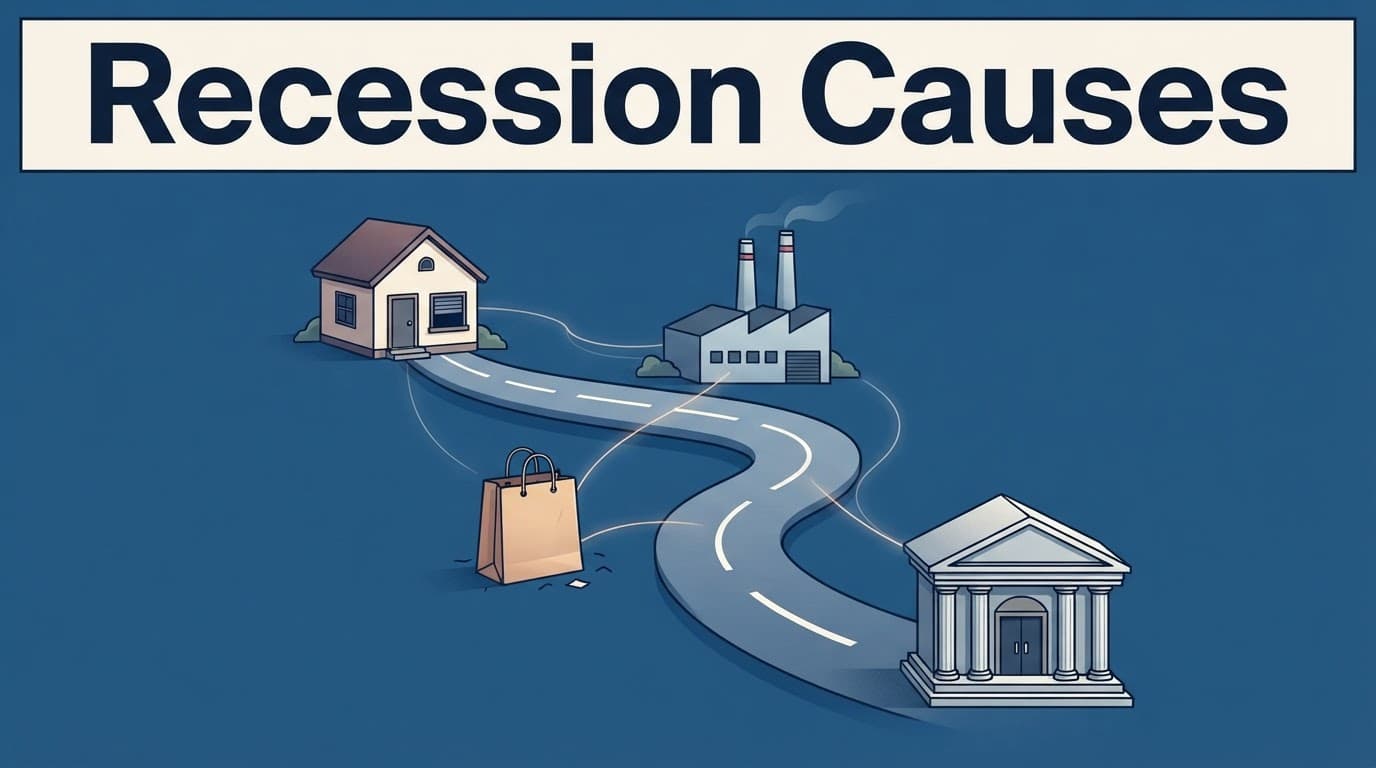
How High Interest Rates Show What Causes a Recession
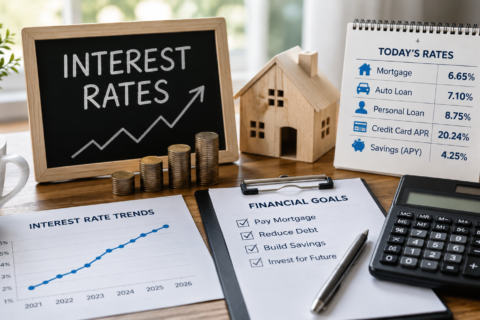
When the Federal Reserve raises its benchmark rate, borrowing usually becomes pricier across the economy. Higher interest rates can raise costs for mortgages, auto loans, credit cards, and business financing.
A larger monthly payment may cause a household to delay buying a home, replacing a vehicle, or financing a major expense. Businesses may also postpone equipment, expansion, software purchases, or hiring when projected returns no longer justify the added cost.
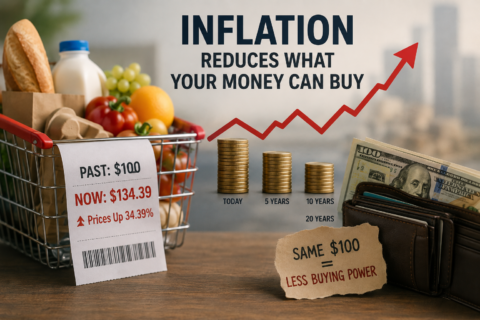
Persistent inflation creates another strain. When prices rise faster than income, each dollar buys less. Inflation reduces purchasing power, so households spend more on necessities while cutting optional purchases.
Central banks often use monetary policy to raise rates and cool persistent price increases. That can weaken demand further when families and companies already feel stretched. The goal is to control inflation without causing an excessive contraction in economic growth.
Still, high interest rates don’t automatically cause a recession. A strong labor market, healthy household finances, or rising productivity may help the economy absorb them. The risk grows when high rates meet heavy debt, weak confidence, or other existing problems.
How Falling Consumer Spending and Business Investment Feed Each Other
Consumer spending supports business sales and revenue. When consumer confidence falls, households may reduce travel, dining out, entertainment, durable goods, and other nonessential purchases. A family might keep an older car, postpone a kitchen renovation, or wait before replacing a laptop during an economic downturn.
That restraint affects companies quickly. Lower demand can reduce revenue, leaving less money for equipment, new locations, technology, and additional employees. Businesses may freeze hiring or slow investment while they wait to see whether demand improves.
The cycle can then turn downward. Weaker demand reduces business income, which can lead to fewer jobs or slower wage growth. Those changes give households another reason to cut spending. A modest pullback can spread when many consumers and companies make similar decisions at the same time.
How Tight Credit, Financial Crises, and External Shocks Spread
Banks and other lenders often tighten approval standards when economic risks rise. Credit card costs may increase, small businesses may struggle to obtain working capital, and companies may cancel projects because financing is unavailable or too expensive. A sudden reduction in credit availability is often called a credit crunch.
A financial crisis can make the problem worse by interrupting normal lending. During the 2007 to 2009 Great Recession, falling home values damaged household wealth, while mortgage-related losses strained financial institutions. An asset bubble in property or financial markets can make a later correction more damaging, although not every recession follows one. The Federal Reserve’s account of the Great Recession describes how weaker construction, lower consumer spending, reduced lending, and limited business financing spread the damage.
Fiscal policy can also cushion demand through government spending and taxes or amplify weakness when support is reduced too quickly.
External shocks can work differently. Energy disruptions, wars, pandemics, supply-chain failures, and natural disasters are all external shocks that may first disrupt production or raise costs. A short disruption may fade quickly. However, if it causes widespread job losses, lower income, reduced economic output, and tighter credit, the shock can help turn a temporary setback into a recession.
What Causes a Recession to Affect Jobs and Wages?
A recession reaches people through work, income, prices, and business decisions. These effects reflect changes in economic activity and rarely arrive all at once. Hiring may slow before layoffs begin, while some industries continue to grow as others contract.
What Happens to Employment and Household Income?
Employment often weakens in stages. Companies may post fewer openings, stop replacing workers who leave, reduce overtime, or cut hours before eliminating jobs. The unemployment rate is a broad measure that may rise after payrolls, job openings, hours, and wages have already weakened.
Some employees may face furloughs, temporary work, or smaller bonuses. Losing a job creates an immediate income gap, but earning the same paycheck while working fewer hours also reduces take-home pay.
In a recession, wage growth can slow as employers face fewer open positions. Yet a raise does not always mean greater financial security. If pay rises by 2% while household costs rise by 4%, your real income, or income after adjusting for inflation, has fallen.
The NBER gives significant weight to nonfarm payroll employment and real personal income when it evaluates whether the economy has entered a recession. Real personal income less government transfer payments shows how much people can earn after accounting for price changes, without counting benefits that may temporarily support their spending.
The labor market also changes at different speeds. Construction, manufacturing, retail, hospitality, technology, and professional services may respond differently to weaker demand. Employment levels can remain steady at a hospital, utility company, or grocery store while a homebuilder or restaurant chain cuts staff.
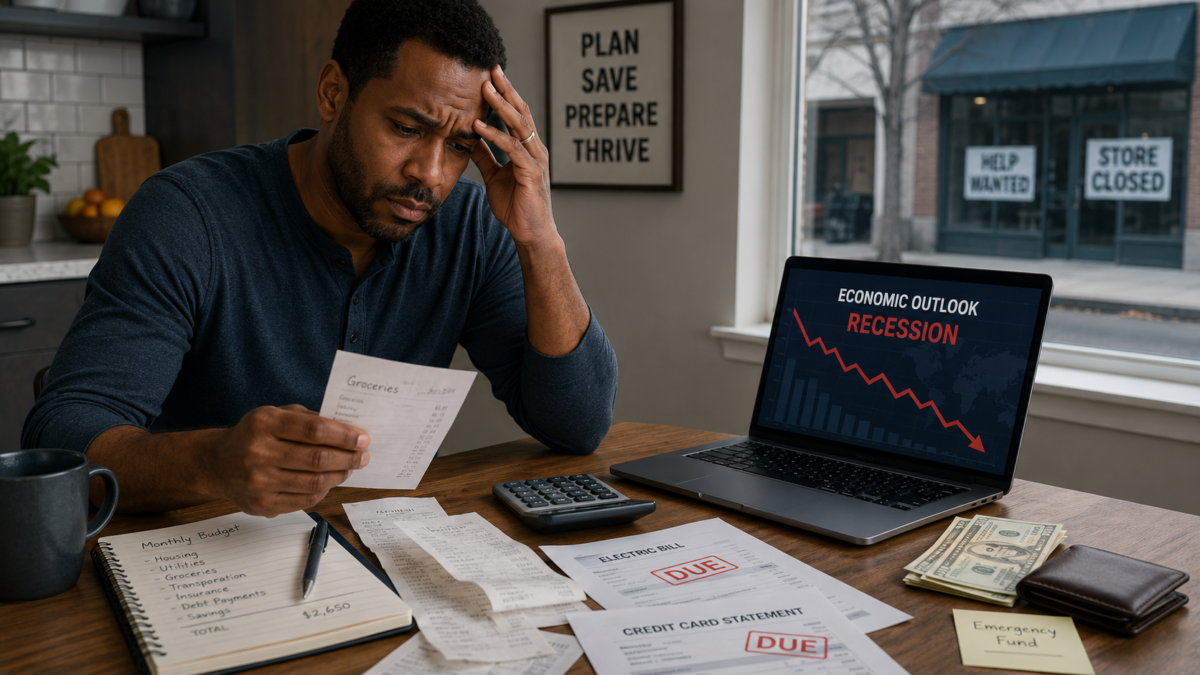
Lower income forces difficult choices. Rent or mortgage payments usually remain due, as do insurance premiums, food bills, transportation expenses, and debt payments. Lower consumer confidence can make households more cautious about purchases and income security. Families may delay medical care, rely on savings, use credit cards, or fall behind when reduced earnings last for several months.
Why Businesses May Cut Hiring, Spending, and Expansion
Businesses feel a recession when consumer spending declines. Falling sales reduce revenue, while rent, insurance, payroll commitments, and loan payments may stay nearly unchanged. Higher interest rates add pressure by making working capital, equipment loans, and expansion projects pricier.
Weaker sales can reduce economic output across affected industries. Consider a business with $100,000 in sales and $80,000 in costs. Its profit is $20,000. If sales fall 10% to $90,000 while costs remain $80,000, profit drops to $10,000, a 50% decline. Fixed costs can make a small revenue loss produce a much larger profit problem.
Managers may respond by freezing hiring, reducing hours, delaying software or equipment purchases, and postponing new locations. They may also cut inventory after products sit unsold, which can lead to discounts, production cuts, or supplier problems. Smaller firms often feel the strain sooner because they have fewer cash reserves and less access to affordable credit.

A recession does not affect every worker or company equally. Income stability depends on industry, job type, debt, savings, and local demand.
How Recessions Affect Borrowing, Investments, and Household Finances
A recession can reach your finances through several channels at once. During an economic downturn, credit may become harder to obtain, investments may lose value, and everyday bills can take up more income when work or wages become less secure.
Borrowing Can Become More Expensive or Harder to Get
During a recession, credit-card APRs, personal loans, and many auto loans can strain a budget. Variable interest rates can also raise payments on adjustable-rate mortgages, home equity lines of credit, and other debt as terms reset.
A rate cut by the Federal Reserve doesn’t instantly lower every consumer loan rate. Fixed-rate loans usually keep their existing terms. Lenders set rates based on funding costs, market conditions, credit risk, and competition. Central banks may influence some variable rates, but the timing and size of any decline vary.
Lenders may also become more cautious during uncertain periods. They might require stronger credit, steadier income records, larger down payments, or lower debt levels before approving an application. The Federal Reserve tracks consumer credit changes through its Consumer Credit Report. Its financial stability reporting also describes periods when banks tighten lending standards.
Review variable-rate debt before a recession puts pressure on your income. Avoid taking on a payment that only works when your hours, salary, or job remain unchanged.
Stocks, Retirement Accounts, and Home Values May Decline
A recession can reduce expectations for corporate earnings, causing stock prices to move sharply. Market volatility may affect industries and assets differently. Some companies face steep losses, while others have steadier demand.
A bear market can occur alongside a recession, but the two conditions aren’t identical. A lower 401(k) or IRA balance can make retirement feel less secure, but the decline is a paper loss until you sell. Selling during panic can lock in losses and leave you with fewer assets if prices later recover.
Your account’s result also depends on its mix of stocks, bonds, target-date funds, and cash. Your investment strategy should reflect your timeline, risk tolerance, income, and financial needs.
Home values may weaken too, especially when unemployment rises or lenders restrict credit. Falling prices reduce home equity, which is the portion of the property you own after subtracting mortgage debt. The Federal Reserve’s history of the Great Recession documents how falling home prices damaged household wealth.
This article provides general financial education, not personalized investment advice.

Why Everyday Budgets Feel Tighter During a Recession
Reduced hours, layoffs, slower wage growth, or lost business income can shrink cash flow. Inflation may also push up essential bills while income stays flat. Missed payments become more likely, savings may run down, and families face harder choices between essential and discretionary spending.
Start with a must-pay list:
- Housing, including rent or mortgage payments.
- Utilities and basic household services.
- Food and necessary household supplies.
- Health, auto, and other required insurance.
- Transportation needed for work and essential errands.
- Minimum payments on debts.
After covering those bills, review optional subscriptions, travel, dining, and large purchases. Finance Beacon’s budgeting guide for beginners can help you organize monthly cash flow, while its emergency fund guide explains how savings can help absorb an income shock. A broader, complete personal finance guide can help you review debt, savings, credit, and spending together.
How to Prepare for a Recession Before Your Finances Feel the Pressure
Preparing for a recession is less about predicting its start and more about improving your financial flexibility. A clear view of your cash flow, debt, income, and benefits can give you more choices during an economic downturn.
Strengthen Your Household’s Cash Flow and Emergency Savings
Start by calculating your essential monthly costs, including housing, utilities, food, transportation, insurance, health care, and minimum debt payments. Revisit that total as inflation changes your necessary expenses.
Then review optional spending and pause subscriptions, memberships, travel, or services you rarely use. Build an emergency fund gradually with each paycheck, even if you can only set aside a small amount.
Liquid cash can help cover rent after a job loss, pay an unexpected medical or car repair bill, or manage a temporary income gap without forcing you to use a credit card.
When possible, pay down high-interest revolving debt, especially credit cards, and review variable-rate loans as interest rates change. Check automatic payments, insurance coverage, and where you keep emergency savings.
Deposit accounts at an FDIC-insured bank are covered up to $250,000 per depositor, per insured bank, and per ownership category. Use the FDIC’s deposit insurance estimator if your balances approach that limit.
Protect Your Income and Prepare for Work Disruptions
Update your resume before you need it. Add recent accomplishments, measurable results, certifications, and skills that employers value.
Reconnect with professional contacts, and consider learning a useful skill while your schedule and income remain stable.
Review your workplace benefits, too. Check your health insurance costs, short-term and long-term disability coverage, paid leave, and rules for unpaid leave or a layoff.
Find out how you would continue health coverage if your employment ended. This preparation doesn’t mean a layoff is certain.
A current resume and clear benefits information can help you make better decisions even when the economy stays healthy.
Recession Planning for Small Businesses
Business owners should test cash flow under lower sales and higher costs. Review how long available cash could cover payroll, rent, insurance, loan payments, and other fixed commitments.
Reduce unnecessary recurring costs, avoid relying too heavily on short-term credit, and review inventory that may sit unsold. Check if any one supplier, customer, or sales channel accounts for too much of your business.
You may also need plans for slower hiring, reduced hours, delayed expansion, or smaller orders. A simple written plan helps you respond deliberately instead of making rushed decisions during a weak sales period.
Key Takeaways and a Simple Recession-Preparation Checklist
- Recessions usually result from several connected pressures, not one event.
- Liquidity matters because income can fall while essential bills continue.
- High-interest debt and variable-rate loans can reduce financial flexibility.
- Job preparation helps whether or not a recession arrives.
- Low unemployment does not rule out a recession.
- A technical recession is a useful shorthand, but it doesn’t replace a broader assessment of the economy.
Use this checklist to prepare before a recession affects your finances:
- Calculate your essential monthly expenses.
- Review debt rates, adjustment dates, and minimum payments.
- Build or refill emergency savings gradually.
- Update your resume and document recent accomplishments.
- Check insurance, workplace benefits, and FDIC deposit protections.
- Review investment risk against your time horizon and financial needs.
- List the bills that must be paid first if income drops.
Frequently Asked Questions
What are the main causes of a recession?
Recessions usually result from several connected pressures, such as high interest rates, falling consumer spending, tighter credit, weaker business investment, or financial crises. External shocks, including pandemics, wars, energy disruptions, and natural disasters, can also weaken economic activity.
Does two quarters of falling GDP always mean a recession?
No. Two consecutive quarters of declining GDP are commonly called a technical recession, but the National Bureau of Economic Research evaluates broader conditions. Its assessment also considers employment, personal income, industrial production, household spending, and sales.
How does a recession affect jobs and income?
Hiring may slow, work hours may decline, wage growth may weaken, and layoffs may increase as businesses respond to lower demand. The effects vary by industry, job type, location, and the financial strength of each employer.
Can a recession affect my savings and investments?
Yes. Stock prices, retirement account balances, and home values may decline when investors expect weaker earnings or employment. A lower investment balance is generally a paper loss until you sell, so investment decisions should reflect your time horizon, risk tolerance, and financial needs.
How can I prepare for a possible recession?
Review your essential expenses, build emergency savings gradually, manage high-interest debt, and check your insurance and workplace benefits. Updating your resume and preparing a plan for reduced income can also give you more flexibility if work or business conditions change.
Conclusion
A recession is a broad and lasting decline in economic activity, not simply a bad stock market day or two quarters of weaker GDP. Two weak GDP quarters can indicate a technical recession, but they don’t alone determine the official recession date. Common pressures include restrictive monetary policy, falling demand, tighter credit, weaker investment, and a financial crisis.
You can’t control the economic cycle, but you can improve your position before a grocery bill or job change strains your finances. Maintain a realistic budget, build cash reserves, and manage expensive debt. Avoid panic-driven investment decisions when market volatility rises, and think carefully before major purchases. Preparation can’t prevent setbacks in a recession, but it can give you more time and choices if income or assets fall.
A steady financial plan can strengthen your resilience as economic growth changes.