

In This Article
Knowing how to negotiate medical bills and set up a payment plan turns one of the most stressful financial experiences into a manageable one. Medical billing is not a fixed price presented by a person with authority. It is a set of charges that can be questioned, corrected, and adjusted, and hospitals routinely accept less than the first figure they send.
This guide sets out the sequence that works: check the bill for errors before paying anything, request the itemized version, compare it against your insurance explanation, and then negotiate the amount and the terms.

Do Not Pay Immediately
Step 1: Do Not Pay Immediately
The single most important piece of advice is the least intuitive. A medical bill is not like a restaurant check. It is frequently wrong, and paying it promptly signals acceptance of the amount.
Before paying anything, take three actions: ask for an itemized bill, request that the account be placed on hold while you review it, and confirm that your insurer has finished processing the claim. Hospitals will generally pause collection activity while a review is in progress, provided you ask.
This matters because many bills are issued before insurance has adjudicated or in parallel with it. Paying one and then discovering the insurer also paid produces a refund process that takes far longer than the review would have.
Step 2: Request the Itemized Bill
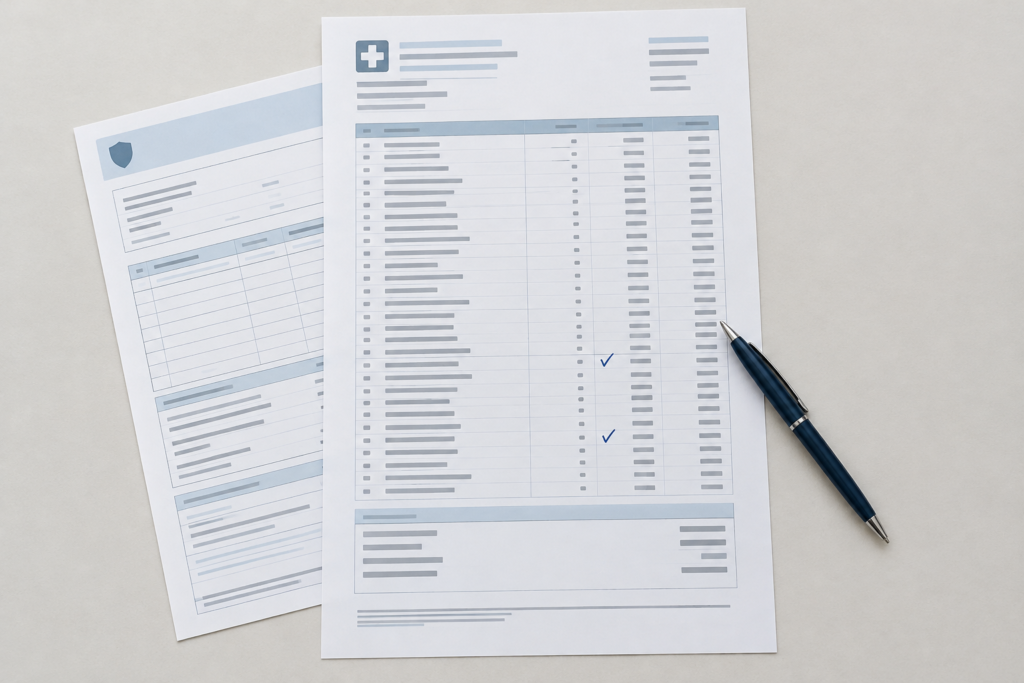
Ask for the fully itemized statement, not the summary. The summary lists a few categories with large totals. The itemized version lists every individual charge, every code, every medication, and every supply, with quantities and unit prices.
Errors are common and often large:
- Charges for services you did not receive.
- Items billed twice, particularly supplies and medications.
- Wrong billing codes, which can produce a much higher charge than the procedure warrants.
- Charges for a longer stay or a higher level of care than you actually had.
- Separate charges for things bundled into a single procedure, known as unbundling.
You are entitled to this level of detail. Ask in writing if a phone request is deflected.
Requesting the Itemized Bill
Step 3: Compare Against Your Insurance Explanation of Benefits
Your insurer issues an explanation of benefits for each claim, showing what was billed, what the insurer allowed, what it paid, and what you are responsible for. That last figure is the only amount you should owe, assuming the provider is in-network.
If the provider’s bill is higher than your responsibility on the explanation of benefits, that gap is the first thing to dispute. It is often a processing error rather than a genuine charge. Understanding your plan’s cost-sharing structure makes this comparison far easier, and comparing health insurance plans and total costs covers it. Relevance: the explanation of benefits only makes sense against the plan terms, which the linked article explains
How to Negotiate Medical Bills: The Four Levers
In the United States, the Consumer Financial Protection Bureau publishes guidance on medical debt and the protections that apply to it.
Lever 1: Correct the Errors First
Before negotiating anything, get the errors removed. A bill reduced from $4,000 to $2,400 because three incorrect charges were deleted is a negotiation you have already won without asking for a discount. Always correct the bill before discussing the price.
Lever 2: Ask About Financial Assistance
Many hospitals, particularly nonprofit institutions, operate financial assistance or charity care programs that reduce or eliminate bills for patients below certain income thresholds. These are frequently not mentioned unless you ask.
Ask directly for the financial assistance policy and the application. Eligibility varies by institution and by state, so ask the hospital rather than relying on a general rule.
Lever 3: Ask for the Self-Pay or Prompt-Pay Discount
A discount for paying in cash is a standard feature of hospital billing. Ask what the self-pay rate is and whether there is a further reduction for payment within a short window. It is common for the figure to fall meaningfully simply because you asked.
Lever 4: Compare Against What Insurers Pay
An uninsured patient is often billed at the list price, while an insurer pays a negotiated rate that is considerably lower. Pointing out that you are being charged more than an insurer would pay for the same service is a reasonable and often effective argument.
Where to check your rights on medical billing: In the United States, the Consumer Financial Protection Bureau publishes guidance on medical debt and consumer protections at https://www.consumerfinance.gov/consumer-tools/medical-debt/. Link the anchor text “the Consumer Financial Protection Bureau publishes guidance on medical debt” to that URL.
How to Set Up a Payment Plan
Nearly every hospital will accept an installment arrangement, and most prefer it to sending an account to collections. The objective is a payment you can sustain without defaulting.
- Ask to speak to the billing department’s financial counselor rather than the general call center. They have more discretion.
- State a monthly figure you can genuinely pay, calculated from your budget rather than from their suggested amount.
- Ask whether the arrangement is interest-free. Many hospital plans are; confirm it in writing.
- Request the agreement in writing, including the amount, the schedule, and a statement that no collection activity will occur while you comply.
- Set up autopay for the agreed amount so the arrangement cannot lapse through an oversight.
If the first figure they propose is beyond you, say so plainly and offer a lower one. The alternative for them is often a collections process with recovery uncertainty, which makes a modest but reliable payment attractive.

Agreeing a Payment Plan You Can Sustain
What to Do If the Bill Reaches Collections
Once an account goes to a collection agency, the negotiation changes. You are no longer dealing with the hospital, and the collector may have purchased the debt for less than its face value, which creates room for a reduced settlement.
Some of the charges that appear on unexpected bills are governed by the federal rules on surprise medical billing, which are worth checking before you agree to pay anything.
Two cautions. First, ask for written confirmation of any settlement before paying, including that the account will be reported as settled. Second, be aware that medical debt reporting rules have changed in recent years, so verify the current treatment rather than relying on older guidance about how such debts appear on credit reports.
Keeping a Record
Document every call and every promise. Note the date, the person you spoke to, the reference number, and what was agreed. Follow up by requesting the key points in writing.
This is not distrust; it is administration. A billing department handles thousands of accounts, and a verbal agreement can be lost between representatives. A written record is what resolves a dispute later.
Unexpected medical costs are one of the clearest arguments for a reserve, and our guide to how large an emergency fund to hold explains how to size one.
Common Medical Billing Mistakes
- Paying before checking for errors. Paying the summary figure closes the easiest route to correcting the bill.
- Assuming the whole bill is yours. Many are actually charges the insurer will cover once the claim is properly processed.
- Not asking about assistance. Financial assistance and self-pay discounts exist and are rarely advertised.
- Accepting a payment plan you cannot afford. A plan you cannot sustain leads to default, which is worse than a smaller agreed payment.
- Failing to get the arrangement in writing. A verbal agreement is worth far less than a written one when the account is later reviewed.
Conclusion: How to Negotiate Medical Bills Without Being Overwhelmed
How to negotiate medical bills is a sequence rather than a confrontation. Do not pay on receipt; request the itemized bill, compare it with your insurance explanation, correct the errors, and then ask about financial assistance, the self-pay discount, and a payment plan you can actually afford. Get the outcome in writing. Most medical bills contain something that can be corrected, and almost every hospital would rather agree to terms with you than pursue the account. The burden is on you to start the conversation.

