In This Article
A first investing screen can feel like a cockpit, full of charts, account choices, and numbers that move before you can make sense of them. Yet how to invest in stocks for beginners is about a few steady decisions, not guessing tomorrow’s winning ticker.
Start with money you can leave invested, choose an account that matches your goal, buy diversified investments, and automate a manageable contribution. Markets can fall without warning, so this approach focuses on habits and risk, not promises of profit.
Key Takeaways
- Invest only after covering bills, high-interest debt, and emergency savings needs.
- Match your account and investments to when you need the money.
- A broad index fund or ETF can reduce the risk of relying on one company.
- Compare broker fees, features, and registration before opening an account.
- Automatic contributions and a written plan can keep emotions from driving decisions.
How to invest in stocks for beginners: lay the groundwork
A stock is a small ownership share in a company. If the company grows, its share price may rise. Some companies also pay dividends, which are cash distributions to shareholders. Neither outcome is guaranteed, and stock prices can fall.
Before you invest, map out your monthly spending and decide what amount will not disrupt essential bills. Pay down high-interest credit card debt first when possible. A card charging 20% interest can be far pricier than the uncertain return an investment might earn.
Keep a cash cushion before committing substantial money to stocks. Building an emergency fund can prevent a car repair or medical bill from forcing you to sell during a market drop. Many households target three to six months of essential expenses, though income stability and family needs matter.
Match your timeline to your comfort with risk
Your time horizon is the date you expect to need the money. Risk tolerance includes both your financial ability to absorb losses and your emotional response when prices drop.
Retirement money needed 30 years from now can usually weather more market swings than a home down payment needed in two years. Money for that near-term down payment generally shouldn’t sit heavily in stocks.
A portfolio is too risky if a normal market decline would make you panic and sell.
The SEC’s introduction to investing explains that every investment carries risk. Choose an approach you can hold through rough periods, not one that only feels comfortable when markets rise.

Choose an investment account that fits the goal
A taxable brokerage account offers flexible access. You can deposit and withdraw money without retirement-account withdrawal rules, although selling investments at a gain can create taxes.
A Roth IRA uses after-tax contributions. Qualified withdrawals in retirement can be tax-free, subject to IRS rules. A Traditional IRA may offer a current tax deduction for eligible taxpayers, while withdrawals are generally taxed as ordinary income.
Workplace plans such as 401(k)s and 403(b)s let employees save through payroll. If your employer matches contributions, contribute enough to capture the full match when your budget allows. It is part of your compensation.
Keep current limits in perspective
For 2026, the IRA contribution limit is $7,500, while the employee deferral limit for many 401(k) and 403(b) plans is $24,500. Those figures can change, and income rules, workplace plan terms, and catch-up provisions can affect what you can contribute. Check the IRS announcement on 2026 retirement limits before acting.
Stocks can be one part of investing for retirement, especially when your time horizon spans decades. The account determines the tax rules. The fund or stock inside it determines the investment risk.
Open a brokerage account with care
Fidelity, Charles Schwab, Vanguard, E*TRADE, Merrill, Robinhood, SoFi Invest, Betterment, and Wealthfront are familiar names for US investors. They are examples, not automatic recommendations.
Compare the account minimum, available funds, research tools, customer support, mobile experience, automatic-investing options, and withdrawal process. New investors who want human help may value a phone line. Others may prefer low-cost self-directed investing or a robo-advisor.
“Zero commission” stock trading does not mean every choice is free. Review expense ratios on funds, advisory fees, account fees, fund transaction charges, transfer fees, and margin interest.
Confirm the firm before transferring money
Use FINRA BrokerCheck to review whether a broker or firm is registered and to see disclosed employment history, licenses, complaints, and regulatory actions. Investor.gov also offers SEC-backed education for people evaluating investment choices.
SIPC protection can apply when a SIPC-member brokerage fails and customer assets are missing. It does not cover a stock that falls, a bad trade, or a disappointing fund. Market losses remain your responsibility.
How to Invest in Stocks for Beginners With Diversification
The first stock investment doesn’t need to be one company’s shares. A broad-market index mutual fund or exchange-traded fund, commonly called an ETF, can hold pieces of hundreds or thousands of companies in a single purchase.
Total US stock-market funds spread exposure across large, midsize, and smaller companies. S&P 500 index funds focus on 500 large US companies. Both can decline during a broad market sell-off, but they reduce the damage that one failed business can cause.
Buying only one airline stock ties your result to fuel prices, labor costs, travel demand, debt, and that company’s management. A diversified fund still carries market risk, yet it doesn’t hinge on one airline’s next earnings report. The SEC describes diversification as spreading investments to reduce overall risk.

Read the fund details before buying
Look at a fund’s holdings, investment strategy, expense ratio, and tax treatment. An ETF may track a broad index, a narrow industry, international stocks, bonds, or something more complex.
A low expense ratio matters because it is deducted from fund assets year after year. It doesn’t guarantee better performance, but unnecessary costs leave less of your money invested.
How to Invest in Stocks for Beginners: Place Your First Order
Once you have cash in the account, search for the fund or stock, review the ticker symbol carefully, and select the number of shares or dollar amount. Some brokers allow fractional shares, so you can buy part of a high-priced share with a smaller amount.
A market order usually seeks execution right away at the best available price. The final price can differ from the quote you saw, particularly in a fast-moving market. A limit order sets your maximum purchase price or minimum sale price, although it may never execute.
Use recurring contributions to make investing routine
Recurring investments let you put the same dollar amount into a fund each month or each payday. This dollar-cost averaging approach means you buy more shares when prices are lower and fewer when they are higher.
Avoid margin, options, and rapid-fire trades while learning. Borrowed money can magnify losses, options can expire worthless, and frequent trades can create costs and tax consequences.
Build a plan that survives market swings
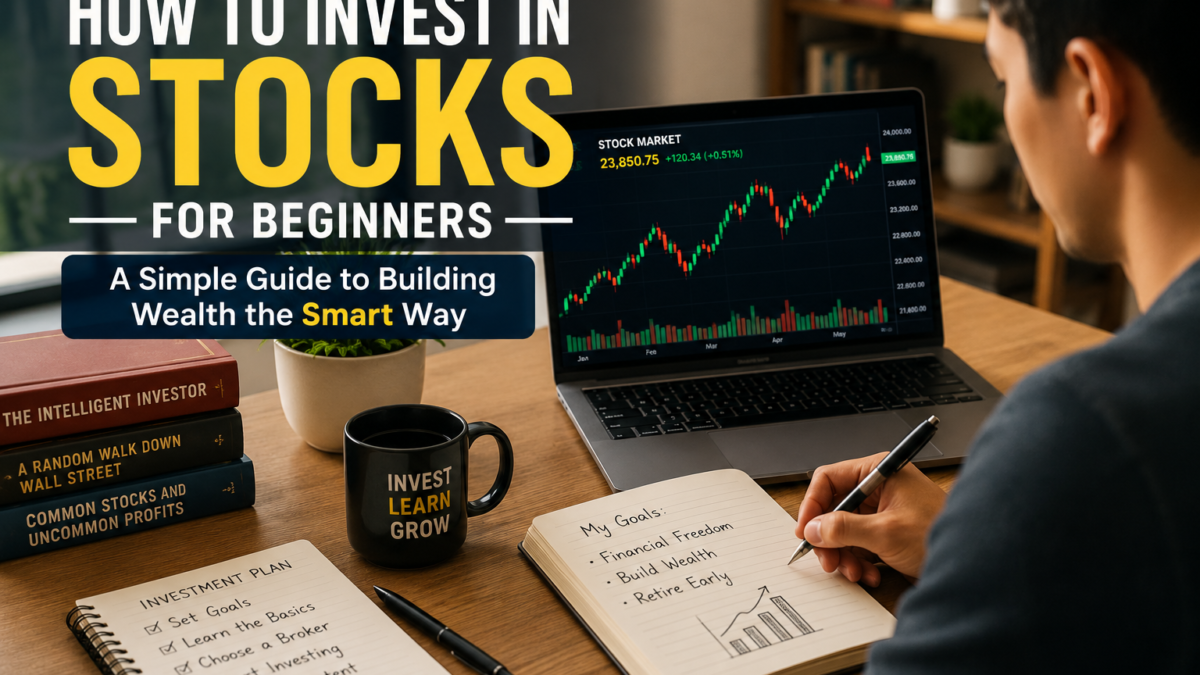
A simple plan answers four questions: what you are saving for, when you need it, how much you will contribute, and what you will buy. Write those answers down before a dramatic headline tests your nerves.
Check your portfolio on a schedule, such as twice a year, instead of refreshing it every afternoon. Rebalance only when your chosen mix has drifted meaningfully. For some investors, that mix includes bonds or cash alongside stock funds as a goal moves closer.
In a taxable account, dividends can be taxable in the year you receive them. Selling an investment can also create a capital gain even if you immediately reinvest the proceeds. Gains on investments held one year or less are generally short-term, while longer-held gains may receive different tax treatment.
Tax-loss harvesting can offset some taxable gains, but wash-sale rules may disallow a loss if you buy a substantially identical investment too soon. Review IRS retirement contribution guidance and current tax rules, or speak with a qualified tax professional.
Avoid mistakes that can interrupt progress
Many beginners stumble before the first trade. The problem is often behavior, not a lack of market predictions.
- Don’t invest rent money, a planned tuition payment, or other cash needed soon.
- Keep high-interest debt and emergency savings in view before increasing stock contributions.
- Treat social media tips as leads for research, not buy signals.
- Don’t place too much money in one company, use borrowed funds, or trade every market move.
- Set automatic contributions and return to your written plan when prices fall.
Past performance does not guarantee future results. Your income, debt, goals, tax situation, and ability to handle losses should guide each decision.
Frequently Asked Questions
Can I start investing with $25?
Yes, if your broker offers fractional shares or recurring dollar-based investments. A small amount will not produce instant results, but it can establish the habit of saving and investing regularly.
Do I need a financial advisor to buy stocks?
No. Many people use a self-directed brokerage account and diversified index funds. An advisor may help when you have complex taxes, a large portfolio, estate-planning needs, or trouble creating a workable plan.
Can I have both a 401(k) and an IRA?
Yes, many workers contribute to both. However, your income, workplace plan participation, and tax filing status can affect IRA deductions or Roth IRA eligibility.
Should I own individual company stocks?
You can, but they add company-specific risk. If you buy individual shares, many investors limit them to a smaller part of a diversified portfolio.
What if the market falls after I invest?
A decline is painful, but it is a normal part of stock investing. Review whether your timeline and investment mix still fit your plan before making any changes.
A steady start beats a perfect market moment
Learning how to invest in stocks for beginners starts with ordinary financial housekeeping. Cover essentials, choose an account for the goal, and favor a diversified, low-cost investment you understand.
Then automate an amount that fits your budget and give time room to work. Starting small and learning consistently beats waiting for a flawless entry point. Investing involves risk, so review fees, taxes, and account rules before you place an order.