
In This Article
Bitcoin for Beginners: How It Works and What You Should Know starts with a simple truth: Bitcoin can feel confusing because its money and technology are tied together. Terms such as blockchain, mining, wallets, and private keys often appear before anyone explains what happens when bitcoin moves from one person to another.
Bitcoin is a technology and a financial asset, not a guaranteed path to wealth. This guide explains payments, storage, costs, risks, and US tax basics, while recognizing that rules differ across countries.
Key Takeaways
Bitcoin runs on a public network that records transactions without a central bank. However, using it safely requires more personal responsibility than using a typical bank account.
A wallet manages the keys that authorize spending. If you control the private key or recovery phrase, you control access to the bitcoin.
Price swings, transaction fees, scams, taxes, and custody mistakes all matter. Start with the mechanics before treating bitcoin as an investment.
Bitcoin for Beginners: How It Works and What You Should Know
Bitcoin is a decentralized digital currency. Its network keeps a shared transaction record called the blockchain, and no single company or government runs it.
“Bitcoin” can mean the network itself, while “bitcoin” refers to the asset people buy and send. BTC is the ticker symbol commonly used on exchanges and price charts. The protocol limits the eventual supply to 21 million bitcoin, and new coins enter circulation through mining rewards that decline over time. Scarcity alone does not guarantee a higher price because demand can change quickly.
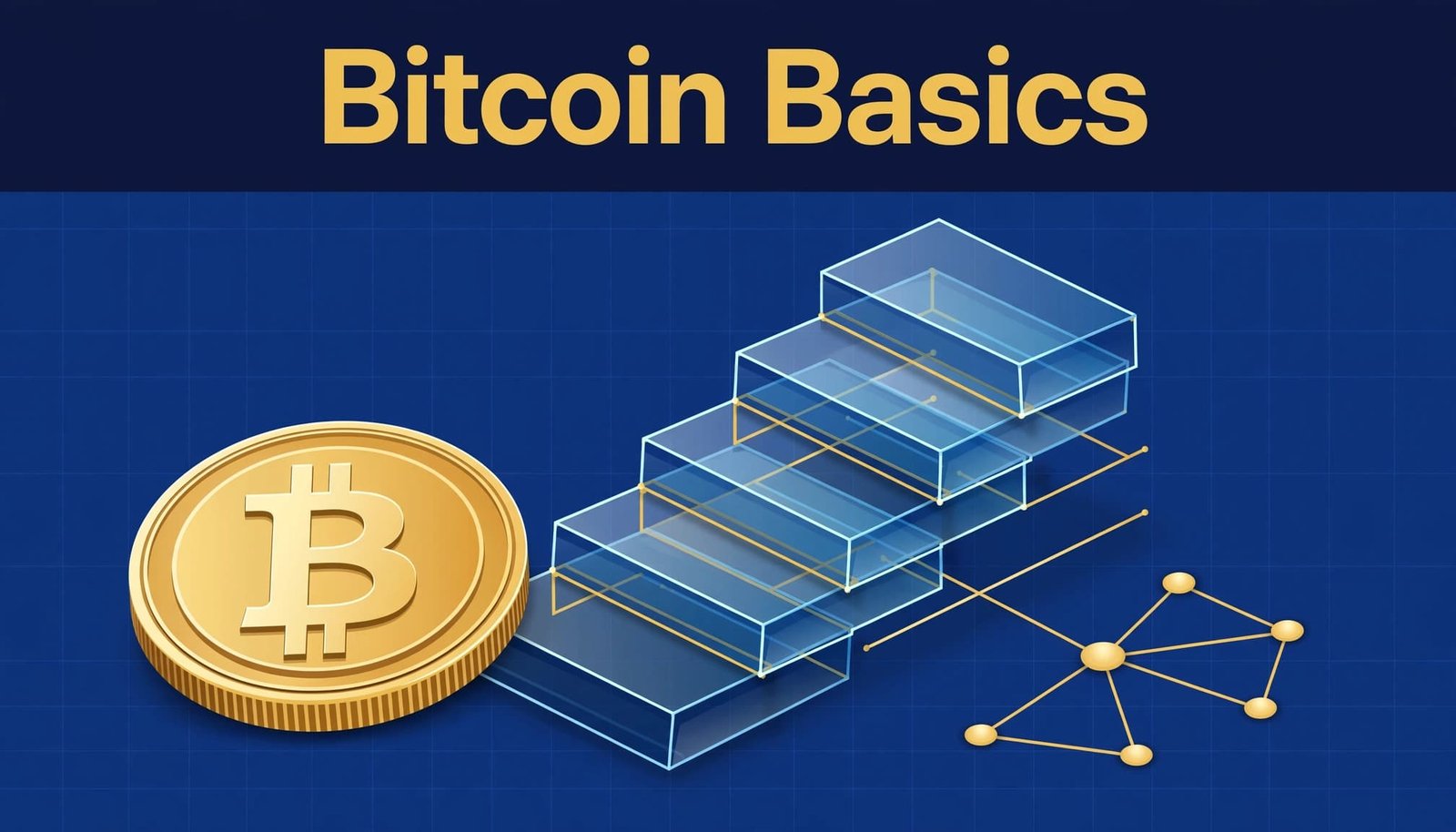
Bitcoin for Beginners: How It Works and What You Should Know begins with the relationship between the asset, the network, and its shared ledger.
How a Bitcoin payment moves from sender to recipient
When you send bitcoin, your wallet creates and signs a transaction with its private key. It then broadcasts that transaction to the peer-to-peer network, where computers validate it against Bitcoin’s rules.
Miners may include the transaction in a new block. After that block joins the blockchain, later blocks add confirmations. Each confirmation makes a reversal harder, but a payment is never instantly final or free of risk. The Bitcoin network explainer provides a helpful overview of this process.
Transaction fees depend mostly on the transaction’s data size and current network demand, not the dollar value sent. Wallets often quote fees in satoshis per virtual byte, written as sat/vB.
What the blockchain, miners, and proof of work actually do
The blockchain is a transaction history copied across thousands of network participants. New blocks link to earlier blocks, which makes changing old records computationally expensive.
Mining uses specialized computers to compete to add valid blocks. This proof-of-work process requires real computing effort, so rewriting history would demand enormous resources. Miners earn a reward made up of newly issued bitcoin and transaction fees.
Mining is competitive and usually requires purpose-built hardware and low-cost electricity. New issuance falls after halving events, which occur roughly every 210,000 blocks. For a broader technical introduction, the European Commission’s blockchain beginner guide explains how distributed records work beyond Bitcoin.
Bitcoin wallets, private keys, and the choice between exchange custody and self-custody
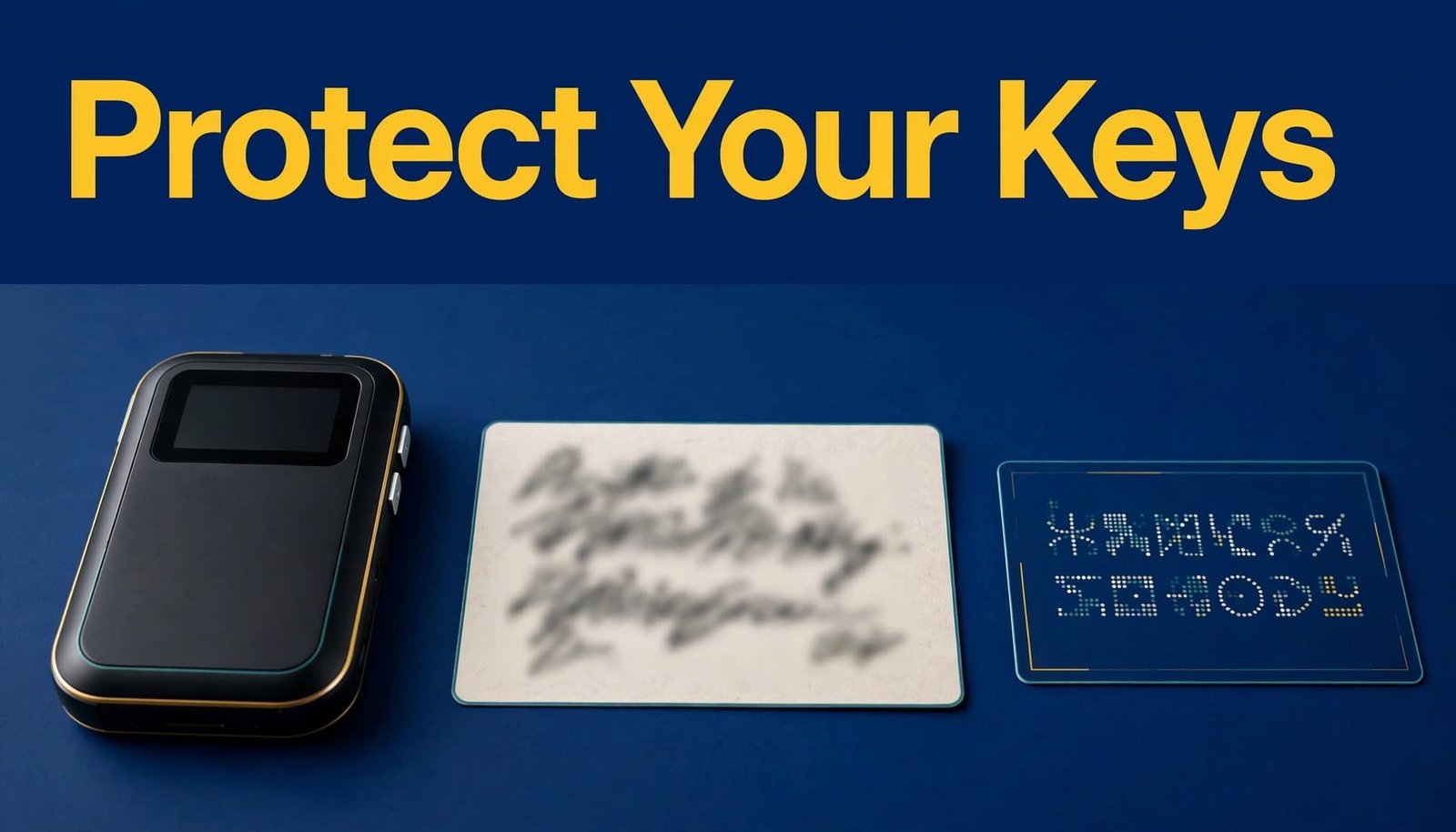
A wallet does not hold coins in a device or app. Instead, it manages the cryptographic keys that prove you can spend bitcoin assigned to a public address.
Your public address can receive bitcoin. Your private key authorizes spending, while a recovery phrase can restore wallet access if a device fails. Anyone with that phrase can usually move the funds, so treat it like the master key to a vault.
How beginners can buy bitcoin without skipping the safety checks
Most beginners use a reputable service available in their country, complete identity verification, compare costs, and make a small purchase. Coinbase, Kraken, Gemini, Cash App, and PayPal are examples to research, not endorsements. Availability, fees, and rules can change.
The market price is the quoted bitcoin price. A spread is the difference between a provider’s buy and sell prices. A trading fee applies to the purchase itself, while a withdrawal fee can apply when you move bitcoin to your own wallet. Review withdrawal limits, account recovery options, custody terms, and insurance statements before depositing money. Wallet basics and private-key context can help clarify what you are responsible for.
Whether bitcoin stays with the provider or moves to self-custody is a tradeoff. Exchange custody is convenient, but accounts can face freezes, hacks, or insolvency. Self-custody offers more control, yet phishing, lost recovery phrases, and sending mistakes can cause permanent loss.
How much bitcoin should a beginner buy?
Bitcoin can fall sharply, sometimes over short periods. Only use money you can afford to lose, and never borrow to buy a volatile asset.
Set a fixed budget before opening an app. First consider high-interest debt, near-term bills, and accessible cash reserves. Building a cushion through personal finance planning fundamentals can prevent a market drop from becoming a household emergency.
The real costs, benefits, and risks of owning bitcoin
Bitcoin can move value across borders at any hour, and self-custody allows direct control without traditional banking hours. Its supply rules are transparent, and anyone can inspect the public ledger.
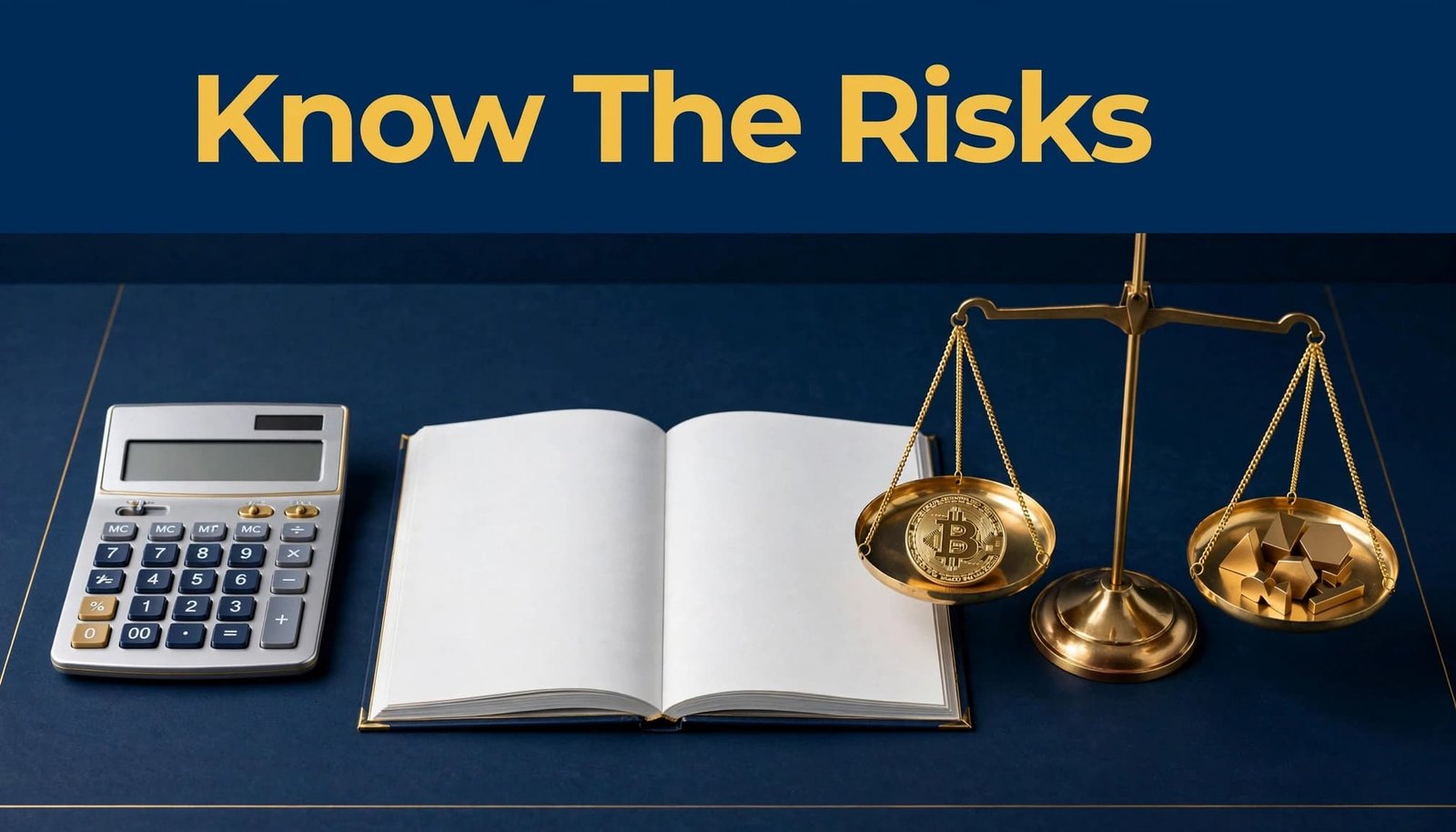
Still, ownership comes with sharp price volatility, changing regulations, variable fees, custody risk, and environmental debates about proof-of-work energy use. Bitcoin has no guaranteed value, and past performance does not predict future results.
Common Bitcoin scams and mistakes that are easy to avoid
Scammers use fake investment managers, cloned exchange sites, romance scams, giveaway posts, malicious wallet downloads, and malware. They often promise high returns or create urgency so you skip a basic check.
Legitimate support staff will not ask for a seed phrase, private key, remote access to your device, or bitcoin to “verify” an account. Check web addresses character by character, install wallets only from official sources, and verify a recipient address before confirming a transfer.
A crypto payment cannot be recalled like a disputed card charge, so a small test transfer can prevent an expensive address error.
The FTC also warns that government agencies, utility companies, and prize promoters will not demand payment in cryptocurrency.
Why Bitcoin records and tax rules matter
For US tax purposes, the IRS generally treats digital assets as property. Buying and holding bitcoin is usually different from selling it, swapping it, spending it, or receiving it for work, each of which can create reporting or tax obligations depending on the facts.
Keep dates, quantities, US dollar values, fees, wallet transfers, and transaction IDs. The IRS says Form 1099-DA reporting began for transactions on or after January 1, 2025, while some older virtual-currency FAQs describe earlier transactions. Readers outside the United States should check their local tax authority. Complex mining, business payments, frequent trading, or activity across many platforms may warrant professional tax help.
Bitcoin’s value depends on buyers and sellers, not on an income stream or a central-bank guarantee. The WisdomTree Bitcoin value guide offers useful context on the factors people consider when assigning value to BTC.
A beginner checklist before making a first Bitcoin purchase
A first purchase should feel routine, not rushed. Write down your plan before money moves.
A beginner checklist before making a first Bitcoin purchase
- Learn the difference between an exchange account, a wallet, a private key, and a recovery phrase.
- Set a loss limit and keep emergency savings separate from speculative assets.
- Compare the quoted price, spread, trading fee, and withdrawal fee.
- Turn on a unique password and multi-factor authentication for every account.
- Store recovery words offline, never share them, and test a small transfer before sending more.
- Save transaction records as you go instead of rebuilding them at tax time.
Keep the position in your wider financial picture
Track bitcoin alongside cash, investments, debt, and other assets. A net worth calculator can make that view more concrete and reduce emotional decisions during big price moves.
Frequently Asked Questions
Can a beginner buy less than one bitcoin?
Yes. Bitcoin is divisible into 100 million units called satoshis. You can buy a small dollar amount if the provider supports it, though minimum purchase amounts and fees vary.
What happens if I send bitcoin to the wrong address?
A confirmed transaction usually cannot be reversed by your wallet provider or the Bitcoin network. If the address belongs to another person, only that person can voluntarily return the funds.
Is Bitcoin anonymous?
Bitcoin is pseudonymous, not anonymous. Addresses do not automatically display a legal name, but transactions remain public and can sometimes be connected to people through exchange records or blockchain analysis.
What happens if a hardware wallet breaks?
The device itself is replaceable if you still have the correct recovery phrase stored safely offline. Without the recovery phrase or another valid backup, a broken device can permanently block access to the bitcoin.
Can I set up recurring Bitcoin purchases?
Many providers offer recurring buys, which purchase a fixed amount on a schedule. Review the total fees, funding source, and custody choice before using one. Coinbase’s crypto basics can help you review common terms before comparing providers.
Conclusion
Bitcoin combines a public transaction network with personal responsibility for security, custody, taxes, and risk management. Learning how confirmations, fees, wallets, and private keys work matters more than chasing a short-term price move.
Bitcoin for Beginners: How It Works and What You Should Know is ultimately a guide to careful participation. Review your finances, protect your accounts, and start only with an amount that fits your risk tolerance.
