In This Article
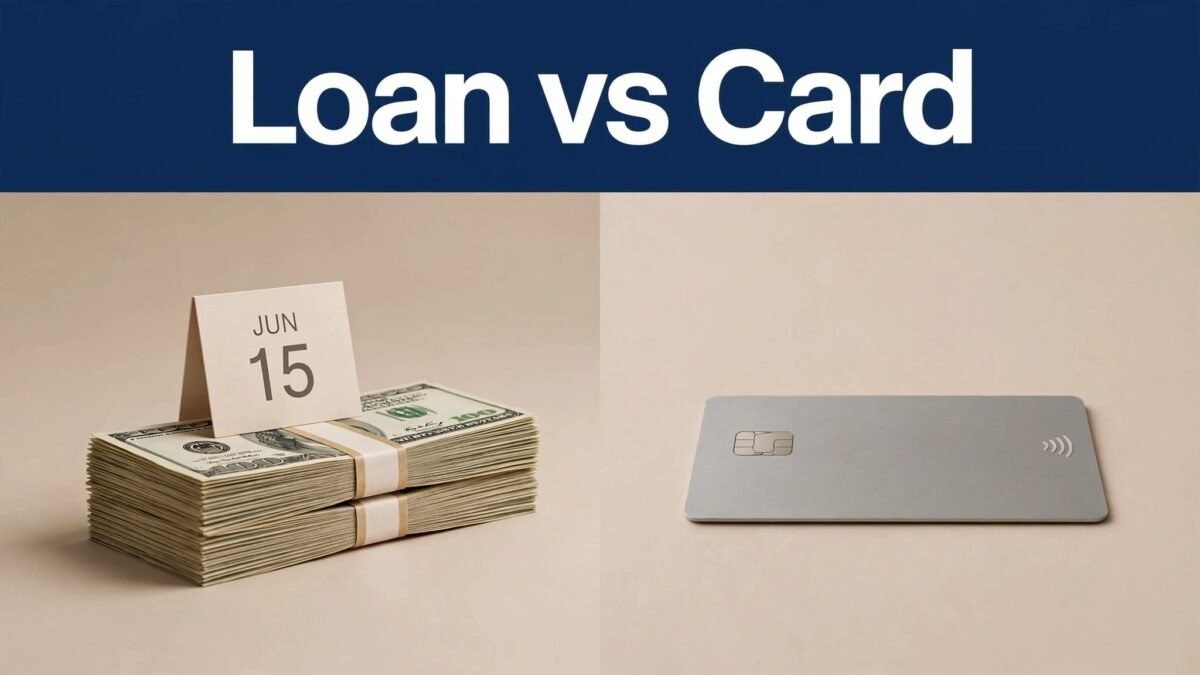
You need money for an expense, but the way you borrow can change what you pay back. If you’re asking, “Personal Loan vs Credit Card: Which Should You Use?” start with the repayment plan: a personal loan sets a payoff schedule, while a credit card lets you borrow again as you repay.
The right choice depends on the amount, how soon you can clear the debt, and the full cost, not only the monthly payment. Those differences become clearer once you look at how each balance works.
Key Takeaways
- A personal loan usually suits a planned, one-time expense when you want set payments and a payoff date.
- A credit card can suit flexible spending you expect to pay off quickly, especially if a purchase grace period applies.
- Compare fees and total repayment alongside APR. A smaller monthly payment can cost more over time.
Personal Loan vs. Credit Card: Which Should You Use?
Choose a personal loan when you need a fixed amount and can commit to regular payments. Choose a credit card when the amount may change, or you can repay purchases quickly. Neither is automatically cheaper: your offer, fees, and payment habits decide the result.
A personal loan generally gives you a lump sum to repay in installments. A credit card offers revolving credit: payments free up available credit that you can use again. Rates, eligibility rules, and consumer protections vary by lender and country.
How fixed loan payments compare with revolving card balances
A loan agreement sets the payment schedule and an expected final payment date. That structure helps you budget, although late payments or other charges can still change your cost.
A card statement gives you a minimum payment, but paying only that amount can leave a balance for years. Paying more reduces interest and shortens repayment. If your card has a purchase grace period, paying the statement balance in full by the due date can help you avoid purchase interest. The CFPB’s explanation of card grace periods makes clear that terms matter: issuers aren’t required to offer one.
What each option may cost in interest and fees
Compare the annual percentage rate, or APR, which expresses borrowing cost on an annual basis. Check whether a loan rate is fixed or a card rate can change. Cards may also apply different APRs to purchases, cash advances, and balance transfers.
A loan may carry an origination fee deducted from the proceeds or added to what you owe. Cards may charge annual, late, cash advance, or balance transfer fees. Read the actual offer rather than assuming a lower advertised rate means a lower total bill.
When a personal loan may be the better fit
A personal loan can work well for a defined expense, such as a necessary repair, when you know the amount before borrowing. A fixed payment gives you a finish line, but only if it fits your budget throughout the term.
Match the loan to the expense.
Start with the amount you’ll receive after any origination fee. If a lender deducts that fee upfront, you might need to borrow more to cover the expense, increasing the amount you repay.
Then compare offers with the same repayment term. A longer term can lower the monthly payment while increasing total interest. Approval and the rate you receive depend on the lender’s criteria and your circumstances. If qualification is a concern, Finance Beacon’s guide to personal finance and debt management can help you put a new payment in context before applying.
Using a personal loan to consolidate debt
Debt consolidation replaces several balances with one new loan. It can make due dates simpler, but one payment isn’t proof of savings. Add any origination fee and compare total repayment, not just the new monthly amount, with what you’d otherwise pay.
A lower payment achieved through a much longer term may cost more overall. Also consider what happens after the transfer: if you run up the paid-off cards again, you’ll have both the loan and fresh card debt.
When a credit card can make more sense
A card gives you access to credit without applying for a new loan each time you need to make a purchase, up to your available limit. That flexibility fits smaller expenses or regular spending you can pay off as billed. It also makes it easy to carry a balance without setting a payoff date.
Paying purchases in full changes the calculation.
If your card offers a purchase grace period and you meet its conditions, paying the statement balance by the due date may avoid purchase interest. In that case, a card may cost less than an interest-bearing loan for the same purchase.
Rewards can add value, but interest can quickly outweigh them when you carry a balance. Annual fees matter too. Compare card features and fees together, including whether a card with no annual fee meets your needs. Protections and benefits differ by card and local rules; check the terms instead of assuming every purchase has the same coverage.

Could a 0% balance transfer help you pay down card debt?
A qualifying offer may let you move existing card debt to an introductory 0% APR for a set period. Check the transfer fee, the credit limit available for transfers, and the APR after the promotion ends. The offer may not cover new purchases.
Work backward from the end date. For example, transferring $3,000 with a hypothetical $90 fee would leave $3,090 to repay. Over a hypothetical 15-month promotion, that’s $206 a month if the entire transferred balance, including the fee, receives the promotional rate. Your actual offer may treat fees differently. If $206 won’t fit, plan for interest after the offer ends rather than counting on another transfer.
Compare your options before you borrow.
Put the offers beside each other using the same amount. Record the APR, every fee, the payment you can make, the payoff date, and the total you’ll repay. Check loan proceeds after upfront fees, and don’t treat a card’s minimum payment as a payoff plan.
Consider a hypothetical $3,000 balance repaid over 12 months. Assume monthly interest, equal end-of-month payments, no fees, no new card spending, and interest accruing on both balances throughout. These sample APRs aren’t current offers.
| Option | Assumed APR | Approximate monthly payment | Approximate total repaid |
|---|---|---|---|
| Personal loan | 12% fixed | $267 | $3,199 |
| Credit card | 20% fixed for this example | $278 | $3,335 |
Under those assumptions, the loan costs about $136 less. A card purchase paid in full within an applicable grace period tells a different story: it may incur no purchase interest. Fees, changing rates, and a slower payoff can also reverse the comparison.
Ask each lender or issuer for the terms that apply to you. A comparison using someone else’s advertised rate can’t tell you what you’ll qualify for.
Protect your credit and your budget.
Cost matters, but so does whether the payment remains manageable when life interrupts your plan. Leave room for ordinary expenses before committing to a loan installment or a card payoff target.
Check the effect on your credit and your budget.
A loan or card application may involve a hard credit inquiry. Carrying a high card balance relative to its limit can affect credit utilization, while missed payments can harm your credit history. On-time payments matter for both products, but taking on debt doesn’t guarantee a better credit score.
Test the payment against a lean month, not your best month. If income falls or an essential bill rises, could you still make it without borrowing again? A repayment plan that only works when nothing changes is too tight.
Watch for borrowing traps that make either option costly.
A small loan payment can hide years of interest. A card minimum can keep debt outstanding long after the original purchase is forgotten. In either case, fees make the gap between the amount borrowed and the amount repaid wider.
The CFPB’s guide to understanding minimum payments shows why paying more each month reduces the cost over time. For a loan, check the payoff total before signing. For a card, set a payment above the minimum that clears the balance on a date you choose. Missed payments may bring fees as well as credit harm.
If neither payment fits, reconsider the borrowing amount.
Sometimes the comparison shows that neither option fits your budget. If the expense can wait, saving toward it avoids interest and fees. If it can’t, check whether a smaller amount or a different payment arrangement would cover the immediate need.
For an existing card balance, focus first on a payment you can sustain. Moving debt to a new product without room in your budget may postpone the problem rather than solve it.
Conclusion
Personal Loan vs. Credit Card: Which Should You Use? For planned borrowing with a defined payoff, a personal loan may fit better. For flexible spending you can repay quickly, a credit card may be more useful.
The deciding figure is the total you’ll repay on terms you can manage. Compare actual offers against your budget and timeline before you borrow.
Frequently Asked Questions
Is a personal loan cheaper than a credit card?
It can be, but compare the offers available to you. A loan’s interest and origination fee may cost less than carrying a card balance. If you pay a card purchase in full under an applicable grace period, however, you may avoid purchase interest.
Can I use a personal loan to pay off credit cards?
Yes, some borrowers use personal loans to consolidate card balances. Compare the loan’s fee, APR, term, and total repayment with your current payoff plan. Keep the cards from building new balances afterward.
Does paying the credit card minimum avoid interest?
Usually not when you carry a purchase balance. A minimum payment helps keep the account current, but interest can continue to accrue. The card’s terms explain when a grace period applies.
Is a 0% balance transfer free?
Not necessarily. An offer may charge a transfer fee, and a higher APR may apply to unpaid debt after the promotional period. Check whether you can repay the transferred balance before that period ends.