In This Article
Owning a dividend-paying stock or fund can give you cash while you continue to own the investment, which is the basic appeal of dividend investing for beginners. However, dividends aren’t guaranteed, and a falling share price can outweigh the income you receive.
You’ll learn how companies declare dividends, how payments reach investors, when reinvestment may help, and how to judge dividend quality, taxes, and risk. First, let’s look at what a dividend is and how it fits into your total return.
Dividend Investing for Beginners: How It Works in Practice
A dividend follows a schedule, so the date you buy matters. The company announces the distribution, identifies eligible shareholders, and later sends the cash to their brokerage accounts. Understanding each step helps you avoid confusing eligibility with the day money arrives.
What happens on the ex-dividend and payment dates?
Four dates shape a regular stock dividend:
- Declaration date: The company’s board announces the dividend amount and schedule.
- Record date: The company checks its shareholder records to identify eligible investors.
- Ex-dividend date: The stock begins trading without the upcoming dividend. Under the current U.S. T+1 settlement cycle, this is generally the record date for ordinary cash dividends.
- Payment date: The company sends the cash to eligible shareholders, often days or weeks after the record date.
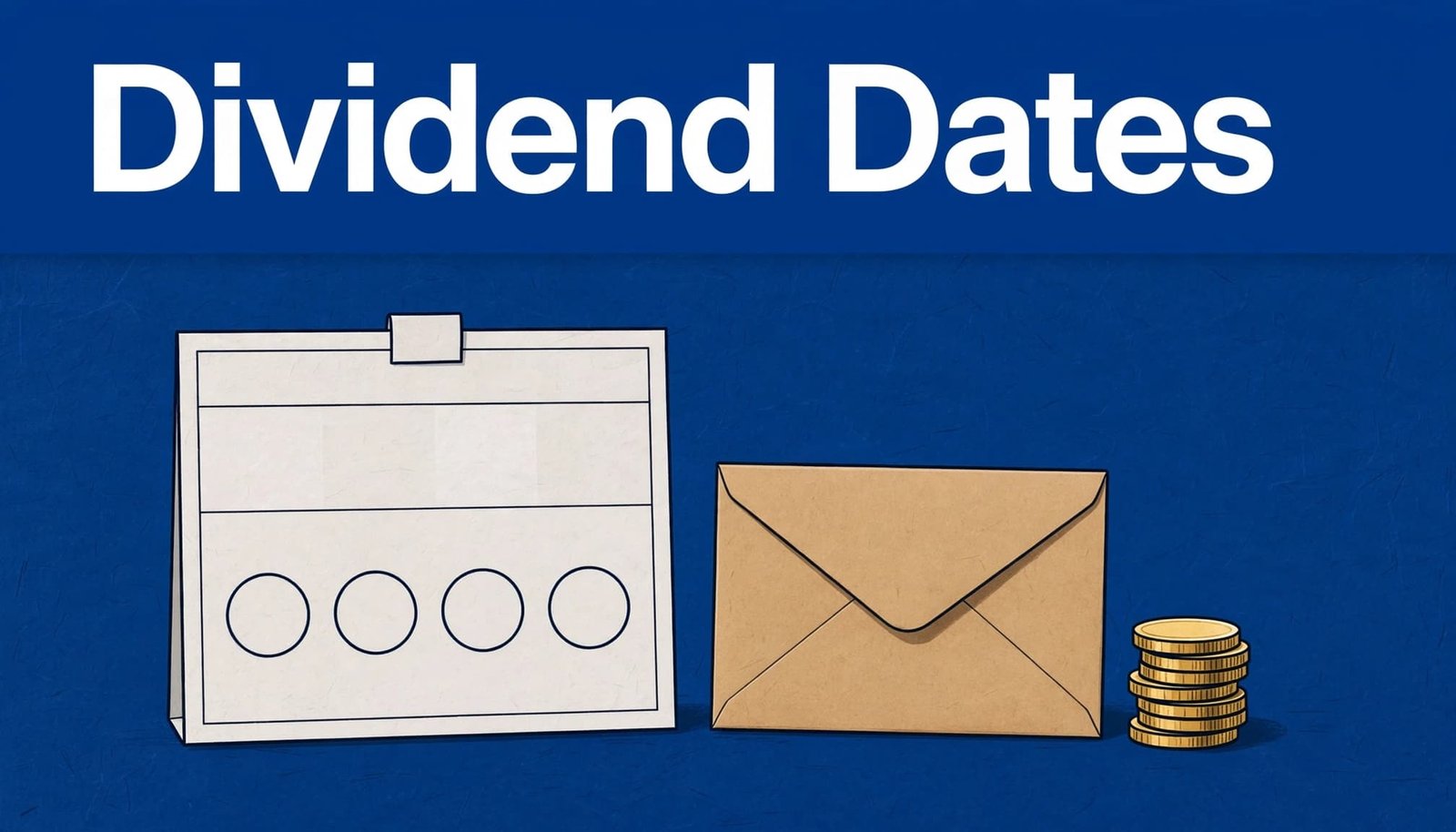
Calendar stages beside a brokerage envelope and stack of dividend coins.
A short calendar example makes the sequence easier to follow:
| Date | Event |
|---|---|
| June 2 | Company declares a dividend |
| June 12 | Ex-dividend date and record date |
| June 27 | Payment date |
An investor who buys the stock on June 11 will generally qualify for the June 27 payment. Someone who buys on June 12 usually won’t receive that dividend, even though the cash hasn’t arrived yet. The SEC’s investor explanation of ex-dividend dates offers a useful reference for this timing.
The share price may also adjust around the ex-dividend date, often by roughly the dividend amount before other market movements. Therefore, a dividend isn’t free money added to your investment. Part of the stock’s value leaves the company as cash and moves to shareholders.
Holidays can shift business-day calculations. Special distributions and large distributions can follow different ex-dividend rules, too. For example, a distribution worth at least 25% of the security’s value may have an ex-dividend date after the payment date. Always confirm the schedule through the company’s investor-relations page, the fund provider, the exchange, or your brokerage.
Stocks, ETFs, and mutual funds can all pay dividends
Buying one dividend-paying stock gives you a direct claim on one company’s distribution. That approach can provide income, but your results depend heavily on that company’s profits, debt, industry, and dividend policy. The company can reduce or cancel its dividend, and its share price can fall.
Dividend ETFs and mutual funds hold baskets of investments. They may pass income from many underlying stocks to fund shareholders, usually according to the fund’s distribution schedule. Because your money is spread across multiple holdings, a fund can reduce the damage caused by one company cutting its dividend. However, diversification doesn’t remove market risk, fees, or the possibility of lower distributions.
When comparing funds, review the holdings, expense ratio, distribution history, and payment schedule. A high recent yield may reflect a falling share price or a one-time distribution, rather than dependable income.
How to Choose Dividend Investments Without Chasing Yield
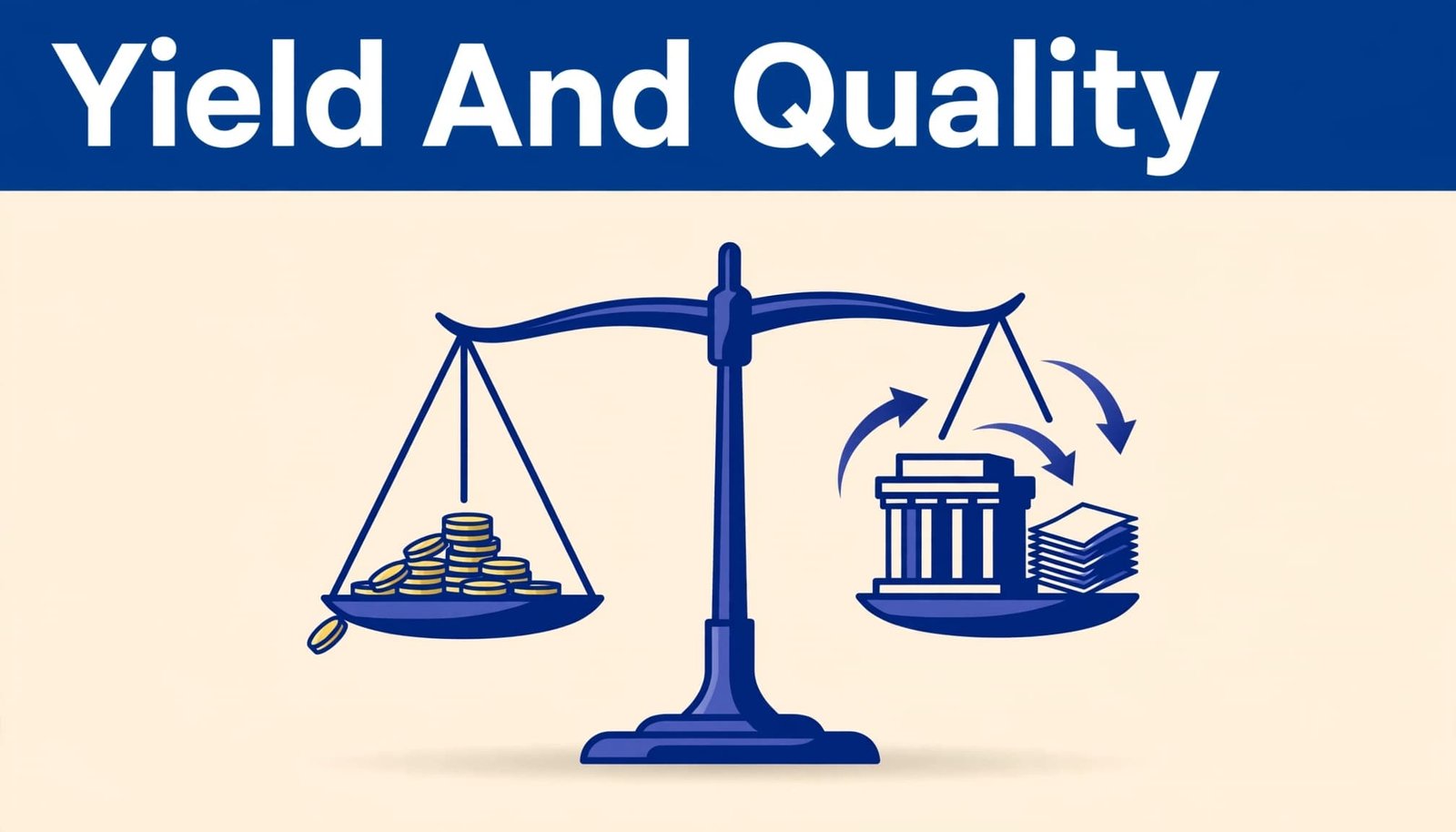
A high dividend yield can look tempting, especially when you’re building income from investments. However, yield alone isn’t a quality score. It may reflect a strong payout, or it may signal that investors expect trouble and have pushed the share price lower.
Before buying, compare the yield with the company’s earnings, cash flow, debt, dividend record, business strength, and industry conditions.
Dividend yield and payout ratio in plain English
Dividend yield measures the annual dividend compared with the current share price. The formula is:
Annual dividend per share / Current share price
For example, a stock paying $2 per share each year at a $50 share price has a 4% dividend yield. If the share price falls to $40 while the dividend stays unchanged, the yield rises to 5%. If the price climbs to $60, the yield drops to about 3.3%. The income hasn’t changed, but the market price has.
You can review the Investor.gov dividend yield definition when comparing this measure across stocks.
Payout ratio shows how much of a company’s earnings it distributes as dividends. If a business earns $4 per share and pays $2 per share in dividends, its payout ratio is 50%. The company keeps the remaining earnings for debt repayment, expansion, buybacks, or other needs.
Earnings don’t always tell the whole story. A company can report accounting profits while generating weak operating cash flow. Because dividends require actual cash, review the cash flow statement explanation alongside earnings and the payout ratio.
There is no single payout ratio that fits every company. A mature utility may distribute more of its earnings than a fast-growing industrial business. Compare the ratio with the company’s history, cash generation, capital needs, and industry peers.
Look for sustainable payments and a diversified mix
A long record of dividend payments can build confidence, but it doesn’t guarantee the next payment. Companies can cut dividends when profits weaken, cash flow shrinks, debt costs rise, or business conditions change. Investor.gov also states that dividends are not guaranteed.
Review several warning signs before you buy:
- Check for past dividend cuts, suspensions, or unusually large increases.
- Compare free cash flow with total dividend payments.
- Examine debt levels, interest costs, and upcoming maturities.
- Study sales, profits, and demand in the company’s core business.
- Consider whether the industry faces regulation, commodity swings, or economic pressure.
Finally, avoid building your income around one high-yield stock. A broader mix might include industrial companies, health care businesses, financial firms, utilities, and real estate investments. A diversified dividend fund can spread exposure across many holdings, although it still carries market risk, fees, and changing distributions.
Diversification won’t prevent every loss, but it reduces the damage caused by one company cutting its dividend. A dependable portfolio usually begins with several sound businesses or a diversified fund, not the highest number on a stock screener.
How to Start Dividend Investing and Manage the Cash
Once you choose investments with sustainable payouts, decide what each dividend should do for you. You can turn the payment into more shares, use it for current expenses, or direct it toward another investment. The right choice depends on your time horizon, cash needs, account type, and comfort with managing the money yourself.
Reinvest dividends or use them as income?
Automatic reinvestment, often called a dividend reinvestment plan or DRIP, uses each payment to buy additional shares. Those new shares can produce future dividends, which may help compound your investment over time. However, reinvestment doesn’t protect you from market declines or guarantee a profit. If the stock or fund falls, your larger share position can also lose value.
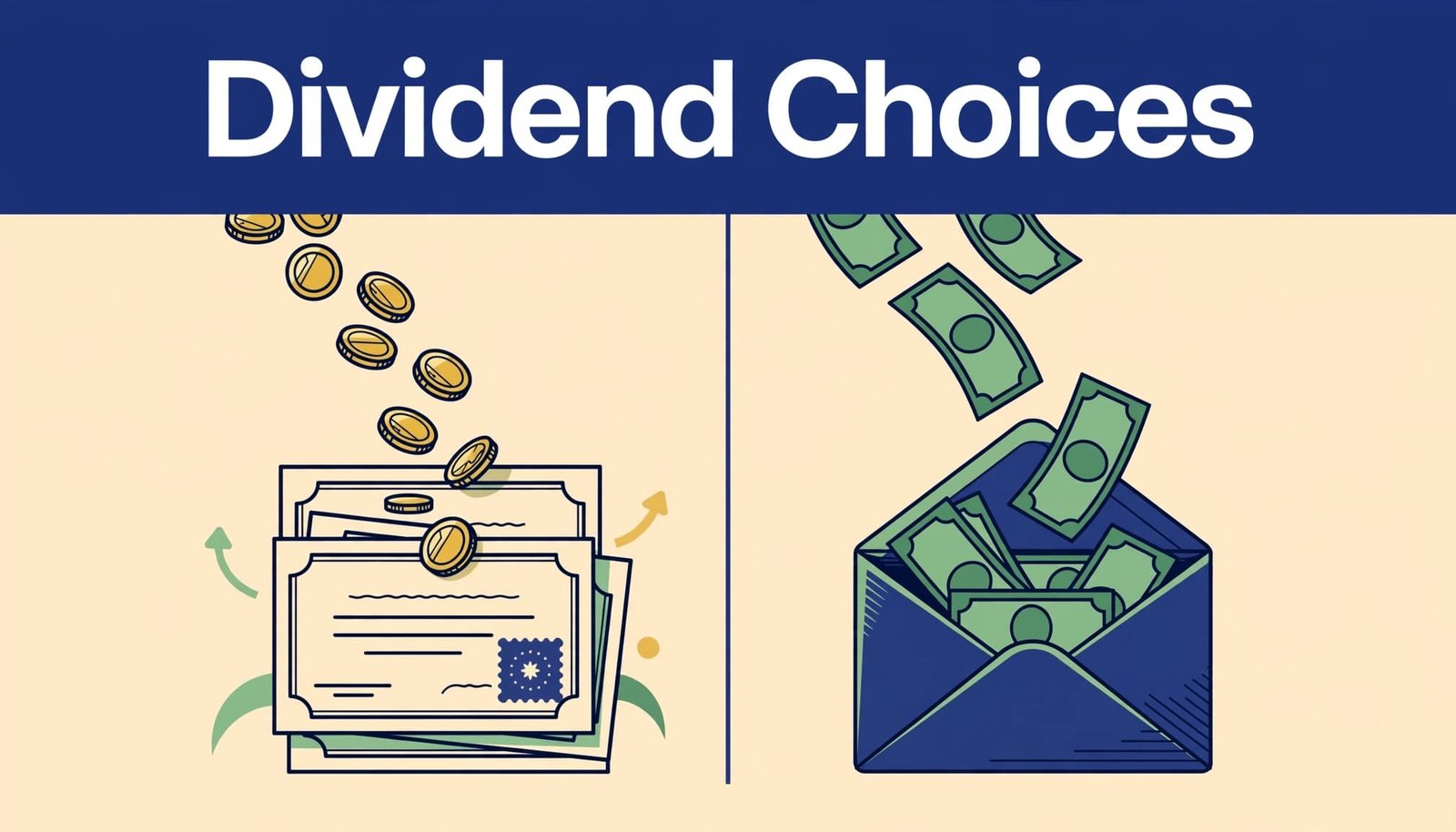
Reinvestment often fits investors who are building wealth and don’t need the cash today. Receiving dividends as cash may suit someone covering expenses, building an emergency reserve, or choosing where to invest the next dollar. Cash also gives you more control when a holding looks expensive or no longer matches your plan.
Brokerage rules differ, so check the details before enrolling. Some platforms offer fractional shares, while others pay the leftover amount in cash. Fees may apply in certain accounts, and you may be able to reinvest all dividends, reinvest selected investments, or turn the feature off at any time.
A simple review can help you choose:
- Reinvest automatically when long-term growth is your main goal and you can tolerate price swings.
- Take cash when you need portfolio income or want to direct payments elsewhere.
- Review the choice after major changes, such as retirement, a new financial goal, or a shift in your risk tolerance.
Understand dividend taxes before investing
In the United States, dividends held in a taxable brokerage account are generally taxable, even when you reinvest them instead of withdrawing the money. Ordinary dividends usually count as ordinary income. Qualified dividends may receive lower long-term capital-gains tax rates when they meet IRS requirements, including holding-period rules.
Your brokerage generally reports dividend distributions on Form 1099-DIV. The IRS says you should receive the form for distributions of at least $10, and you can review its dividend tax guidance or the Form 1099-DIV instructions for current details.
Tax treatment can differ inside traditional IRAs, Roth IRAs, and employer retirement plans. It also varies outside the United States. Because filing status, income, holding periods, and account rules affect the result, use current IRS guidance or consult a qualified tax professional before making decisions.
The Main Benefits, Risks, and Mistakes for Beginners
Dividend investing can provide cash flow and encourage long-term ownership, but the payment itself doesn’t make an investment safe. Your total return includes both dividends and changes in the investment’s price. A falling share price, dividend cut, or tax bill can outweigh years of income.
Common dividend investing mistakes to avoid
The biggest mistake is buying a stock only because it has a high yield. A rising yield may reflect a falling share price or a business under financial pressure. Before investing, examine earnings, cash flow, debt, and the company’s ability to fund future distributions.
Also, don’t treat a long dividend history as a promise. Companies can reduce or cancel payments when profits weaken, borrowing costs rise, or cash needs change. Past dividend growth may show a pattern, but it cannot guarantee future increases.
Payment frequency can create another false sense of security. Monthly income isn’t safer than quarterly income, and a frequent schedule doesn’t protect you from losses. Review fund documents and company filings instead of relying only on dividend calendar websites, stock screeners, or social media posts.
Keep these risks in view:
- Fees and expense ratios reduce your return, while taxes may reduce the cash you keep.
- Concentrating in one company or sector leaves your income exposed to a single business problem.
- Money needed for rent, tuition, emergencies, or another near-term goal shouldn’t depend on stock prices.
- Inflation can reduce the spending power of a dividend that never grows.
The SEC’s Investor.gov education resources can help you verify basic investing, diversification, and fee information before you buy.
A simple checklist before buying
Use this quick review before placing an order:
- Identify exactly what you’re buying, including the stock ticker, ETF, or mutual fund.
- Confirm the current dividend amount, ex-dividend date, and payment schedule through a primary source.
- Review the yield and payout ratio, then ask whether both remain reasonable for that business or fund.
- Check earnings, operating cash flow, debt, interest costs, and recent dividend changes.
- Assess concentration. Look at the company’s sector, the fund’s largest holdings, and your existing portfolio.
- Understand the tax treatment, expense ratio, trading costs, and account fees.
- Decide whether the investment fits your time horizon and tolerance for price declines.
Dividend information can change after you research it. Check the latest company filing, investor-relations release, or fund prospectus before buying. A careful review may take longer than scanning a yield column, but it gives you facts instead of a tempting number.
Frequently Asked Questions
Dividend investing for beginners often raises practical questions that yield percentages cannot answer. These common concerns can help you decide whether dividend stocks belong in your broader investment plan.
How much money do I need to start dividend investing?
You don’t need thousands of dollars to begin. Many brokerages offer fractional shares, allowing you to invest a small amount in a stock or ETF. However, a tiny portfolio will produce very little income at first, so focus on building a consistent investing habit rather than chasing immediate cash flow.
Can dividends replace a paycheck?
They can provide meaningful income, but replacing a paycheck usually requires substantial invested capital and dependable distributions. For example, a $100,000 portfolio yielding 4% would produce about $4,000 annually before taxes, assuming the dividend remains unchanged. Because payments can fall, don’t rely on dividends for essential expenses without maintaining other income and cash reserves.
Are dividend stocks safer than growth stocks?
Dividend payments don’t make a stock safe. A company can pay dividends while its share price declines, and a cut can reduce both your income and your confidence in the investment. Safety depends on the business, valuation, debt, cash flow, diversification, and your time horizon.
Should beginners buy individual stocks or dividend ETFs?
A dividend ETF may be a simpler starting point because it spreads your money across many companies. That diversification can reduce the effect of one company cutting its payment. Individual stocks give you more control, but they require more research and expose you to greater company-specific risk. Review an ETF’s holdings, fees, strategy, and distribution history before buying.
What happens if a company cuts its dividend?
Your future income falls, and the share price may also decline as investors reassess the company. A cut doesn’t always mean the business will fail, since management may preserve cash for debt reduction or necessary investment. Still, review the company’s earnings, cash flow, debt, and updated dividend policy before deciding whether to keep holding it.
Can dividend income lose value over time?
Yes. Inflation reduces what a fixed payment can buy, while taxes and fund expenses reduce the amount you keep. Dividend growth can help protect purchasing power, but growth is never guaranteed. When reviewing an investment, consider its history of raising payments, current valuation, business strength, and total return rather than focusing only on today’s yield.
The SEC’s explanation of ex-dividend dates can help you verify payment eligibility, while the Investor.gov investing glossary provides plain-language definitions for unfamiliar terms.
Conclusion
Dividend investing for beginners is a way to own income-producing investments, not a promise of steady profits. Payment dates affect eligibility, while dividend quality depends on cash flow, debt, business strength, taxes, fees, and the risk of a cut.
Reinvesting can support long-term growth, but spreading your money across sound companies or a diversified fund can reduce company-specific risk. Before investing, build a watchlist and compare a diversified dividend fund with individual stocks, including each option’s holdings, costs, payout history, and risks.