In This Article
A checking vs savings account decision comes down to what job you need your money to do. Both hold cash at a bank or credit union, but checking works like a wallet for regular spending, while savings is a safer parking spot for money you’ve set aside.
The differences affect access, interest, fees, overdrafts, transfer policies, and deposit insurance. Once you understand them, you can decide whether one account is enough or whether using both makes everyday money management easier.
Key Takeaways
- Checking accounts are built for frequent purchases, bills, cash withdrawals, and direct deposits.
- Savings accounts are better for emergency funds, planned expenses, and goals you don’t need to spend today.
- Savings accounts often pay more interest, but rates, fees, and withdrawal rules vary by institution.
- The Federal Reserve removed the federal six-transfer savings limit in 2020. Your bank may still set its own limits.
- FDIC insurance generally protects eligible bank deposits up to $250,000 per depositor, per insured bank, per ownership category.
- Many people benefit from keeping spending money in checking and reserves in savings.
Checking vs Savings Account: What Is the Difference?
Checking accounts are designed for money that moves often. You can use them for paychecks, debit card purchases, rent, utilities, checks, online bill pay, and ATM withdrawals.
Savings accounts hold money you want available but don’t expect to spend every day. They commonly support emergency reserves, travel plans, annual insurance bills, home repairs, and near-term goals. In exchange for less immediate access, they often pay more interest.
Here is the practical comparison:
| Feature | Checking Account | Savings Account |
|---|---|---|
| Main purpose | Everyday spending and payments | Money set aside for goals or reserves |
| Access | Debit cards, checks, ATMs, bill pay | Transfers and withdrawals, usually fewer payment tools |
| Interest | Often low or none | Often higher, especially high-yield accounts |
| Typical use | Rent, groceries, subscriptions | Emergencies, travel, annual costs |
| Common risk | Overdrafts and transaction fees | Using it too often for everyday spending |
Account agreements matter because no two banks offer identical terms.
What a Checking Account Is Designed to Do
A checking account keeps your day-to-day money within easy reach. Many people have their pay sent through direct deposit, then use the account for recurring bills, debit card purchases, peer-to-peer payments, and cash withdrawals.
It makes sense to keep enough in checking for upcoming expenses and a modest cushion. However, money you won’t need soon may earn little or no interest there. Some checking accounts pay interest, but they can require direct deposit, a minimum balance, or regular debit purchases.
Watch for monthly maintenance charges, out-of-network ATM fees, overdraft fees, insufficient-funds fees, paper statement fees, and wire transfer charges.
What a Savings Account Is Best For
Savings accounts suit money that has a purpose beyond this week’s spending. You might use one for an emergency fund, a down payment, holiday travel, vehicle repairs, or annual property taxes.
Most savings accounts earn interest, expressed as annual percentage yield, or APY. A high-yield savings account isn’t a separate federal account category. It is a marketing term for an account offering a comparatively strong rate, which can rise or fall at any time.
For a closer look at account choices for a cash reserve, see this guide on where to keep an emergency fund.
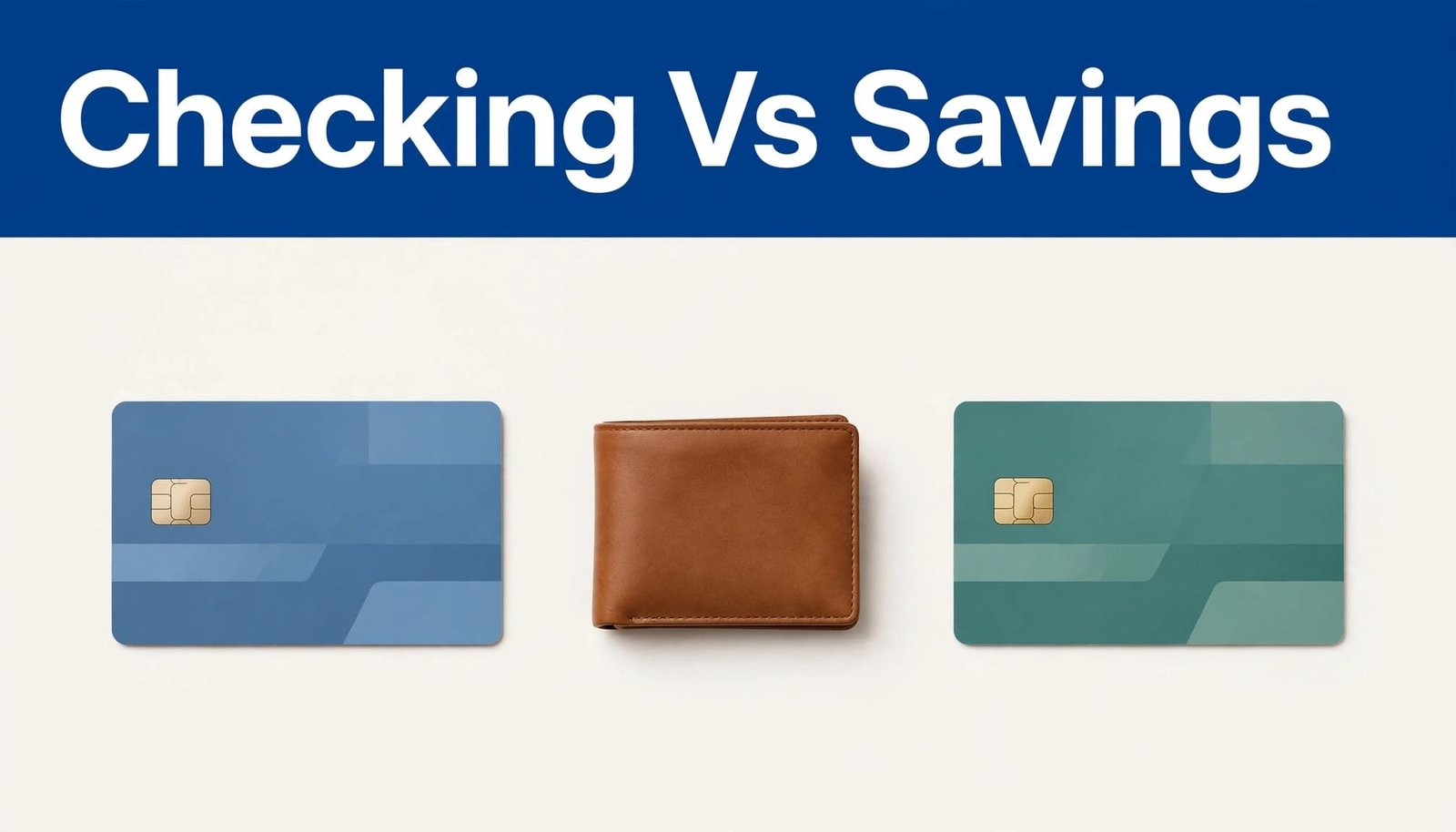
The checking vs savings account choice starts with whether the money is for spending now or later.
How Access, Interest, Fees, and Transfer Rules Compare
Easy access is checking’s main strength. It supports the transactions that keep a household running. Savings creates a useful bit of distance between you and money meant for another purpose.
Which Account Usually Pays More Interest?
Savings accounts, especially high-yield savings accounts, often pay more APY than basic checking. APY shows what you could earn over one year when interest compounding is included.
Still, the advertised rate isn’t the whole story. Some interest-bearing checking accounts pay a competitive APY only on balances below a stated cap. They may also require direct deposit or a set number of debit purchases each month.
Compare the APY with minimum balance rules, monthly fees, transfer speed, and cash access. A slightly higher rate loses its appeal if account conditions are hard to meet or fees erase the interest.
Fees, Overdrafts, and the Cost of Easy Access
An overdraft occurs when a checking transaction exceeds the available balance. The payment may be declined, or the institution may cover it and charge a fee, depending on the transaction and your account settings.
Fees vary widely. The Consumer Financial Protection Bureau’s overdraft guidance says many institutions charge $30 or more per transaction. A CFPB circular has described fees as high as $36, so review your bank’s current schedule instead of assuming a standard price.
Linking savings to checking may help cover a shortfall. Before relying on it, check transfer fees, daily limits, transfer timing, and whether you must opt in. A transfer that arrives after a payment posts may not prevent a returned-payment fee.
What Savings Withdrawal Limits Look Like Today
The old rule limiting certain savings transfers to six per month no longer applies at the federal level. The Federal Reserve removed that requirement in April 2020.
Banks and credit unions can still set their own policies. They may limit transfers, charge excess-activity fees, or change the account type if you use savings mainly for routine bill payments.
A savings account can be easy to access without being designed to replace a transaction account.
Read the fee schedule and account agreement before using a savings account for frequent purchases or autopay bills.
Account Types, FDIC Insurance, and Features That Blur the Line
Checking and savings are broad labels, not fixed products. Terms can differ sharply between a traditional bank, an online bank, and a credit union.
Checking and Savings Account Options You May See
Basic checking offers familiar payment tools, while online checking may reduce fees or expand ATM reimbursements. Student checking may waive certain charges, and second-chance checking can help people rebuilding their banking history. Business checking separates company cash flow from personal spending.
On the savings side, regular savings may require a low opening deposit. High-yield savings focuses on APY, while youth savings can help a child learn banking. Money market deposit accounts may offer savings-style interest with limited check-writing or debit access.
“High-yield” doesn’t guarantee a lasting rate. Read the account disclosure for balance requirements, rate tiers, maintenance fees, and access rules.
How Deposit Insurance Protects Eligible Bank Balances
At an FDIC-insured bank, eligible checking and savings deposits are generally covered up to $250,000 per depositor, per insured bank, per ownership category. The FDIC explains the calculation in its guide to understanding deposit insurance.
Balances held at different branches of the same bank are usually combined. However, ownership categories, such as individual, joint, and certain trust accounts, can change the calculation. The FDIC’s deposit insurance FAQs provide examples for households with larger balances.
Insurance does not protect investments, cryptocurrency, mutual funds, or other non-deposit products in the same way. Credit unions have separate coverage through the NCUA, which generally insures shares up to the same standard $250,000 limit per owner, per insured credit union, per ownership category.
Avoiding Common Account Mix-Ups
The checking vs savings account distinction becomes clearer when you avoid treating both accounts as interchangeable.
Don’t Keep Every Available Dollar in Checking
A large checking balance may feel reassuring, especially when bills arrive at different times. Yet if your checking account pays little interest, money meant for future needs can miss out on potential earnings in savings.
Keep enough for known bills, typical spending, and a cushion. Then move the rest based on your timeline and comfort level. Cash needed within days belongs somewhere accessible, not in an investment that can lose value.
Don’t Treat Savings Like a Daily Spending Account
Savings is accessible, but frequent transfers can blur the line between a goal fund and spare spending money. A weekend purchase can slowly drain funds reserved for an insurance premium or emergency.
Separate savings goals when your bank allows it, or track them in your budget. More importantly, confirm how fast transfers reach checking. Some are immediate, while others take longer.
Should You Use a Checking Account, a Savings Account, or Both?
Match the account to the job. For most beginners, using both accounts creates a simple boundary between money for current obligations and money for later.
When Checking Is the Better Choice
Checking fits money you need to use regularly. It is the natural home for your paycheck, rent, utilities, debit card purchases, checks, and ATM withdrawals.
Leave a realistic buffer for timing differences between deposits and payments. That cushion can reduce declined transactions and overdrafts. Still, don’t leave every dollar there if part of it is not needed soon and the account earns little interest.
When Savings Is the Better Choice
Savings works best for emergencies, irregular bills, and goals with a short or medium timeline. Keeping that money away from daily purchases can make a budget easier to follow.
It is not a substitute for checking when you need frequent payment tools. Before a bill is due, confirm that a transfer from savings will arrive in time.
A Simple Setup for Using Both Accounts Well
A practical payday routine is simple:
- Deposit income into checking and leave enough for scheduled bills and a spending cushion.
- Set an automatic transfer to savings shortly after payday.
- Use savings for emergencies and planned goals, then replenish it after withdrawals.
- Turn on low-balance alerts and review overdraft settings before a problem occurs.
When comparing accounts, look beyond the headline rate. Check minimum balances, monthly fees, ATM access, transfer speed, customer service, overdraft terms, and whether the institution has FDIC or NCUA insurance.
Tracking these accounts alongside debts and investments also helps you see the larger picture. A regular net worth calculation shows how your cash reserves fit into your overall financial progress.
Conclusion
A checking account is generally for frequent payments and spending, while a savings account is for money set aside, often with a better chance to earn interest. The right checking vs savings account setup depends on your fees, APY, access needs, transfer rules, and insurance coverage.
Review your current balances and decide how much belongs in a checking cushion and a savings reserve. Comparing the account terms may show that using both together gives your money clearer jobs.