In This Article
Financial news can turn a normal Tuesday into a flashing red alert. A hot inflation reading, a CEO quote, or a conflict overseas may make a portfolio move feel urgent.
The path from financial news into actionable investment decisions starts with restraint. Treat every report as an input to examine, not an automatic command to buy or sell.
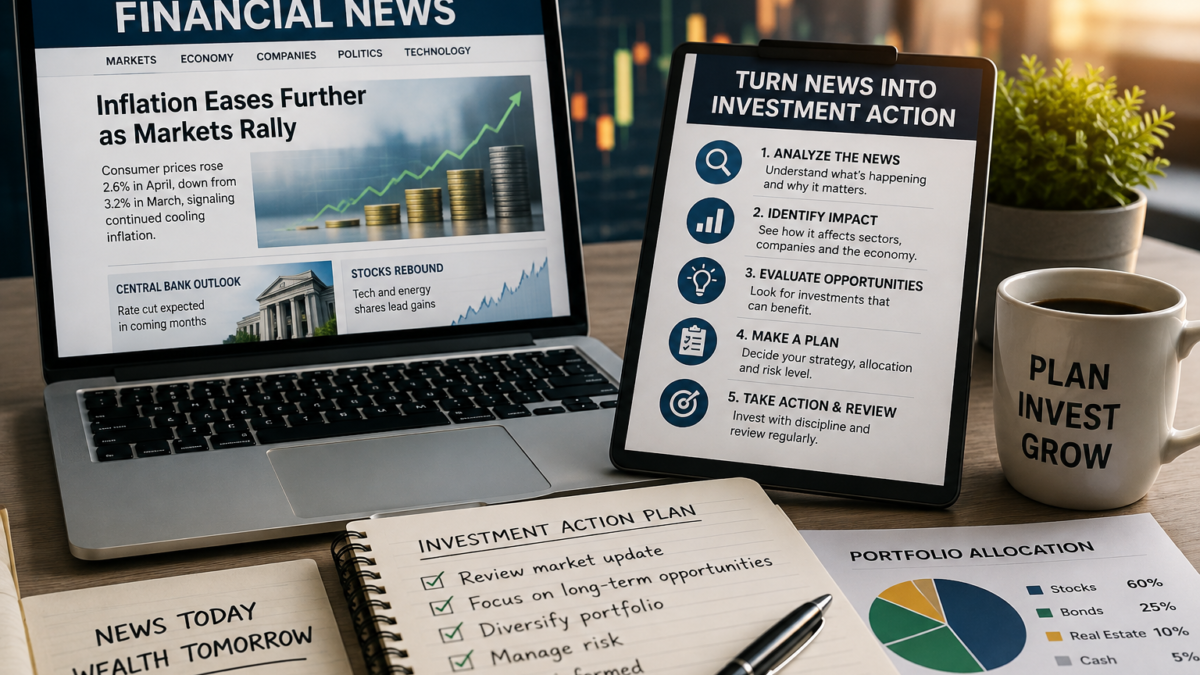
A practical routine has three parts: filter the noise, verify the facts, and test whether the news changes your investment case.
Why Most Financial News Is Noise and How to Find the Signal
A market signal is information that can change inflation, growth, interest rates, earnings, regulation, or financing conditions. Noise is dramatic commentary that leaves those foundations untouched.
Headlines compete for attention, so they often borrow the language of fear and certainty. A one-day price drop can look alarming, yet it may say little about a company’s five-year earning power. Finance Beacon helps everyday readers sort complex market events without treating each headline as a trading order.
Ask What Actually Changes Before You React
Start with a plain test: Does this news change expected cash flow, borrowing costs, demand, profit margins, or risk?
A company cutting full-year revenue guidance may change the investment case. A pundit declaring that a stock “can’t lose” doesn’t. First identify what asset, industry, or economic variable the report affects. Then decide whether that effect is large enough to matter.
Spot Emotional Triggers That Lead to Bad Trades
“Panic,” “market crash,” “surprise shock,” and “once-in-a-lifetime opportunity” are designed to speed up your reaction. Fear of missing out can push investors into a rally after much of the gain has passed. Panic can also turn a temporary decline into a poorly timed sale.
A price move is evidence of changing opinions, not proof that your long-term thesis is wrong.
Pause before acting. Write down the claim, locate its source, and separate the reported fact from the author’s prediction.
How to Turn Financial News Into Actionable Investment Decisions
The same process works for individual stocks, bond funds, index funds, and a diversified portfolio. It prevents a loud headline from taking control of a decision that should reflect your goals and risk tolerance.
Verify the Headline Against Data and Consensus
Read the original release before relying on a summary. For inflation and jobs, start with the Bureau of Labor Statistics CPI release. For rate decisions, read Federal Reserve statements and reports. For businesses, check earnings releases and SEC filings through EDGAR.
Use a simple lens:
- Compare the actual result with the economist consensus.
- Check whether earlier figures were revised.
- Confirm the story through at least two independent sources.
An earnings beat can disappoint markets if revenue misses estimates or management cuts guidance. Numbers only gain meaning when compared with expectations and prior data.

Follow the Transmission Channel to Estimate Market Impact
Important news reaches markets through a chain of effects. Softer inflation can reduce expected interest rates, which may lower bond yields and support stock valuations. Hotter inflation can lift yields and pressure growth stocks because future profits become less valuable in today’s dollars.
Likewise, an earnings report matters more when margins improve, guidance rises, and peers show similar demand. Geopolitical news needs the same discipline. Ask whether it changes oil supply, shipping costs, supply chains, consumer spending, or risk appetite.
Decide Whether the News Changes Your Thesis or Just the Price
A single CPI report, weak retail-sales month, or earnings surprise can move prices without changing long-term value. Revisit why you owned the asset in the first place.
Update your assumptions when evidence builds. Otherwise, keep the news in proportion. A stock falling 4% is a market event, not a reason by itself to abandon a well-researched plan.
Use Real Market Examples Without Letting Headlines Drive the Trade
Recent inflation data shows why context matters. The market often reacts to what the data means for future policy, not merely to the number printed in the report.
Inflation and Rate News Move Several Markets at Once
In July 2026, headline CPI rose 3.4% year over year, while core CPI rose 2.5%. The monthly increases were 0.1% and 0.2%, respectively. Reuters’ July inflation report described a milder reading that eased concern about an immediate rate hike.
The chain ran from inflation to Federal Reserve expectations, bond yields, stock valuations, and the dollar. Still, inflation remained above the Fed’s 2% target. The Fed held its target range at 3.5% to 3.75% in July, while its Monetary Policy Report described inflation as elevated.
Earnings, Consumer Data, and Geopolitics Need Context
An earnings beat carries more weight when revenue, margins, guidance, and future estimates rise together. Broad strength across companies can support markets even when inflation worries persist.
Retail sales offer another useful check. Steady spending may support consumer-facing businesses, while a broad slowdown can challenge their forecasts. With geopolitical events, focus on measurable effects such as energy prices, shipping routes, and supply disruptions. Conflict headlines alone rarely create a clean trade.
Control Risk Before You Change the Portfolio
Check position size, diversification, time horizon, and the event calendar before trading. CPI releases, Fed meetings, and major earnings weeks can concentrate risk in a few volatile days.
Use gradual adjustments instead of all-in trades. Preplanned entry and exit rules also reduce emotional decisions. When facts remain unclear, waiting is a valid portfolio choice.
Build a News Routine That Protects Your Judgment
Verify the data, compare it with expectations, trace the market impact, and decide whether it changes your thesis before sizing risk. That routine turns financial news into actionable investment decisions without rewarding the fastest reaction.
Successful investing doesn’t require predicting every headline. It requires letting evidence, goals, and risk limits guide each portfolio decision.