In This Article
A lost crypto recovery phrase can feel like watching the only key to a safe vanish. However, losing the written phrase does not always mean the funds are gone, especially if your wallet still opens on a trusted device.
A recovery phrase is the master backup for a self-custody wallet. It isn’t a password that an app, exchange, or customer support team can reset. Never send it to anyone while you look for help, even someone claiming to be wallet support.
Your next move depends on one fact: whether you still control an active wallet, device, private key, or legitimate backup.
Key Takeaways
- Crypto remains recorded on its blockchain even if you lose the recovery phrase. The problem is losing the credentials that let you authorize a transaction.
- If a wallet still opens on a phone, browser extension, or hardware wallet, act before resetting, deleting, or replacing anything.
- A wallet address, transaction record, ID check, or screenshot cannot replace a recovery phrase or private key.
- The full phrase gives another person control of the wallet. Treat every request for it as a potential theft attempt.
- If the phrase might be exposed, create a new wallet with a fresh backup and move assets to it as soon as you can safely do so.
What Happens If You Lose Your Crypto Wallet Recovery Phrase?
The direct answer is simple: you may lose access permanently if the recovery phrase, private keys, active devices, and every usable backup are gone. The coins or tokens do not disappear from the blockchain. Yet without the secret needed to sign a transaction, you can’t move them.
A recovery phrase is not the crypto itself. Instead, it produces the wallet’s underlying secret material, which gives you control over the addresses holding your assets. For that reason, proof that an address is yours does not restore access.
Many wallets follow BIP-39, a standard introduced in 2013. Common phrases contain 12 or 24 words chosen from an English list of 2,048 words. The BIP-39 specification also permits an optional passphrase. That extra passphrase matters as much as the words because a different one can generate a different wallet.
A lost crypto recovery phrase is less urgent when you still control an active wallet or secure backup.
An active device may still give you a recovery path.
If the wallet still opens on your phone, tablet, browser extension, or hardware device, pause before making changes. Do not delete the app, clear its data, reset the device, reinstall firmware, or trade in the hardware wallet.
Use only the wallet maker’s official app, help center, or device settings to locate supported backup or export options. Confirm you are on the genuine app or extension before entering a PIN or password.
If a hardware wallet still signs transactions, the safer route is often to create a new wallet, record its fresh recovery phrase offline, and transfer assets while the old wallet remains usable. The basics of wallet control and key ownership help explain why possession of the signing credentials matters more than an account name.
A wallet provider usually cannot reset self-custody access
A custodial exchange account and a self-custody wallet work differently. An exchange may verify your identity and reset account login details because it controls the assets or the account system. A self-custody wallet gives you direct control of the keys.
Coinbase Wallet, for example, states that only the user has access to the wallet’s 12-word recovery phrase. Its support team can’t retrieve that phrase or move the funds for you. You may still have another valid route if you control an encrypted wallet backup, a private key, a keystore file, a working hardware wallet, or the exact optional passphrase.
A working wallet is a recovery opportunity. Treat it as fragile until you have created and tested a fresh, secure backup.
Can a Lost Crypto Recovery Phrase Be Restored?
A complete phrase can sometimes be found, but a missing phrase usually cannot be reconstructed. Search for real recovery sources, not online shortcuts. An accessible device or a correctly preserved offline record can solve the problem. A public wallet address cannot.
Word order is part of the secret. One incorrect word, an omitted word, or a forgotten optional passphrase may open another valid wallet that appears empty. That result does not prove your original funds vanished.
Avoid repeated guessing if a substantial balance is involved. More importantly, never type partial or complete words into an unfamiliar website, chat window, form, or “recovery tool.” A lost crypto recovery phrase creates the perfect opening for criminals who know people are scared and rushed.
Check these legitimate recovery sources first
Start with the places you controlled before the phrase went missing:
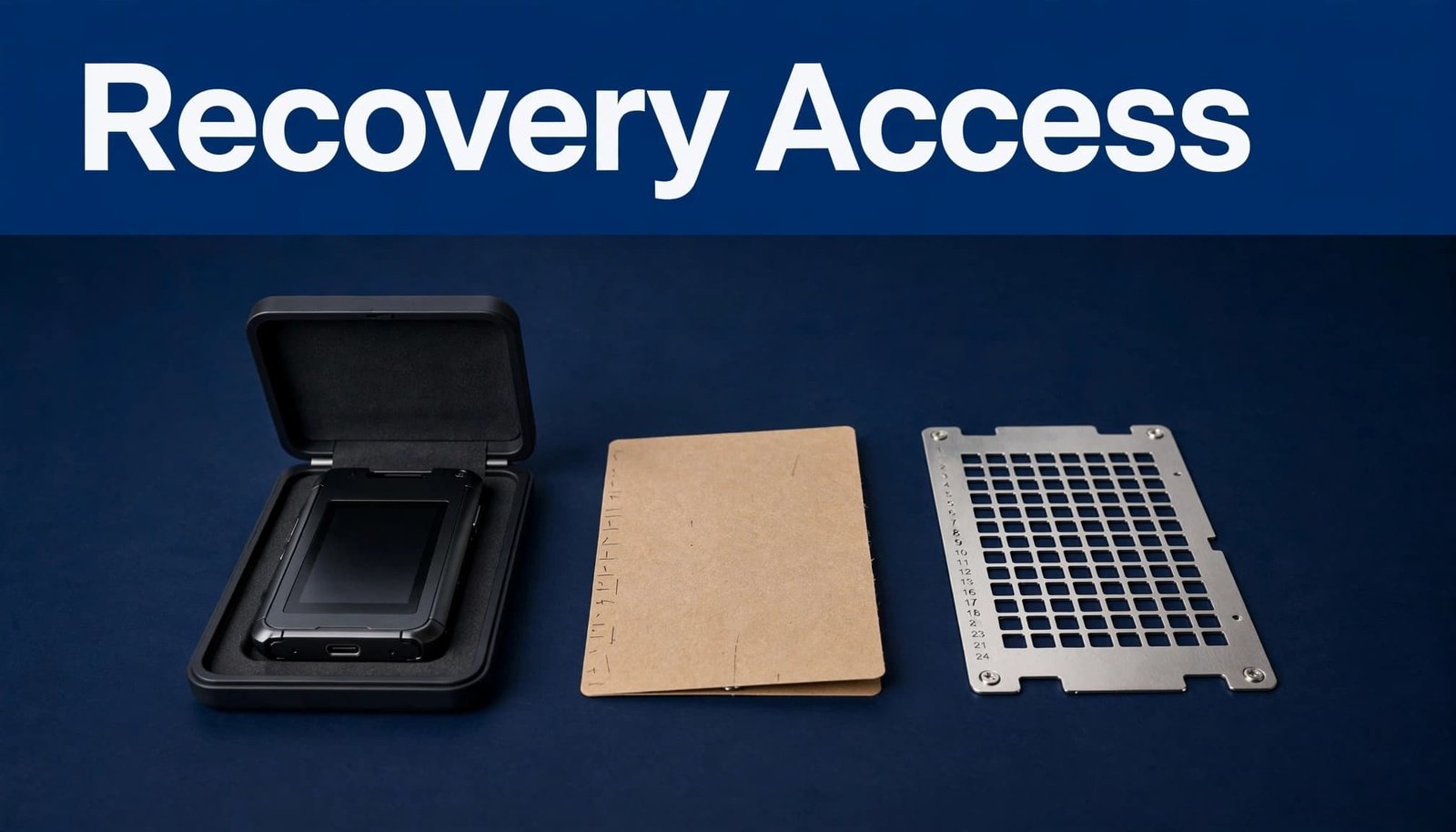
- Inspect the original paper record, metal backup, safe, lockbox, or other planned physical storage location.
- Check whether another phone, computer, or hardware wallet still opens the same wallet.
- Look for an official encrypted backup that your wallet explicitly supports, such as an approved cloud backup you created yourself.
- Confirm whether you added a separate BIP-39 passphrase, sometimes called a 25th word, and whether you recorded it separately.
Restore only through the wallet maker’s official software. Before moving anything, compare the restored wallet’s addresses and balances with the addresses you expected. Coinbase’s wallet recovery guidance is one example of why recovery options depend on the wallet and the backup method you used.
Watch for fake recovery experts and phishing scams.
Scammers often appear in search results, Telegram groups, Reddit replies, X direct messages, and social media comments. They promise a quick recovery, then ask for the seed phrase, private key, PIN, password, screenshots, or remote access to your computer.
Some create look-alike wallet support pages that request a phrase to “sync” or “validate” a wallet. Others ask for an upfront fee, then disappear or drain the wallet after receiving the words. Anyone who gets the full recovery phrase can control the assets.
Use the same caution outlined in this guide to spot cryptocurrency scams. Keep recovery details off cloud notes, email, chat apps, and photos. A legitimate support agent does not need your phrase to help with general troubleshooting.
Why Proof of Ownership Can’t Unlock a Self-Custody Wallet
Blockchains can show that an address received Bitcoin, Ether, stablecoins, or NFTs. They cannot identify the person who should control that address. The network accepts a properly signed transaction, not a story about how the phrase was lost.
Transaction history may help you identify the correct wallet after restoring it. It cannot generate the private keys required to spend from that wallet. Similarly, a photo of a hardware wallet, an account email, or an identity document doesn’t prove control to a decentralized network.
This design protects users from arbitrary account seizures. However, it also removes the familiar recovery process that comes with banks, brokerages, and traditional online accounts. Self-custody gives you direct control, along with full responsibility for the backup.
What to Do After You Regain Access
Regaining access is only the first step. Decide whether the original recovery phrase remained private during the loss. If anyone else saw it, photographed it, copied it, or received it through a form, consider the wallet compromised.
Move exposed funds to a new wallet.
Create a completely new wallet using trusted, official software or a reputable hardware wallet. Write down the new phrase offline before transferring anything. Do not reuse the old phrase, even if you recovered it.
Then send funds to addresses controlled by the new wallet. Check each blockchain network carefully. A token on Ethereum, Base, Arbitrum, or another network may need separate attention, even when the asset name looks identical. Leave enough native token, such as ETH, to cover any required network fees.
Confirm the move is complete.
Review every account and asset before you consider the transition finished. Small tokens, NFTs, staking positions, and assets on less-used networks are easy to overlook.
Check the new addresses through the official wallet app and a reputable block explorer. Keep the old wallet available until you have confirmed the expected balances and completed transactions. Then store the new backup separately from the device.
Build a Backup Plan That Fits Your Risk
A recovery phrase deserves the same care as a high-value financial document, but the right setup depends on your holdings, household, and physical risks. One paper copy in a desk drawer may be easy to access, yet it can be destroyed, stolen, or casually discovered.
Your backup plan should balance convenience against loss, theft, fire, and unauthorized access. That is the same trade-off behind broader decisions about managing investment risk.
Keep the phrase offline and durable.
Write the phrase clearly on paper or record it on a purpose-built metal backup. Store copies in separate secure locations, away from the phone or computer that runs the wallet.
Do not save it in screenshots, email drafts, cloud drives, password notes, or messaging apps. Encryption can reduce some risk, but it also adds another password or failure point that you must preserve.
Test the backup before an emergency.
When your wallet’s official instructions allow it, test the backup process with a small amount or a spare wallet. Confirm that the words are complete, readable, and in the correct order.
Do this privately and never expose the phrase to a connected website. A tested backup turns a future device failure into an inconvenience rather than a permanent loss.
Final Thoughts
A lost crypto recovery phrase may be manageable when an active device or trusted backup still exists. Once every recovery method is gone, self-custody funds may remain visible on-chain but permanently inaccessible.
Stop sharing information, check official wallet access and offline records, and move funds to a newly backed-up wallet if the phrase is exposed. Your recovery phrase is the one secret customer support cannot replace.