In This Article
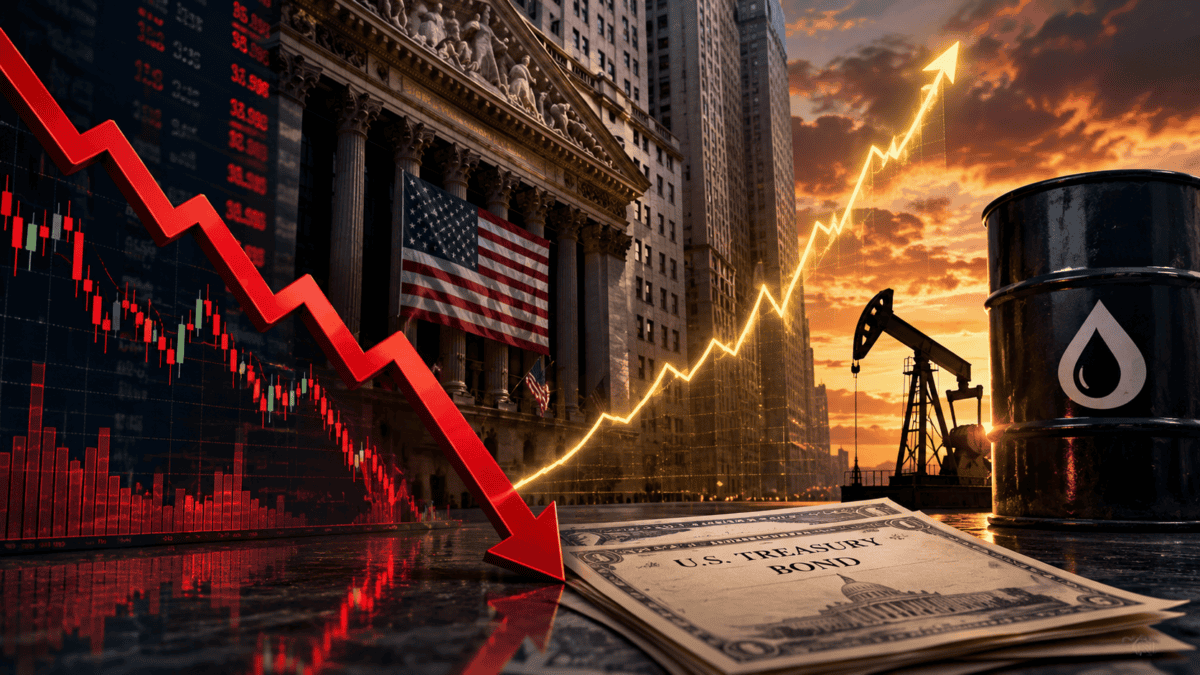
US stocks fall as Treasury yields and oil prices rise, renewing pressure on markets on Thursday, August 20, 2026. The Dow Jones Industrial Average dropped 703.84 points, the S&P 500 lost 0.87%, and the Nasdaq Composite declined 1%, as investors weighed rising borrowing costs, geopolitical tension in the Middle East, and uncertainty over the Federal Reserve’s next move. For everyday investors, the day was a reminder that bond markets and energy prices can move stocks just as much as company earnings and that the effects of a single policy announcement can wear off quickly.
1. US Stocks End Lower as Bond Pressure Returns
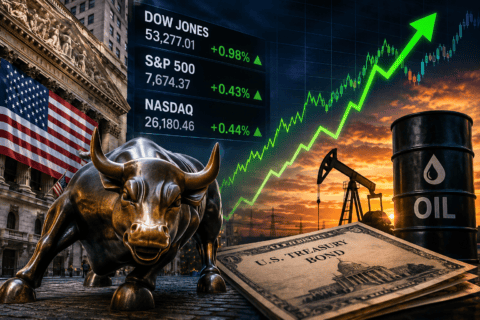
According to CNBC’s official market close report, the Dow Jones Industrial Average fell 703.84 points, or 1.32%, to close at 52,759.21 on Thursday. The S&P 500 declined 0.87% to end at 7,641.16, and the technology-heavy Nasdaq Composite dropped 1% to settle at 26,067.17. Separately, Yahoo Finance data showed the small-cap Russell 2000 index fell 1.34% to 2,992.43, while the CBOE Volatility Index (VIX), often called Wall Street’s “fear gauge,” jumped 7.52% to 16.01.
The losses erased the modest gains stocks had posted a day earlier, when the S&P 500 rose 0.21%, the Dow gained 0.22%, and the Nasdaq added 0.16%, according to CNBC. That Wednesday rally followed a surprise announcement from the US Treasury Department, which aimed to calm the bond market. By Thursday, however, those gains had reversed, as bond yields climbed back up and oil prices accelerated.
Walmart was among the day’s biggest decliners, falling about 9% on Thursday after US same-store sales growth slowed and fell short of Wall Street expectations.
2. Why Treasury Yields Are Rising
Treasury yields represent the return investors demand for lending money to the US government by buying Treasury bonds. When yields rise, it generally means investors are demanding more compensation, often because they expect higher inflation, greater government borrowing, or reduced demand for US debt from buyers at home and abroad.
According to reporting from NBC News, the 10-year Treasury yield rose as high as 4.71% on Thursday, its highest level since Tuesday, before ending the day near 4.70%. The 30-year Treasury yield, which had briefly eased after Wednesday’s Treasury announcement, spiked to as high as 5.267% before settling around 5.25%. Earlier in the week, on Monday, August 17, the 30-year yield had reached approximately 5.31%, its highest level since June 2007, according to CNBC.
Several factors have combined to push yields higher in recent weeks. Reuters reports that persistent inflation concerns, large US government debt and deficits, and competition from heavy AI-related corporate borrowing have contributed to pressure on the bond market. Global bond yields have also risen, with Germany’s 10-year bond yield and Japan’s 10-year government bond yield both touching multi-year or multi-decade highs’
Higher Treasury yields matter to ordinary households too. Because Treasury yields act as a benchmark for other borrowing costs, rising yields tend to push up rates on mortgages, auto loans, and other consumer credit. “Mortgage rates have also remained elevated. Mortgage News Daily reported that the average 30-year fixed mortgage rate reached 6.75% on August 18, reflecting continued pressure from higher bond yields.
3. What the US Treasury Is Doing
On Wednesday, August 19, the Treasury Department announced it would more than double the size of its long-term government debt repurchase operations, according to Reuters. Under the plan, the Treasury said it would raise the maximum size of its buyback operations from $2 billion to “at least” $4 billion, targeting bonds in the 10-to-20-year and 20-to-30-year maturity range. A segment of the market has faced weak demand, or a “buyers’ strike,” since late June.
Debt buybacks involve the government repurchasing some of its previously issued bonds, which can help support prices and push yields lower in a stressed part of the market. The move initially worked: yields fell and stocks rose on Wednesday.
However, the effect proved short-lived. Reuters reported that on Thursday, Treasury Secretary Scott Bessent told CNBC that the government could increase its bond repurchases beyond the $4 billion previously announced. Bessent said the objective was to support liquidity in a thinly traded part of the Treasury market. Despite the intervention, Treasury yields resumed their climb as investors remained concerned about inflation and rising government debt.
4. Why Oil Prices Matter
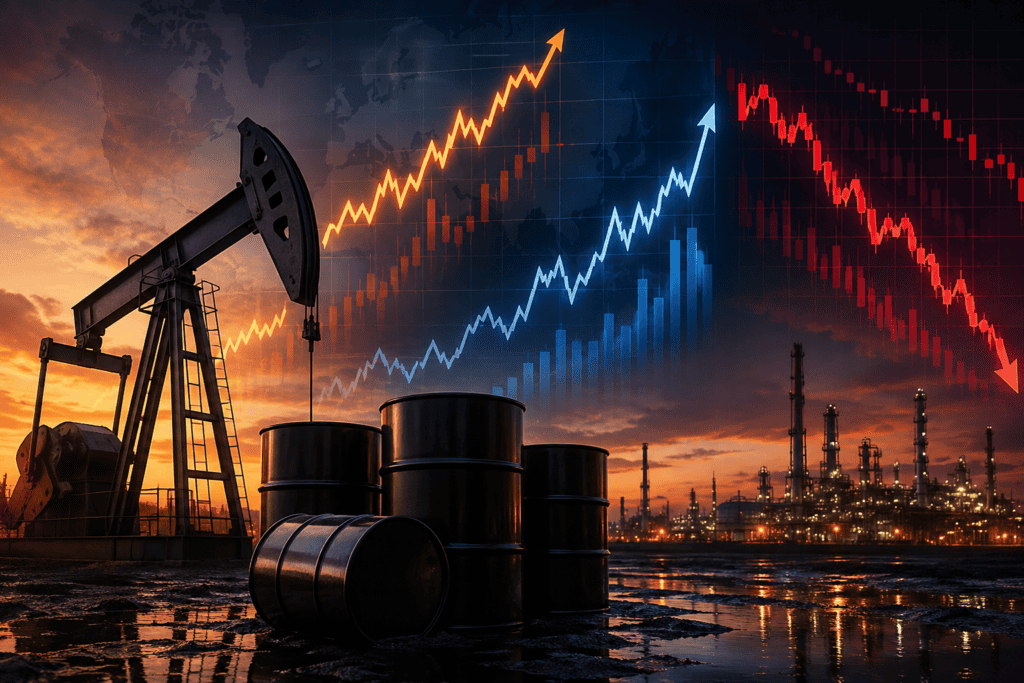
Oil prices rose sharply on Thursday. Reuters reported that the US benchmark West Texas Intermediate (WTI) crude briefly touched $89 per barrel before closing at $87.83, up 2.3% for the day. The international benchmark, Brent crude, rose more than 2% to close at $93.78 per barrel.
The move came after President Donald Trump indicated he intends to increase economic pressure on Iran, NBC News reported. Oil prices had already been elevated in recent sessions amid rising US-Iran tensions, after a memorandum of understanding between the two countries lapsed on August 17, according to Yahoo Finance. Earlier in the week, Trump also threatened to take action against Oman if it interfered with US plans concerning the Strait of Hormuz, a key global oil shipping route, according to Yahoo Finance and UPI. CNBC has also reported that the US Strategic Petroleum Reserve, the government’s emergency oil stockpile, has fallen to its lowest level since January 1983.
Oil prices matter to the broader economy and markets because energy costs feed directly into inflation, both through gasoline prices and the cost of transporting and producing goods. Rising oil prices can complicate the Federal Reserve’s efforts to bring inflation down, which is one reason energy market moves have been closely tied to bond yield swings recently.
5. What the Federal Reserve Is Watching
The Federal Reserve, led by Chair Kevin Warsh, is central to how markets are interpreting this period of volatility. Warsh was confirmed by the Senate on May 13, 2026, and sworn in on May 22, 2026, succeeding Jerome Powell, according to the Federal Reserve’s official announcement.
At its most recent meeting, held July 28 to 29, the Federal Open Market Committee (FOMC) voted 9 to 3 to hold the federal funds rate steady at a target range of 3.50% to 3.75%, according to the official FOMC statement published by the Federal Reserve. Three regional Federal Reserve bank presidents, Beth M. Hammack of Cleveland, Neel Kashkari of Minneapolis, and Lorie K. Logan of Dallas, voted against the decision, each preferring to raise the target range by a quarter percentage point at that meeting, according to the Federal Reserve’s official minutes.
Those minutes, released by the Federal Reserve on Wednesday, August 19, show that support for potentially higher rates extended beyond the three formal dissenters. “Many participants assessed that policy tightening would likely be necessary if inflation did not decline,” the minutes state.
The Federal Reserve’s minutes also confirm that the Committee will hold its next scheduled meeting from Tuesday, September 15, to Tuesday, September 16, 2026. Markets will be watching upcoming inflation and employment data closely between now and then, as well as any further public remarks from Chair Warsh.
6. Which Parts of the Stock Market Were Hit
Thursday’s declines were broad-based across major indexes, but one stock stood out. Retail giant Walmart fell about 9% after issuing a disappointing sales outlook, according to CNBC and Bloomberg, and was the single biggest drag on the Dow.
Technology and growth-oriented stocks, which tend to be more sensitive to rising interest rates because their expected profits lie further in the future, also came under pressure, contributing to the Nasdaq’s decline. In prior sessions this week, semiconductor and artificial-intelligence-linked stocks had already been highlighted by CNBC and Yahoo Finance as particularly exposed to the run-up in long-term bond yields, given how heavily some of these companies rely on borrowing to fund data center and infrastructure investment.
7. What Investors Should Watch Next
Several developments in the coming days and weeks are likely to influence the direction of stocks, bonds, and oil prices:
- Further Treasury actions: Secretary Bessent has signaled the debt buyback program could expand beyond the initial $4 billion figure, and any additional announcements could move bond yields again.
- US-Iran developments: Continued tension, including any further statements from President Trump regarding Iran or the Strait of Hormuz, could keep oil prices elevated or volatile.
- Economic data: Upcoming inflation and employment reports will shape expectations heading into the Fed’s September 15 to 16 meeting.
- Fed communications: Further public remarks from Chair Warsh may offer clues about the central bank’s thinking, though the FOMC’s July statement offered no explicit forward guidance, according to the Federal Reserve’s official minutes.
- Corporate earnings: With the second-quarter earnings season still unfolding, individual company results continue to influence sector-level performance alongside these broader macroeconomic forces.
Market conditions can change quickly, and some of the developments described above, particularly around US-Iran relations and the size of future Treasury interventions, remain uncertain and are still unfolding.
8. Frequently Asked Questions
Why did US stocks fall on August 20, 2026?
Stocks fell mainly because Treasury yields rose back up after a brief decline, and oil prices jumped following President Trump’s remarks about increasing economic pressure on Iran, according to NBC News and CNBC.
What is a Treasury yield, and why does it affect stocks?
A Treasury yield is the return investors receive for holding US government debt. When yields rise, borrowing becomes pricier across the economy, and future company profits become less attractive compared with the safer returns available from bonds, which can pressure stock prices, particularly for growth-oriented companies.
What did the Treasury Department announce this week?
On August 19, the Treasury said it would more than double the size of its long-term debt buyback operations, from a maximum of $2 billion to at least $4 billion, targeting bonds with maturities between 10 and 30 years, according to CNBC.
Who is the current Federal Reserve Chair?
Kevin Warsh has served as Federal Reserve Chair since being sworn in on May 22, 2026, succeeding Jerome Powell, according to the Federal Reserve’s official records.
What is the Federal Reserve’s current interest rate?
As of its July 2026 meeting, the Federal Reserve’s target range for the federal funds rate is 3.50% to 3.75%, according to the Federal Reserve’s official statement.
When is the Fed’s next meeting?
The next FOMC meeting is scheduled for September 15 to 16, 2026, according to the Federal Reserve’s official minutes of its July 28 to 29 meeting.
Why are oil prices rising?
Oil prices have risen amid escalating tension between the US and Iran, including expired diplomatic agreements and statements from President Trump about further economic and, at times, military pressure, according to Yahoo Finance and UPI.
Does the increase mean a recession is coming?
News reports reviewed for this article do not indicate that forecasters are currently predicting a recession. Economic conditions remain mixed, with some data points, such as a soft July retail sales report, suggesting caution, while the Fed continues to describe economic activity as expanding. This is a developing situation, and readers should follow updates from primary sources.