In This Article
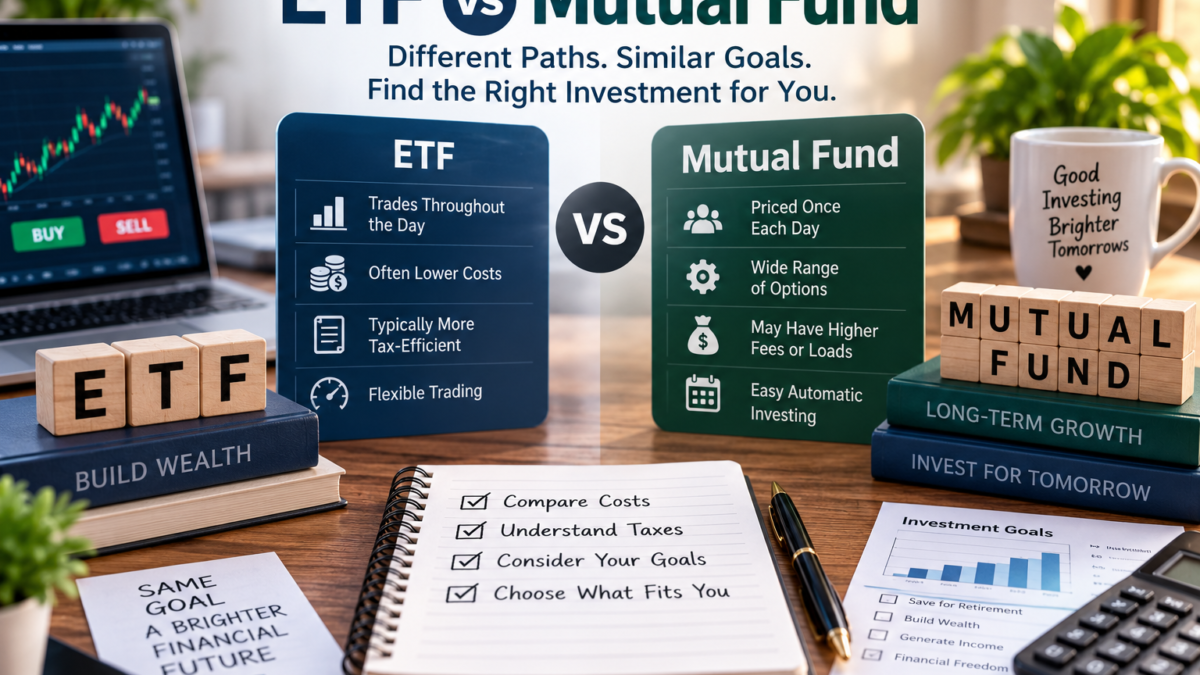
ETF vs mutual fund is a common comparison for investors choosing a simple way to build a diversified portfolio. Both investment options provide access to baskets of stocks, bonds, and other assets, but they differ in trading, fees, taxes, management, and convenience.
In an ETF vs mutual fund decision, both choices can hold diversified investments. Yet they differ in trading, management, taxes, costs, and convenience. A clear comparison helps you weigh the risks and choose a fund that fits your goals.
Key Takeaways
- ETFs trade on exchanges throughout the day, while mutual funds price once each business day.
- Either fund type can track an index or use active management.
- Expense ratios, spreads, commissions, loads, and account fees can affect long-term results.
- ETFs often create fewer capital-gain distributions in taxable accounts, but taxes still apply.
- The fund’s holdings, risks, and total cost matter more than its label.
ETF vs Mutual Fund: How Each Investment Works
An ETF, or exchange-traded fund, pools money into a portfolio of stocks, bonds, commodities, or other investments. You buy and sell ETF shares through a brokerage account, much like shares of a public company. The SEC’s ETF investor bulletin explains that ETFs can trade at market prices above or below the value of their underlying holdings.
A mutual fund also pools investor money into a portfolio. However, you place an order in dollars or shares through the fund company, a brokerage, or an employer plan. The fund calculates its net asset value, or NAV, after the market closes. Everyone buying or selling that day receives that same end-of-day price.

Suppose you place a market order for an ETF at 11:15 a.m. Your trade may fill within seconds at the current market price. If you submit a mutual fund order at 11:15 a.m., it will generally receive that day’s NAV after the market closes.
Neither wrapper tells you how risky the investment is. A broad index ETF and a broad index mutual fund may own similar companies and behave similarly. Meanwhile, either format can use active management, where a manager selects holdings, or index management, where the fund tracks a benchmark such as the S&P 500.
An ETF isn’t automatically safer or better because it trades like a stock. Its holdings, concentration, fees, and investment objective tell the more useful story.
ETF vs Mutual Fund, Costs, Taxes, and Flexibility
Small details can change how a fund feels to own and how much of your return stays in your account. The Investor.gov guide to ETF basics is a useful starting point when reviewing the mechanics.

Why Expense Ratios and Trading Costs Matter
The expense ratio is the annual percentage a fund takes from assets to cover management and operating costs. It doesn’t arrive as a separate bill, yet it reduces the fund’s return over time.
For example, assume two $10,000 funds earn 6% annually before fees for 20 years. A 0.05% expense ratio leaves a hypothetical balance near $31,800. A 0.75% ratio leaves about $27,800. Returns, taxes, and market movements will differ in real life, but the fee gap can still matter.
ETFs may also involve a bid-ask spread, which is the gap between the highest current buyer’s price and the lowest seller’s price. Many online brokers offer commission-free ETF trades, though spreads still create a cost. Mutual funds may charge sales loads, redemption fees, transaction fees, or account fees. Compare the fee table rather than relying on a fund’s name.
Tax Efficiency Is Different in a Taxable Account
Taxes can arise from dividends, bond interest, and capital gains when investments sell at a profit. Mutual funds may pass realized capital gains to shareholders, even if you didn’t sell your own fund shares.
ETFs often use a creation and redemption process that can reduce taxable capital-gain distributions. That feature can make many ETFs more tax-efficient in a taxable brokerage account. However, ETFs can still distribute income and gains, and some mutual funds distribute few gains.
In a 401(k), IRA, or other tax-advantaged account, this difference often matters less at the time of distribution. Tax rules depend on the account, fund, and your circumstances, so a qualified tax professional can address personal decisions.
Trading Convenience Versus Automatic Investing
ETFs offer live pricing, limit orders, and the ability to trade whenever markets are open. A limit order lets you set the highest price you’re willing to pay or the lowest price you’re willing to accept.
Mutual funds tend to make repetitive investing easier. You can often schedule a $100 monthly purchase and reinvest distributions automatically without thinking about share prices. Some brokers now support fractional ETF shares, recurring ETF purchases, and dividend reinvestment, but features vary by platform.
ETF vs Mutual Fund, Which One Fits Your Investing Style?
The better choice depends on the job the fund must do. Your time horizon, account type, investment amount, tax situation, and preferred routine all matter.

When an ETF May Be the Better Fit
An ETF may suit a long-term investor using a taxable brokerage account who wants low ongoing costs and flexibility. Many ETFs publish holdings daily and have no large minimum investment beyond the cost of a share or fractional share.
This format also appeals to investors who want a broad index fund and prefer to control the price with a limit order. Still, frequent trading can raise costs, trigger taxes, and invite decisions based on daily market noise. A market order can also fill at a price you didn’t expect during volatile periods.
When a Mutual Fund May Make More Sense
A mutual fund can work well for a beginner building a retirement portfolio through recurring contributions. It also fits many workplace plans, where mutual funds or collective investment trusts make up most of the available menu.
Investors seeking active management may find a wider selection of mutual funds, although actively managed ETFs are common too. Vanguard, Fidelity, Schwab, BlackRock iShares, and State Street SPDR offer examples across both formats. These names aren’t endorsements. Read the prospectus because some mutual funds carry higher fees, sales loads, or minimum investments.
A Simple Checklist for Comparing Specific Funds
Before buying, use the fund fact sheet, prospectus, and your brokerage research tools to compare:
- Your goal, time horizon, target asset mix, and the fund’s benchmark.
- Holdings, sector concentration, historical volatility, turnover, and overlap with funds you already own.
- Expense ratio, ETF trading spread, tax distributions, minimum investment, and account availability.
- Manager tenure and approach for active funds, plus tracking quality for index funds.
Past performance doesn’t predict future results. A fund that topped a one-year ranking may have taken risks you don’t want.
A low fee is valuable, but a low-cost fund with the wrong holdings can still miss your goal.
ETF vs Mutual Fund, Common Mistakes to Avoid
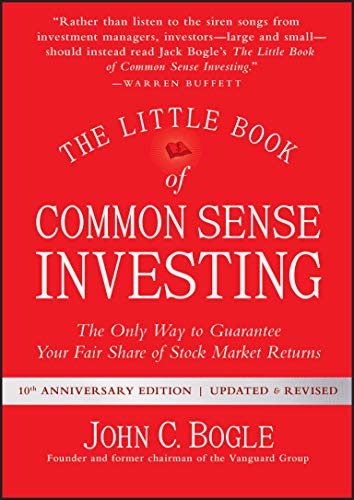
For a broader introduction to low-cost, long-term index investing, The Little Book of Common Sense Investing explains why diversification, costs, and disciplined investing matter when building a portfolio.
Last year’s winner can look irresistible after a strong rally. Chasing it often means buying after its price has already climbed. Start with the fund’s objective and holdings, not its ticker symbol or marketing name.
Also check for overlap. Owning several technology-heavy funds may feel diversified because the account holds many names, yet the same large companies may drive most of the result. Diversification reduces the damage from one holding, but it can’t erase market-wide losses.
Risk comes in several forms:
- Market risk is the chance that a broad decline pulls down the fund.
- Interest-rate risk affects bond prices when rates change.
- Credit risk is the danger that a bond issuer can’t make promised payments.
- Concentration risk rises when a fund leans heavily on one sector, country, or company group.
- Tracking error measures how far an index fund’s return strays from its benchmark.
Don’t focus only on the expense ratio. Check taxes, spreads, fund quality, and how the investment fits the rest of your portfolio. Then follow a practical path: identify the goal, choose an asset mix, compare suitable funds, check total costs, and invest consistently.
Frequently Asked Questions
Are ETFs safer than mutual funds?
Safety depends mainly on what a fund owns, not whether it is an ETF or mutual fund. A broad stock fund carries different risks than a bond fund, a narrow sector fund, or a money market fund. Read the investment objective and holdings before judging risk.
Can I lose money in an ETF or mutual fund?
Yes. Fund values can fall, and some funds take much more risk than others. Diversification can reduce exposure to a single company, but it can’t prevent losses during a broad market decline.
Which is better for a 401(k), an ETF or a mutual fund?
Most workplace plans offer mutual funds, collective investment trusts, or a limited group of choices. Compare the plan’s low-cost diversified options first, then consider employer matching before focusing on the ETF versus mutual fund format.
Do ETFs and mutual funds pay dividends?
Both can distribute dividends, interest, or capital gains from the investments they hold. Depending on your account settings, you can often receive those distributions as cash or reinvest them into more fund shares.
Can I own both ETFs and mutual funds?
Yes, and many investors do. However, combining both formats doesn’t automatically improve diversification or returns. Review your holdings for duplicate exposure and keep the portfolio simple enough to manage.
Conclusion
Neither choice wins for every investor. ETFs may appeal to people who want low costs, flexible trading, and potential tax efficiency. Mutual funds may suit people who prefer automatic contributions, a simple long-term routine, or the choices inside a retirement plan.
Choose based on holdings, fees, taxes, convenience, and goals, not the fund label. This is general education, not personalized investment or tax advice.