In This Article
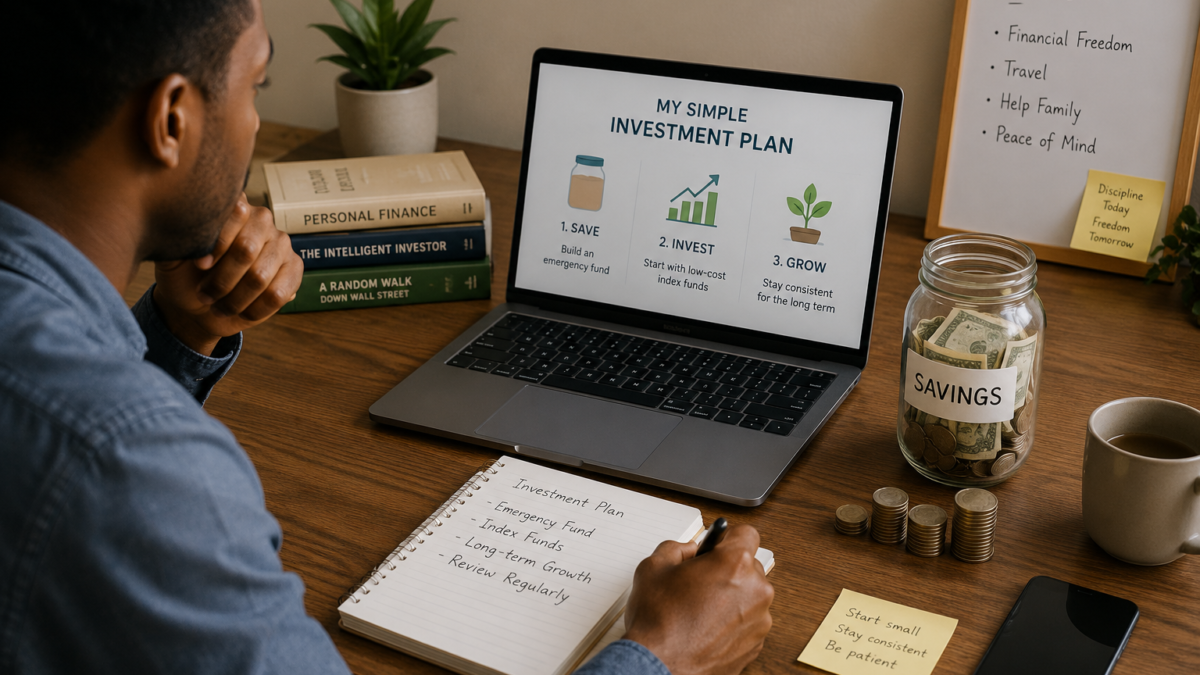
Investing with little money is possible when you start with a clear plan, control your expenses, and choose investments suited to your budget. You do not need thousands of dollars to begin building long-term wealth.
How Investing With Little Money Works
Many people assume investing requires hundreds or thousands of dollars, but you can start with a small amount and build wealth through steady contributions over time. Even modest deposits can help you develop a consistent habit and benefit from long-term market growth.
This guide explains how to begin investing with little money, which accounts and investments to consider, how much you may want to start with, and common mistakes to avoid. It offers general education, not personalized financial advice, so let’s begin with the first steps.
Key Takeaways
- You can start investing with as little as $10 or $25, then increase contributions as your budget allows.
- Choose an account based on your goal and time horizon, such as a 401(k), Roth IRA, traditional IRA, or taxable brokerage account.
- Low-cost, diversified funds and ETFs can help reduce concentration risk and keep fees manageable.
- Automating contributions can make consistent investing easier, but it does not eliminate market risk or guarantee returns.
- Build an emergency fund, manage high-interest debt, and avoid investing money you need for near-term expenses.
Build an Investing Plan for a Small Budget
A small budget can support a sustainable contribution when your plan fits your real finances. Before choosing an account or fund, review your income, expenses, and what you need to protect. A small, consistent contribution can help you build wealth more reliably than a large deposit you can’t maintain.
Choose an Amount You Can Invest Every Month
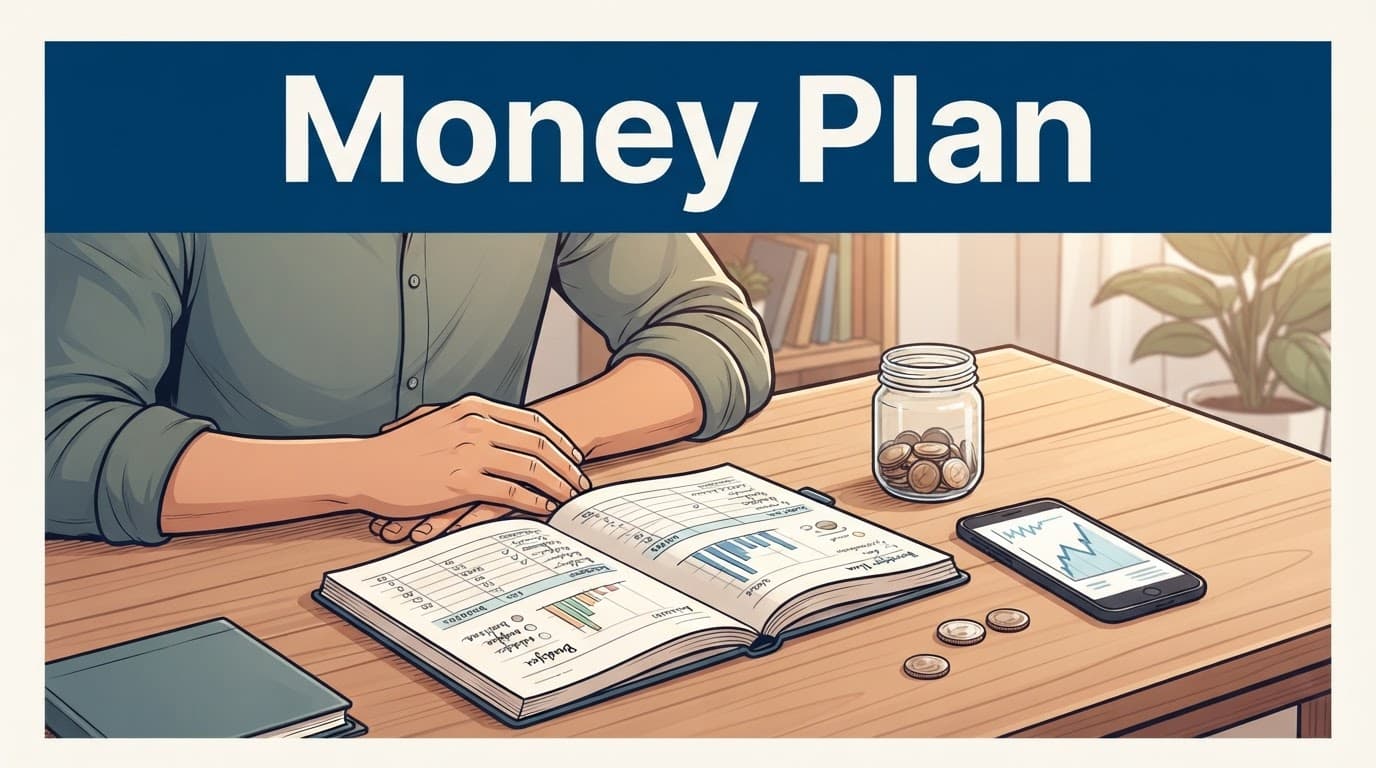
Start with your monthly take-home income. Subtract essential bills, minimum debt payments, groceries, transportation, insurance, and regular savings. Leave room for irregular costs, such as car repairs or annual fees, before deciding how much you can invest.
If you have high-interest credit card debt, paying down that balance may deserve priority because its interest can outpace many investment returns. You also don’t need to be debt-free before investing. A small contribution can continue while you make extra payments.
Build an emergency fund in a savings account before investing more aggressively, even if your first target is modest. The SEC’s introduction to investing explains why savings accounts can fit short-term needs and emergency funds.
For short-term cash needs, a savings account may be appropriate. A high-yield savings account is one example, while certificates of deposit may also fit, depending on access and terms. You might begin with $25 each week, or about $100 per month. If that amount strains your budget, start with $10. When your cash flow improves, consider raising it to $50. Set up an automatic transfer for payday so the money moves before you spend it.
Set a Goal Before You Pick an Investment
Your financial goals and time horizon should guide your choices. Money needed within the next few years usually belongs in a safer savings vehicle, rather than a risky investment that could lose value when you need to withdraw. A near-term need calls for more caution than retirement investing. The right asset allocation depends on your time horizon and risk tolerance, which is your ability to tolerate losses.
Retirement goals may fit a tax-advantaged retirement plan, such as a workplace 401(k) or individual retirement account. Target date funds can offer a simple retirement-oriented option. Long-term wealth building may use a taxable account when you need more flexibility.
Regular deposits may benefit as returns earn additional returns over time. Use the SEC’s compound interest calculator to illustrate how returns and contributions may grow over time under different assumptions.
Best Strategies for Investing With Little Money
Once your budget and goal are clear, choose an account, select a diversified investment, and automate small contributions. The right setup removes much of the friction from getting started.
Pick the Right Account for Your Goal
A taxable brokerage account lets you invest for any goal and withdraw money whenever you choose. You may owe taxes on dividends and profits from investments you sell.
A Roth IRA uses after-tax contributions, but qualified retirement withdrawals are generally tax-free. A traditional IRA may provide a tax deduction today, while withdrawals in retirement generally count as taxable income. Workplace plans, such as 401(k)s, may offer pre-tax or Roth contributions.
For 2026, the combined contribution limit for traditional and Roth IRAs is $7,500, or $8,600 if you’re at least 50. The employee contribution limit for most 401(k) plans is $24,500. Some workers also qualify for catch-up contributions. Check the IRS IRA contribution limits and 2026 401(k) limits before contributing.
If your employer matches part of your 401(k) contribution, try to contribute enough to receive the full match. That match adds money to your account based on your contributions.
Start With Low-Cost, Diversified Investments
Broad-market index funds and exchange-traded funds hold many companies or bonds in one investment. You can also compare mutual funds and target date funds, which offer diversification and adjust their mix over time.
Review each fund’s expense ratio, which is the yearly operating cost deducted from fund assets. Don’t assume every index product has a low cost structure, especially when a small account can feel these costs over time.
Diversification can reduce your investment portfolio’s dependence on one company or asset. Putting all your money into one stock, cryptocurrency, or trend can still create sharp losses.
Make the First Investment and Automate Future Contributions
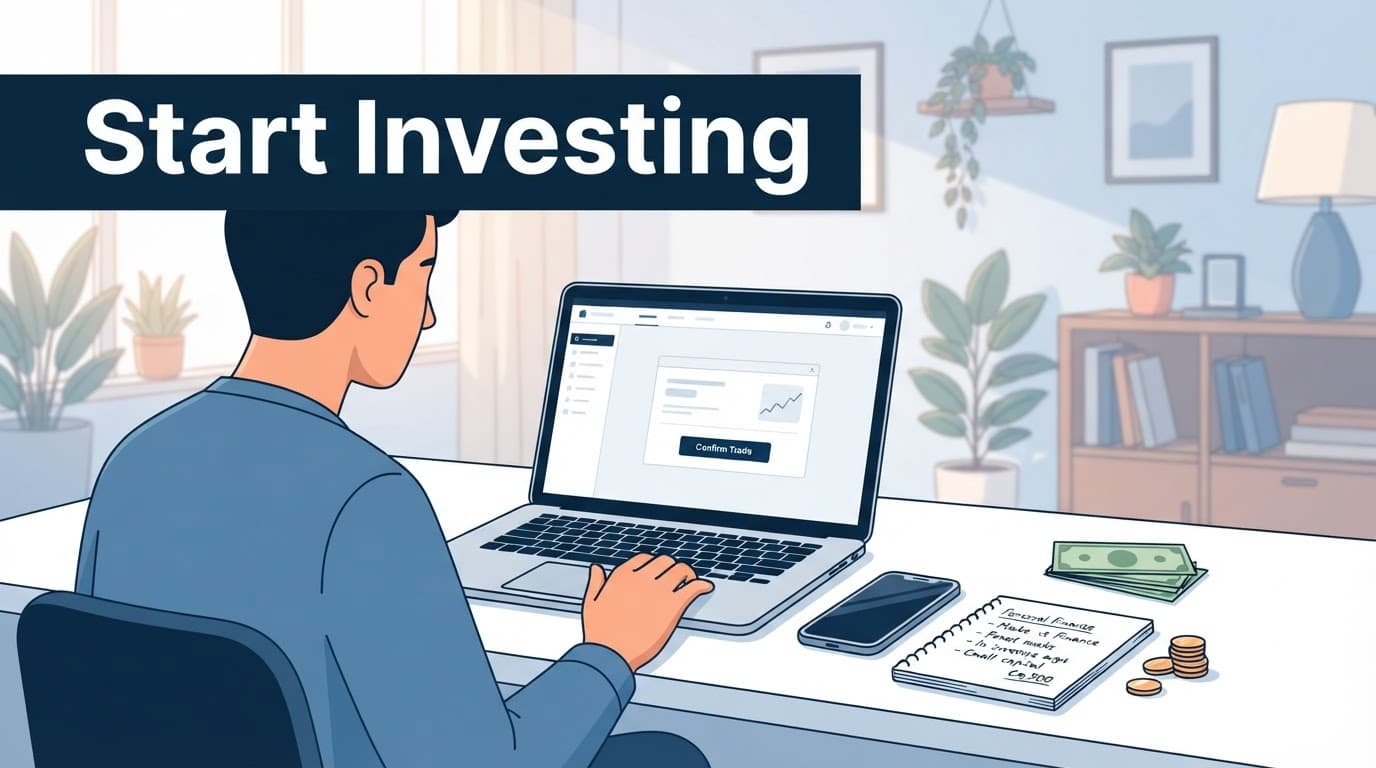
After opening the account, connect your bank, transfer an amount you can afford, and choose the fund or ETF. Before submitting the order, review the investment name, dollar amount, price type, and any transaction fee.
Micro-investing apps may let you invest tiny amounts or round up spare change from purchases. Review their fees, investment choices, and account terms before signing up.
Fractional shares let you buy part of a share, so you may invest $10 or $25 even when one full share costs more. Then schedule recurring contributions or purchases after payday. Consistent contributions may grow over time through compound interest, although dollar-cost averaging doesn’t remove market risk or guarantee a profit.
Compare current fees, minimums, fractional share rules, and automatic-investing features at providers such as Fidelity, Charles Schwab, Vanguard, or a robo-advisor. Automated investing can simplify regular purchases, but brokerage protections may cover certain firm failures without protecting you from investment losses. Also verify withdrawal rules with the IRS or your plan provider before taking money out.
Costs to Consider When Investing With Little Money
When you invest small amounts, fees can take a noticeable bite from your balance. A low cost of ownership helps a small balance remain invested.
Compare Brokers, Robo-Advisors, and Employer Plans
A brokerage account usually gives you the widest investment choice and lets you select funds or stocks yourself. Many brokers have no account minimum and offer commission-free trades, but you still need to review fund expense ratios, bid-ask spreads, and account service fees.
A robo-advisor builds and manages a portfolio for you. It often has a low starting minimum and makes investing easier, but its advisory fee is charged in addition to the expense ratios of the funds it uses. Customer support may also be more limited than full-service brokerage support.
An employer plan, such as a 401(k), may offer tax benefits and matching contributions. However, your plan may have fewer investment choices, higher administrative costs, or withdrawal restrictions. Compare these features before choosing where to place each dollar:
- Minimums: Look for low or zero opening deposits, especially when starting with $10 or $25. Check whether the account supports fractional shares for small-dollar purchases.
- Investment choices: Verify whether you can buy broad index funds, mutual funds, target-date funds, ETFs, or individual securities.
- Fees: Review trading commissions, expense ratios, advisory fees, account fees, and transfer charges.
- Support: Consider phone, chat, educational resources, and access to human assistance.
A $5 monthly account fee costs $60 per year. On a $1,000 balance, that equals 6% before any investment growth, so small recurring charges matter.
Read the fee schedule, fund prospectus, and account disclosures before signing up. Those documents also explain bid-ask spreads, withdrawal fees, and possible charges for transferring an account.
Understand Taxes Before You Sell or Withdraw
A taxable account may create taxes on dividends, interest, and realized capital gains when you sell an investment for more than its cost. The IRS explains investment income and capital gains in Publication 550.
Retirement accounts follow different rules. Traditional IRA and pre-tax 401(k) withdrawals generally count as taxable income, while qualified Roth withdrawals can be tax-free. Roth IRA contributions and earnings don’t receive identical withdrawal treatment, so taking out contributions may differ from withdrawing investment growth.
Review the IRS guidance on Roth IRA rules before making a withdrawal. Tax rules can change, and your situation may require advice from a qualified tax professional.
Managing Risk When Investing With Little Money.
A small account still requires a clear safety plan. Your account may be small, but poor decisions can damage your finances, confidence, and ability to keep investing.
Avoid These Costly Beginner Mistakes
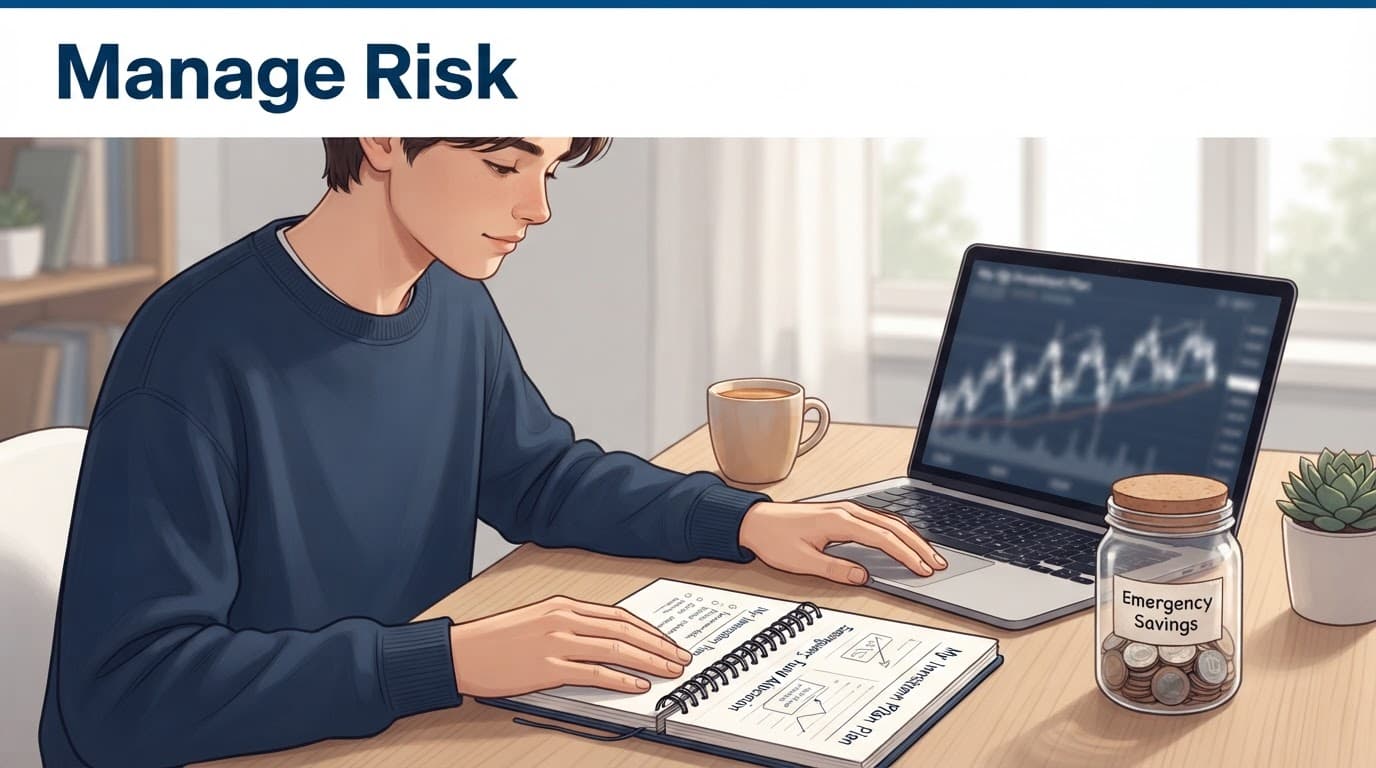
Never invest money you need for rent, groceries, debt payments, or emergencies. Keep near-term expenses in cash so a market decline doesn’t force you to sell at a particularly inopportune time.
Headlines can trigger fear or excitement, but reacting to every market story often leads to buying after prices rise and selling after they fall. Trying to time the market creates another problem: you must predict when to exit and when to return.
Social media can introduce useful ideas, but it can also promote risky stocks, cryptocurrency, and promises of rapid returns. Research an investment through reliable sources before putting money into it.
Fees also matter. A monthly account charge, high expense ratio, advisory fee, or frequent trading cost can consume a large share of a small balance. Check the fee schedule before opening an account.
If your employer offers a 401(k) match, ignoring it can mean turning down part of your compensation. Contribute enough to receive the full match when your budget allows, then review whether the plan’s fees and investment choices fit your goals.
Finally, checking your account several times a day can turn normal price changes into emotional decisions. A written plan and scheduled review, perhaps once or twice a year, can help you stay focused.
Keep Investing During Market Drops Without Panicking
The stock market can rise and fall sharply, even during a long-term investment period. A temporary decline becomes a permanent loss when you sell, although an investment can also suffer a permanent loss if the underlying company or asset fails.
Keep your emergency fund separate and review your investment portfolio against your original plan, risk tolerance, and time horizon before changing anything. If it still fits your plan, continue suitable automatic contributions. Buying at different prices can reduce the pressure to choose one perfect entry point.
The SEC’s guidance on asset allocation and diversification explains how to structure your portfolio. Diversification can limit dependence on one holding, but it cannot eliminate losses. Rebalance when your chosen mix drifts or your goals change, not simply because a headline causes alarm.
A market drop is a reason to review your plan, not an automatic instruction to abandon it.
Frequently Asked Questions
How much money do I need to start investing?
You can begin with as little as $10 or $25 if your brokerage or investment app supports small-dollar or fractional-share purchases. The most important factor is choosing an amount you can contribute consistently without straining your budget.
What is the best investment for beginners with little money?
Broad-market index funds, ETFs, and target-date funds can provide diversification through a single investment. Review the fund’s expense ratio, investment strategy, and risk level before buying.
Should I pay off debt or invest first?
High-interest credit card debt may deserve priority because its interest can exceed many potential investment returns. You can often make small investments while paying down debt, especially if your employer offers a 401(k) match.
Is a Roth IRA or taxable brokerage account better for small investments?
A Roth IRA may be useful for retirement because qualified withdrawals are generally tax-free, while a taxable brokerage account provides more flexibility for different goals. The better choice depends on when you need the money, your tax situation, and whether you have access to an employer match.
What should I do when the market drops?
Review your goals, time horizon, and risk tolerance before making changes. If your investment still fits your plan, continuing suitable automatic contributions may help you avoid emotional decisions, although diversification cannot prevent losses.
Conclusion
A strong investing habit starts with secure finances and a clear goal. Once you open a suitable account, choose a diversified investment, and automate an affordable contribution, you have a plan you can maintain and may build wealth over time.
Review that plan occasionally as your goals and finances change. Your first step can be as modest as $10. It may support your financial future, but investment results are uncertain. Patience and consistency may let compound interest support long-term growth.