In This Article
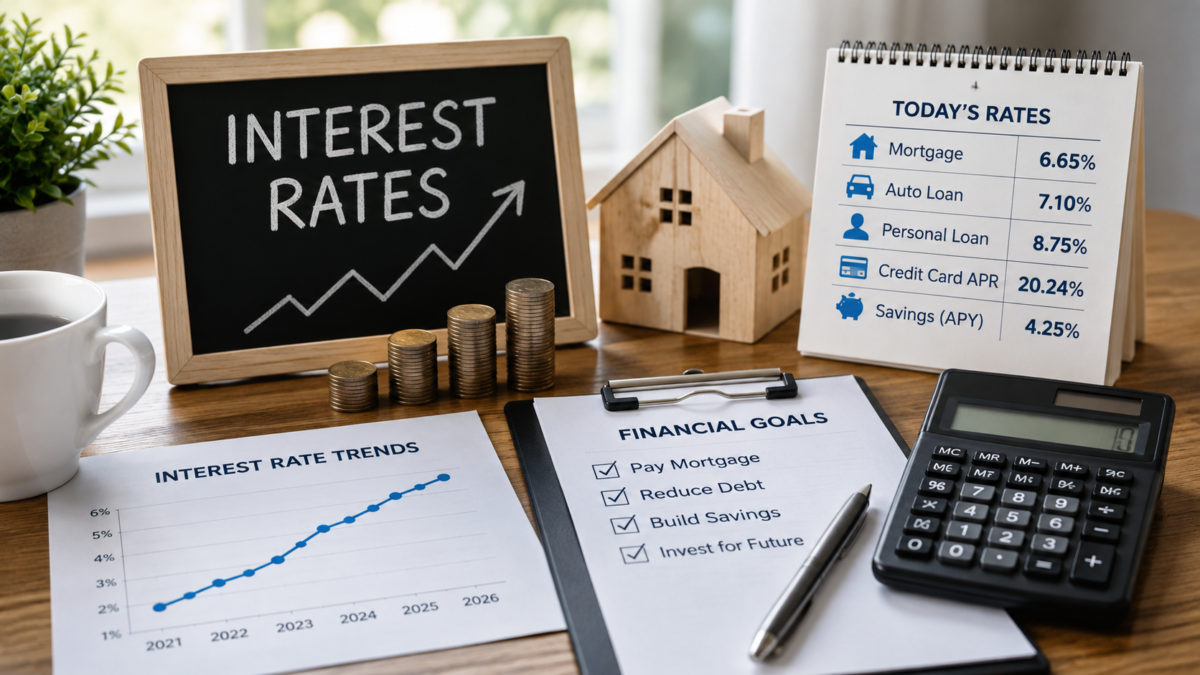
A credit card payment can rise even when you haven’t charged anything new, while a savings balance may earn more without extra deposits. That’s why interest rates explained matters: an interest rate is the price you pay to borrow money or the reward you receive for saving it.
Rates shape your household budget by changing mortgage, loan, and credit card costs, and they also affect savings, investments, inflation, and economic growth. The Federal Reserve influences broader rates, but lenders and banks set the terms you see based on the product and your financial profile. Next, we’ll break down how interest rates work and why even a small change can affect your money.
Interest Rates Explained: The Basics Every Beginner Should Know
An interest rate is the price of borrowing money or the reward for keeping money in an account. When you borrow, the lender charges interest because it takes risk and gives up access to its funds. When you save, the bank may pay you interest, as it can use the money you deposit to support lending and other business activities.
A quoted rate alone doesn’t tell the whole story. Your actual rate can vary by lender, product, credit history, loan term, fees, and broader market conditions.
Simple Interest and Compound Interest Use Different Math
Simple interest applies only to the original amount, called the principal. For example, $1,000 earning 5% simple interest for one year produces $50 in interest, resulting in a total balance of $1,050.
Compound interest applies to the principal plus interest already added to the account. The balance can therefore earn interest on the interest already earned. The same $1,000 at a 5% annual rate, compounded once a year, becomes $1,050 after one year. If the account compounds monthly, it grows to about $1,051.16 instead.
The difference after one year is small, but more frequent compounding can widen the gap over longer periods. The CFPB’s payment-of-interest guidance recognizes several possible compounding schedules, including monthly, daily, and annual compounding.
Compounding can help savers build a balance without making additional deposits. However, it can also increase the cost of unpaid credit card balances and other debt because interest gets added to what you owe.
Fixed and Variable Rates Change the Risk You Take
A fixed interest rate stays the same for a set period. This structure makes payments easier to predict, which can help when you plan a household budget. Mortgages, personal loans, and some auto loans may use fixed rates.
A variable or adjustable rate can change when a benchmark or contract formula changes. The starting rate may be lower, but future payments can rise. Credit cards, home-equity lines of credit, adjustable-rate mortgages, and some personal loans often use variable rates.
Before choosing a variable-rate product, review its rate cap, margin, reset date, and adjustment rules. The contract should explain which index affects the rate and how often the lender can recalculate it. A lower starting payment is useful only if you can manage the payment after a possible increase.
APR and APY Reveal Different Parts of the Deal
APR measures the annual cost of borrowing. For mortgages and some other loans, it may include the interest rate plus certain fees, making it more useful than the advertised rate alone. Use APR when comparing loans, credit cards, and other borrowing products.
APY measures the annual return on a deposit after accounting for compounding. Use it to compare savings accounts and CDs. A higher stated rate may produce a lower return if the account compounds less often or includes different terms.
Check loan disclosures and account agreements before choosing. One headline number rarely describes the complete cost or return.
Why Interest Rates Rise and Fall in the First Place
Interest rates move because the economy is always balancing growth, inflation, employment, and financial risk. The Federal Reserve influences broad borrowing conditions, but it doesn’t directly set every mortgage, credit card, auto loan, or savings rate. Markets can also adjust before or after an official policy decision because lenders respond to expected economic conditions.
The Federal Reserve Uses Rates to Guide the Economy
The federal funds rate is the overnight interest rate banks charge one another for short-term loans. The Federal Reserve influences this rate through monetary policy, and then changes in the banking system can spread across other markets.
When the federal funds rate rises, banks often face higher short-term funding costs. Prime rates may increase, and lenders may become more selective. Credit card APRs, home equity lines, business loans, and some adjustable-rate products can become pricier. Deposit yields may also rise as banks compete for customer savings, although the increase may vary by institution and account.
As of late August 2026, the Federal Reserve’s target range for the federal funds rate was 3.50% to 3.75%, while its August 28 release reported an effective rate of 3.63%. Those figures are time-sensitive examples, not permanent benchmarks. You can check the Fed’s daily interest-rate release for updated data.
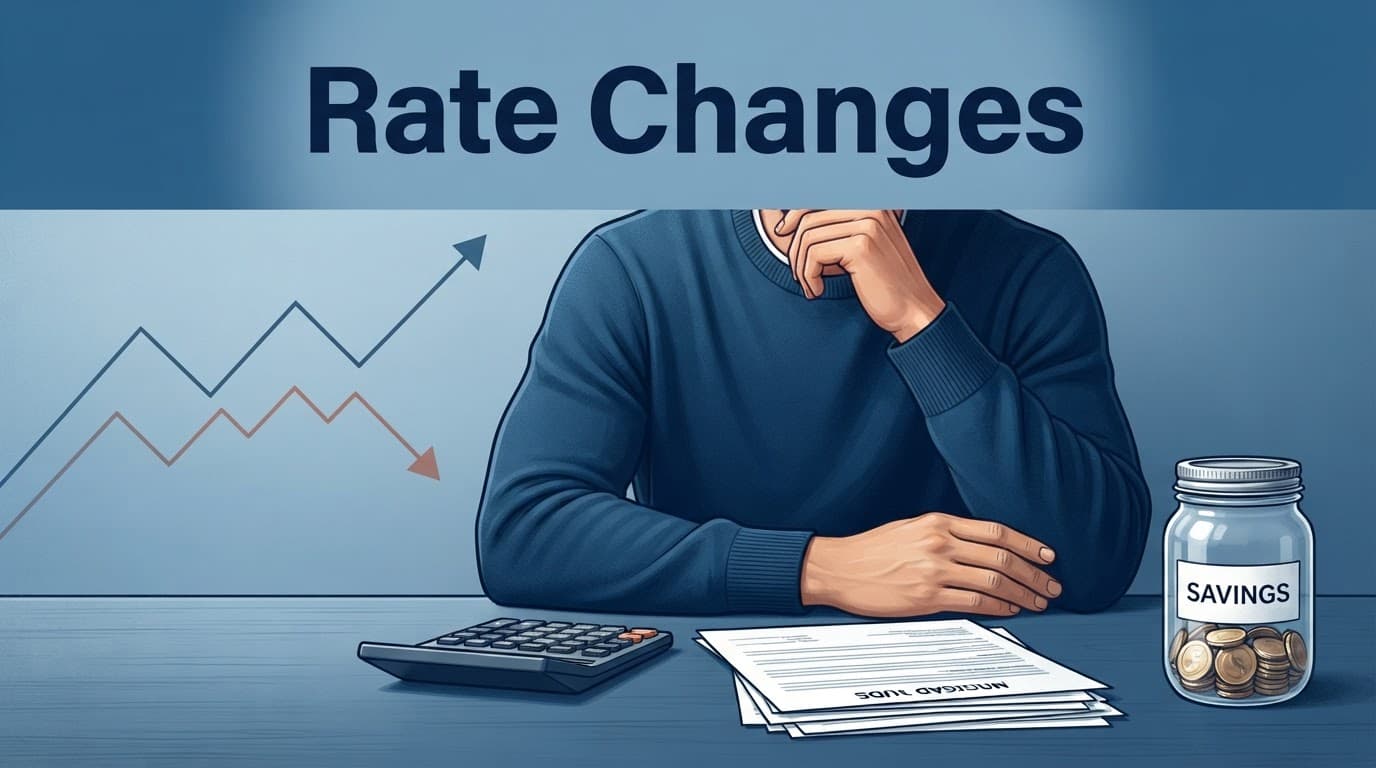
Higher rates can cool the economy by making mortgages, loans, and credit purchases harder to afford. Households may delay major purchases, and businesses may postpone expansion. Lower rates can support demand by reducing financing costs, though lenders still consider credit scores, income, collateral, and market risk.
Inflation and Interest Rates Often Move in Opposite Directions
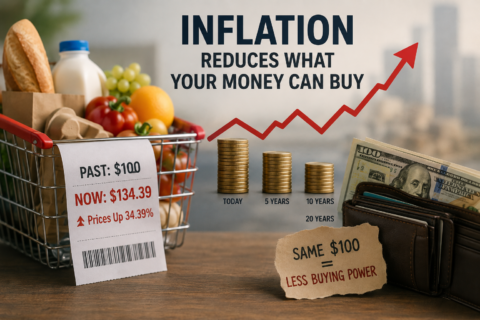
Inflation means prices rise over time, so the same dollar buys less. Learn more about this connection in our guide to inflation and purchasing power.
When inflation remains too strong, central banks may raise rates to reduce borrowing and spending. Weaker demand can slow price growth, but rate increases can’t quickly repair a broken supply chain, crop shortage, energy shock, or labor disruption.
The real interest rate adjusts a stated rate for inflation. For example, a savings account paying 4% while inflation runs at 3% offers an approximate real return of 1% before taxes. The account balance grows, but its purchasing power grows more slowly.
How Interest Rates Affect Your Borrowing and Savings
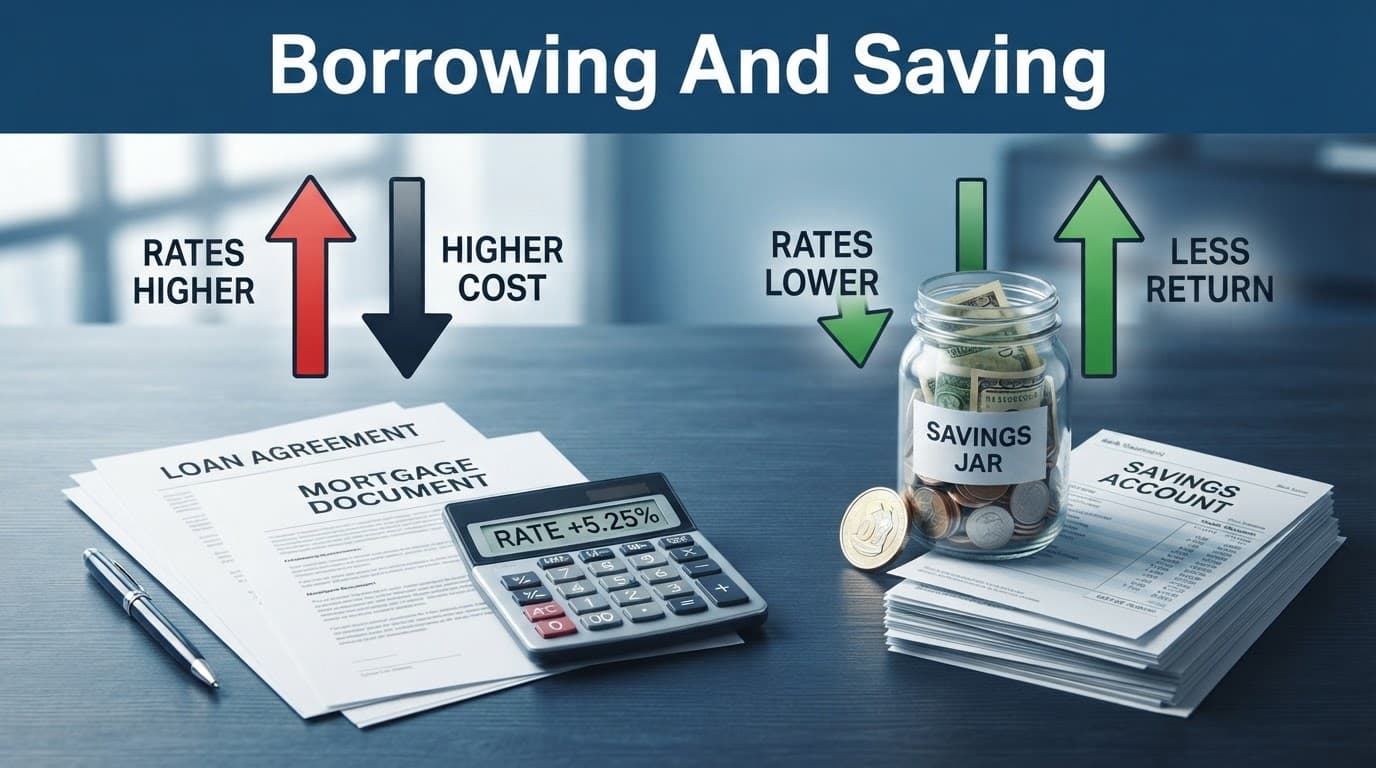
The same rate change can hurt a borrower while helping a saver. Your outcome depends on the product, balance, timing, and whether the rate is fixed or variable.
Mortgages Can Change Monthly Payments and Total Home Costs
A mortgage rate affects both your payment and the total interest paid. For example, a hypothetical $300,000, 30-year fixed mortgage at 6% would have a principal-and-interest payment of about $1,799 per month. At 7%, the payment would rise to about $1,996. That 1% difference adds roughly $71,000 in interest over the full loan term, before taxes, insurance, and other costs.
A fixed-rate mortgage keeps the interest rate stable, so your principal-and-interest payment remains predictable. An adjustable-rate mortgage, or ARM, may begin with a lower rate, then change according to its index, margin, adjustment schedule, and caps. The initial payment can look attractive, but future increases may strain your budget.
The mortgage interest rate is the loan’s base borrowing cost. Mortgage APR is a broader comparison figure that generally includes the rate, discount points, broker fees, and certain other charges. Review the CFPB’s mortgage APR explanation before comparing offers.
Credit Cards, Personal Loans, and Auto Loans Respond Differently
Credit card APRs are often variable. If you carry a balance, a higher APR makes each unpaid dollar pricier. Pay the statement balance in full whenever possible, and prioritize paying off high-cost debt first.
Personal and auto loan rates depend on credit history, income, debt-to-income ratio, lender, loan term, and collateral. Auto loans usually secure the vehicle, while personal loans often remain unsecured. A longer term can reduce the monthly payment but increase total interest. Hypothetically, a $20,000 loan at the same rate costs less overall over three years than over six years, even though the six-year payment is lower.
Savings Accounts and CDs Can Reward Higher Rates
A competitive APY helps savings grow because it includes compounding. Savings accounts usually offer easier access, but their rates can change. CDs commonly lock a rate for a set term and may charge an early-withdrawal penalty. Compare APY, fees, minimum balances, withdrawal rules, and FDIC insurance before choosing.
What Rate Changes Mean for Investments, Businesses, and the Economy
Interest rate changes reach well beyond your loan payment or savings account. They can shift investment values, change business decisions, and influence how quickly households spend money. However, markets rarely respond to one rate announcement in isolation. Investors also weigh inflation, company profits, employment, and expectations about future economic conditions.
Bonds Usually Feel Rate Changes More Directly
Bond prices and yields generally move in opposite directions. When newly issued bonds offer higher yields, older bonds with lower coupon rates may become less attractive. Their market prices can fall because buyers may prefer newer bonds that provide more interest.
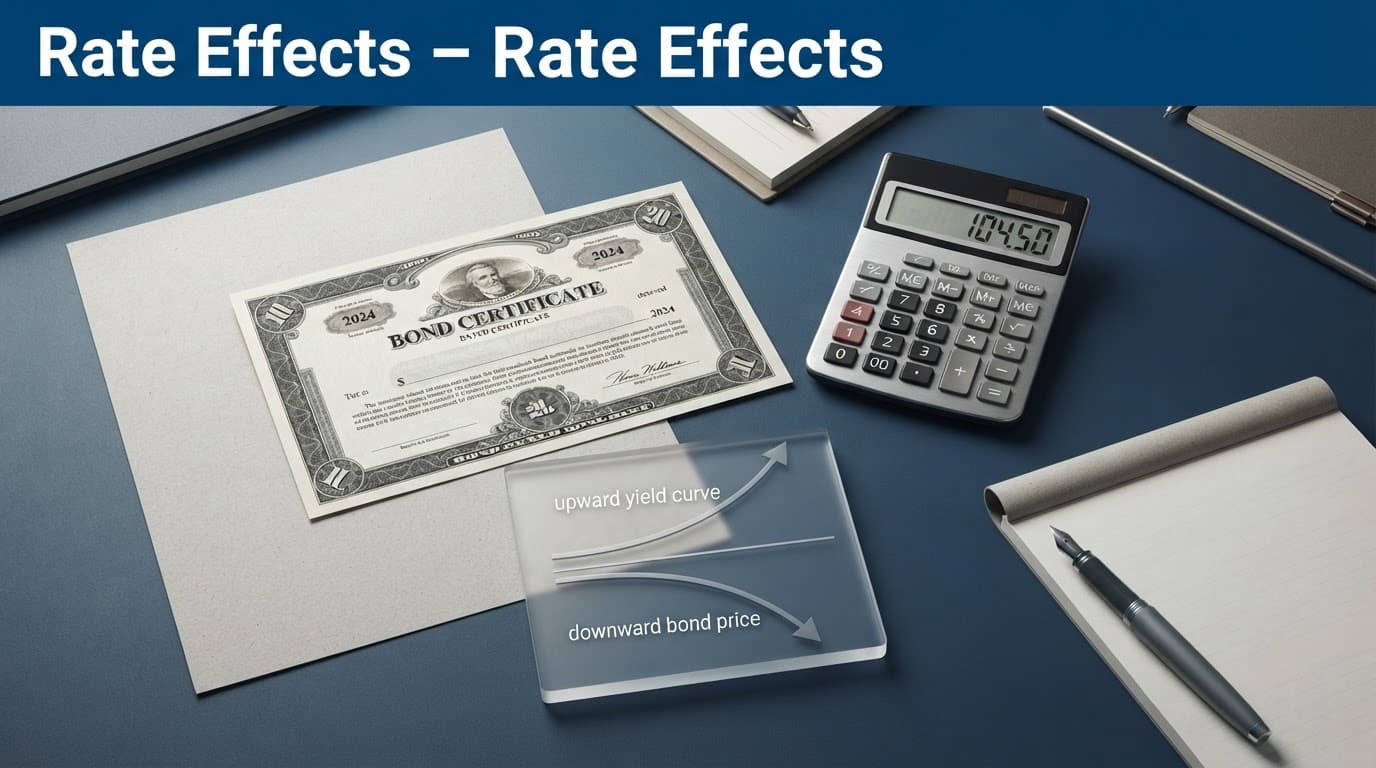
The effect depends partly on maturity, which is the time until the bond repays its principal. Longer-maturity bonds often react more strongly to rate changes. Duration is a related measure of a bond’s sensitivity to changing rates. Credit quality matters too, because bonds issued by borrowers with greater repayment risk may respond to changes in both interest rates and credit conditions.
Individual bonds and bond funds can behave differently. An individual bond may return its stated principal at maturity if the issuer meets its obligation, but its market value can change before then. A bond fund continually buys and sells securities, so its share price and income can change as its holdings and market rates shift.
Stocks and Other Investments Reflect Future Expectations
Higher rates can raise a company’s borrowing costs. They can also reduce the present value investors assign to future earnings, which may pressure some stock prices, especially when much of a company’s expected growth lies years ahead.
Still, the stock market is not a simple rate calculator. Prices also respond to profits, economic data, company conditions, investor risk appetite, and expectations. Cash, money-market products, real estate, and other assets may react differently as rates move.
The Federal Reserve explains that monetary policy changes financial conditions and can affect asset prices, borrowing, and spending. Review your goals, time horizon, diversification, and risk tolerance before reacting. Investment information here is general education, not personalized investment advice.
Businesses and Households Can Slow the Wider Economy
Higher borrowing costs may lead households to delay homes, cars, renovations, or other large purchases. Businesses may postpone expansion, equipment purchases, or hiring when financing becomes pricier.
As demand weakens, economic growth can slow and recession conditions may develop. The Fed identifies consumer spending, residential investment, and business fixed investment as important interest-sensitive parts of the economy. Lower rates can support spending and investment, but stronger demand may also add pressure to inflation. For more context, see what causes a recession.
Practical Ways to Respond When Interest Rates Change
Interest rate changes affect people differently. Borrowers may face higher payments, while savers may find better returns. The right response depends on your cash flow, debt terms, emergency savings, and financial goals.
Steps Borrowers Can Take When Rates Rise
Start by reviewing every variable-rate balance, including credit cards, home-equity lines, and adjustable-rate loans. Check each credit card APR, because a higher rate can make an unchanged balance pricier. If possible, direct extra payments toward your highest-cost debt first.
Refinancing may lower your rate, but compare the full deal before applying. Include closing costs, lender fees, points, prepayment penalties, and the new loan term. The Federal Reserve notes that refinancing costs can reach 3% to 6% of the outstanding principal. Use its refinancing guidance to calculate your break-even point, or the time needed for monthly savings to recover those costs.
A fixed-rate option may provide useful certainty when variable payments threaten your monthly budget. If higher borrowing costs are putting pressure on your finances, learning how to create a monthly budget can help you identify where your money is going and adjust spending priorities. Homebuyers should also stress-test their budget against a higher mortgage payment, then compare the loan’s total cost, not just its advertised rate.
For auto and personal loans, request offers from multiple lenders. Avoid choosing a longer term solely because it lowers the monthly payment. You may pay much more interest over time.

Steps Savers Can Take When Rates Are Higher
Compare APYs at FDIC-insured banks and credit unions, then check whether a promotional rate can change. Savings accounts provide access to cash, while CDs may offer a fixed rate in exchange for locking money away and accepting possible early-withdrawal penalties.
Match the account to the job your money needs to do. Emergency savings should remain accessible, even when another product offers a higher yield. Keep short-term goals in suitable cash products, and don’t take unnecessary investment risk to chase a small rate difference. A higher APY can help, but it won’t always outpace inflation.
A Simple Interest-Rate Checklist for Your Household
When rates move, review these items:
- Check variable-rate debt and credit-card APRs.
- Compare savings APYs and inspect CD maturity dates.
- Test your monthly budget against higher payments.
- Reconsider major purchases and review mortgage terms.
- Protect accessible emergency savings.
- Compare total borrowing costs, not monthly payments alone.
- Confirm that investments still match your time horizon and risk level.
- Read the details and use current rate information when comparing offers.
A headline rate is only the starting point. The fees, reset rules, access limits, and total cost determine whether a financial product fits your household.
Key Takeaways From This Interest Rates Explained Guide
Interest is the cost of borrowing and the reward for saving. That simple idea affects nearly every financial decision, from carrying a credit card balance to choosing a savings account.
What You Should Remember
- APR and APY serve different purposes. APR helps compare borrowing costs, while APY shows how much a deposit can earn after compounding.
- Fixed and variable rates create different risks. Fixed rates provide payment stability. Variable rates can change as market conditions shift.
- Central bank policy influences consumer rates, but it doesn’t directly set every mortgage, credit card, auto loan, or savings rate.
- Inflation changes what a rate means. A positive account balance may still lose purchasing power if prices rise faster than your savings return.
- Rate changes bring both challenges and opportunities. Borrowers may need to reduce costly debt, while savers can compare higher-yield accounts.
The Federal Reserve explains how policy rates affect household and business borrowing in its guide to why interest rates matter.
Conclusion
Interest rates explained in practical terms come down to how money moves through your budget. Higher rates can raise borrowing costs for credit cards, mortgages, and loans, while savers may earn more on cash and deposits. Investors also face changing returns and market values, so financial choices should match each goal and time horizon.
When rates change, compare the full cost of debt rather than the monthly payment alone. Use APY to compare savings accounts, protect your cash reserves, and review your household budget before taking on new borrowing. A clear view of interest rates helps you respond thoughtfully, whether you’re paying interest, earning it, or balancing both.