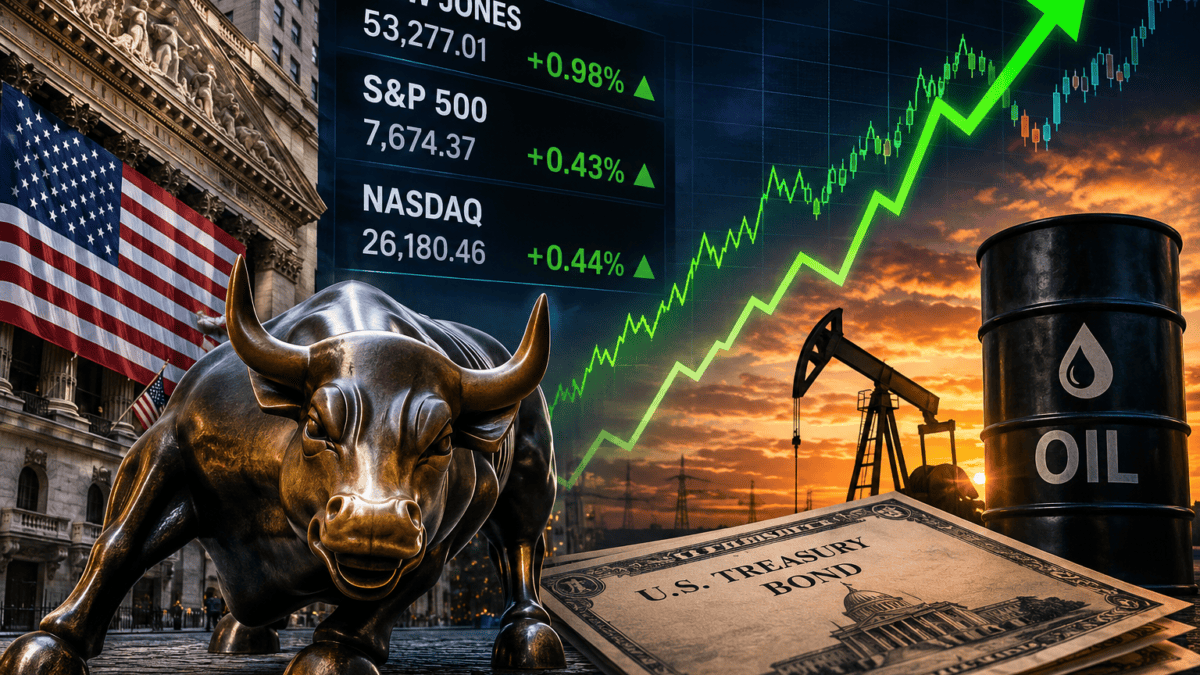
US stocks rebound on Friday, August 21, 2026, recovering part of Thursday’s steep decline as investors responded to stronger business activity and corporate earnings. The Dow Jones Industrial Average gained 517.80 points, or 0.98%, while the S&P 500 rose 0.43% and the Nasdaq Composite advanced 0.44%. Despite Friday’s recovery, all three major indexes finished the week lower as Treasury yields, oil prices, and geopolitical uncertainty continued to weigh on investor sentiment.
1. US Stocks Rebound After Thursday’s Selloff
Wall Street recovered on Friday following a difficult Thursday session. The Dow closed at 53,277.01 after gaining 517.80 points. The S&P 500 added 33.21 points to finish at 7,674.37, while the Nasdaq Composite gained 113.29 points to close at 26,180.46, according to Reuters.
The recovery followed sharp losses in the previous session, when rising Treasury yields and higher oil prices pressured stocks. Friday’s gains provided some relief, but they did not erase the week’s losses.
For the week, the S&P 500 declined 1.43%, the Nasdaq lost 2.05%, and the Dow fell 0.85%. The Russell 2000 also ended the week down 1.65%. The S&P 500 and Nasdaq broke three-week winning streaks, while the Dow recorded its second consecutive weekly decline.
2. Why Stocks Recovered on Friday
Better economic data helped calm investors.
Reuters reported strong growth in the US services sector, which helped accelerate overall business activity in August. The stronger services performance offset weaker manufacturing growth, where supply disruptions and reduced inventory building remained concerns.
Corporate earnings also provided support. Ross Stores shares gained 4.4% after the retailer reported stronger-than-expected quarterly results and increased its annual profit forecast. AP also reported the company exceeded analysts’ expectations for both profit and revenue.
Investors also appeared less concerned about an uncontrolled rise in Treasury yields following the Treasury Department’s intervention in the bond market earlier in the week.
Stronger economic activity, encouraging corporate results, and reduced anxiety around the bond market helped stocks recover.
3. Treasury Yields Remain a Major Risk
The bond market remained one of Wall Street’s biggest concerns despite Friday’s stock gains.
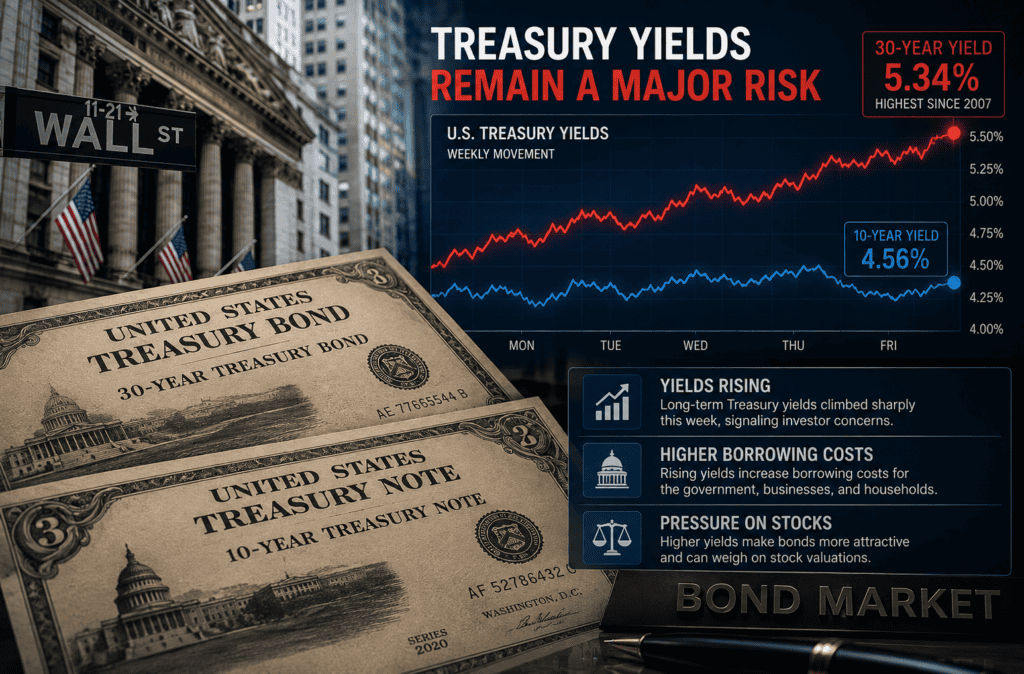
Long-term Treasury yields rose sharply during the week. Reuters reported the 30-year Treasury yield reached roughly 5.34%, its highest level since 2007. Concerns surrounding inflation, government debt, and Federal Reserve policy have contributed to the rise.
Higher Treasury yields matter because they increase borrowing costs throughout the economy. Mortgage rates, corporate borrowing costs, and other forms of credit often respond to movements in government bond yields. Higher yields also make bonds more competitive with stocks, which can reduce investors’ willingness to pay high valuations for equities.
The US Treasury attempted to ease pressure by increasing its purchases of longer-term government debt. Treasury Secretary Scott Bessent announced plans to double buyback sizes for 10-year to 30-year Treasuries to at least $4 billion per operation.
The announcement initially pushed yields lower, but the effect proved temporary.
4. Oil Prices Add to Inflation Concerns
Oil remained another important issue for investors.
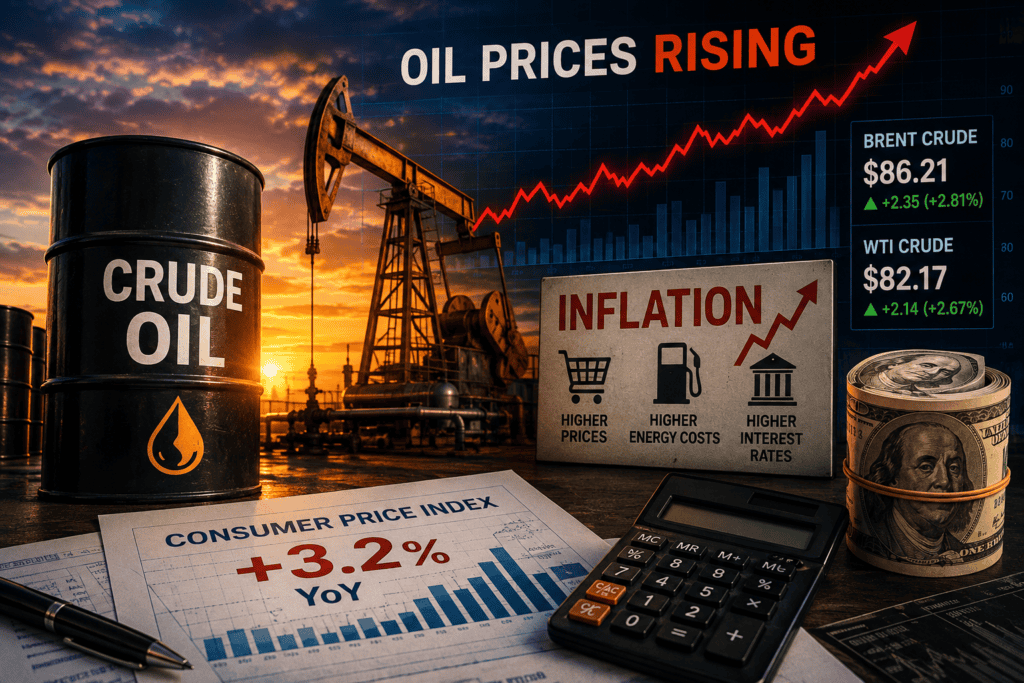
Reuters reported oil futures rose for a sixth consecutive session on Friday after President Donald Trump threatened economic sanctions against countries trading with Iran. Concerns about tighter supplies helped push energy prices higher.
For the week, Brent crude futures gained 6.39%, while US crude increased 5.66%.
Higher energy prices create a problem for financial markets because they feed into transportation, manufacturing, and consumer costs.
Persistent increases in oil and refined fuel prices could make inflation harder to control. Reuters reported European diesel prices have risen more than 70% since the Iran conflict began in February, while US gasoline prices have risen around 60%.
For investors, this creates an uncomfortable combination. Stronger inflation can keep interest rates elevated, while higher borrowing costs can pressure stock valuations.
5. Which Stocks Performed Well?
Friday’s recovery extended across much of the market.
Most of the S&P 500’s 11 major sectors finished higher. Materials stocks led with a 2.2% advance, healthcare gained 1.3%, and financial stocks rose 1%. Utilities were the weakest major sector, falling 2.3%.
Several individual stocks recorded strong gains. Ross Stores rose 4.4% following its earnings report. Robinhood jumped 13.7%. Coinbase Global climbed 8.2%. Strategy gained 6%.
The gains in cryptocurrency-related companies coincided with a 6.4% rise in Bitcoin, according to Reuters.
These moves suggest investors were still willing to take risks despite concerns in the bond and energy markets.
6. What the Weekly Losses Tell Investors
Friday’s rebound should be viewed within the context of the entire week.
The S&P 500 lost 1.43% during the week, while the Nasdaq declined 2.05%. The Dow fell 0.85%.
AP reported similar rounded figures, with the S&P 500 down 1.4%, the Dow down 0.8%, the Nasdaq down 2.1%, and the Russell 2000 down 1.6%.
The weekly losses show how sensitive markets have become to movements in Treasury yields.
Stocks rose Wednesday when yields fell, dropped Thursday when yields climbed, and recovered Friday even as bond-market concerns persisted.
Investors should therefore avoid reading too much into a single positive trading session.
7. What Investors Should Watch Next
Several events next week could determine whether Friday’s recovery continues.
Nvidia is scheduled to report quarterly earnings. Its results will provide investors with another measure of demand for artificial intelligence infrastructure and technology spending. Reuters identifies Nvidia’s report as one of the major events markets will watch next week.
Investors will also receive July’s Personal Consumption Expenditures price index. The PCE price index is closely watched by the Federal Reserve as an inflation measure. A stronger inflation reading could renew concerns about interest rates and Treasury yields.
Federal Reserve Chair Kevin Warsh’s upcoming speech at the Jackson Hole symposium will also attract significant attention. Investors are looking for clearer signals about monetary policy following recent volatility in the bond market.
Treasury policy will remain important as well. Treasury Secretary Scott Bessent is scheduled to hold a press conference on Monday following recent actions involving long-term Treasury yields and potential additional sanctions against Iran.
8. What This Means for Everyday Investors
Friday’s rebound provides some reassurance, but the week’s losses show uncertainty has not disappeared.
Investors should watch three areas closely. Treasury yields will influence borrowing costs and stock valuations. Oil prices will affect inflation expectations. Corporate earnings will show whether companies remain strong enough to support current market valuations.
Short-term market swings are difficult to predict. Investors with long-term portfolios should focus on diversification, risk tolerance, and investment objectives rather than reacting to every daily move.
The coming week could bring another period of volatility as markets digest inflation data, major technology earnings, Treasury policy, and signals from the Federal Reserve.
Frequently Asked Questions
Why did US stocks rebound on Friday?
Stronger US business activity, encouraging corporate earnings, and reduced anxiety surrounding Treasury yields helped support stocks. The Dow gained about 1%, while the S&P 500 and Nasdaq each rose roughly 0.4%.
Did the stock market finish higher for the week?
No. Despite Friday’s gains, the major indexes ended the week lower. The S&P 500 lost 1.43%, the Nasdaq declined 2.05%, and the Dow fell 0.85%.
Why are Treasury yields important for stocks?
Higher Treasury yields increase borrowing costs and make government bonds more attractive relative to stocks. This can put pressure on equity valuations, especially growth stocks whose valuations depend heavily on expected future earnings.
What should investors watch next week?
Key events include Nvidia’s quarterly earnings, July PCE inflation data, Federal Reserve Chair Kevin Warsh’s Jackson Hole speech, Treasury developments, and movements in oil prices.
Are rising oil prices a risk for stocks?
Yes. Sustained increases in energy costs can contribute to inflation and increase costs for businesses and households. Higher inflation can also influence interest-rate expectations.